The Potential of Brain-Computer Interfaces for Accessibility
8 December 2025
Imagine if you could control a computer with your thoughts—no keyboard, no mouse, not even a touchscreen. Just pure, unfiltered brainpower at work. Sounds like something out of a sci-fi movie, right? Well, guess what? It's not just fiction anymore! Welcome to the fascinating world of Brain-Computer Interfaces (BCIs), where your brain waves can do more than just overthink every embarrassing moment from your past.
BCIs are revolutionizing accessibility in ways we never thought possible. For people with disabilities, they open up life-changing possibilities, from communication to mobility. And let's be honest, for the rest of us, the dream of writing emails just by thinking about them? Yes, please!
So, buckle up and prepare your neurons, because we're diving deep into the mind-bending potential of BCIs for accessibility. 
What Exactly is a Brain-Computer Interface?
Before we start fantasizing about telepathically ordering pizza, let’s clear up what a Brain-Computer Interface actually is. In simple terms, it's a direct communication pathway between your brain and an external device—be it a computer, a robotic arm, or even a smart home system.BCIs work by reading electrical signals in the brain, interpreting them, and translating them into digital commands. Think of it like Morse code, but instead of tapping dots and dashes, your brain just thinks the command.
There are two main types of BCIs:
- Non-invasive BCIs – These use external electrodes placed on the scalp (like an electroencephalogram or EEG cap). No surgery required, just a high-tech hat!
- Invasive BCIs – These involve implanting electrodes directly into the brain. Yep, we’re talking cyberpunk level technology right here.
For accessibility, non-invasive BCIs are currently the go-to option since surgery isn’t exactly a casual weekend activity. 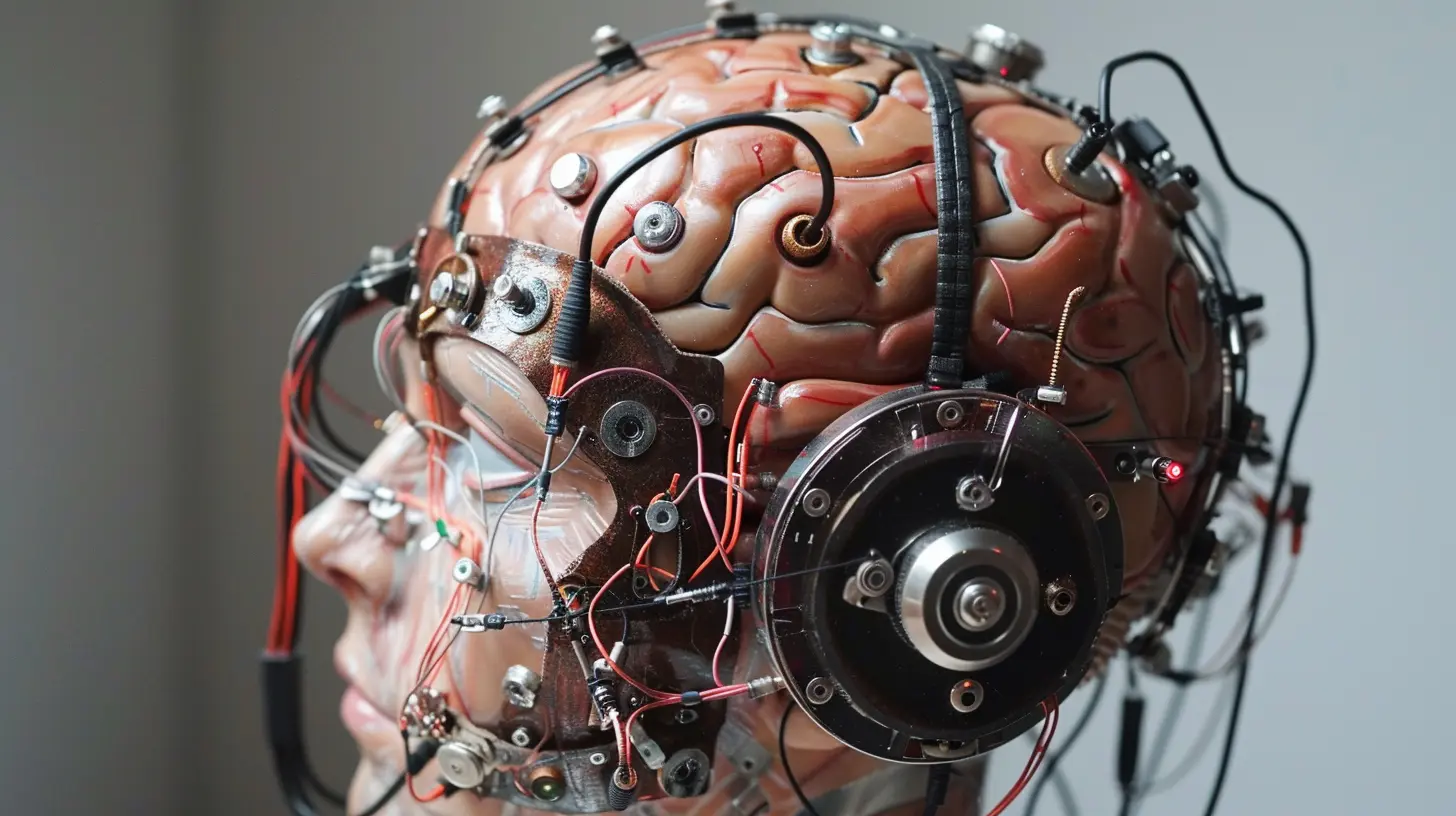
Breaking Barriers: How BCIs Are Transforming Accessibility
BCIs may sound like a cool party trick, but their real power lies in their potential to change lives. For individuals with physical disabilities, communication disorders, or neurological conditions, BCIs offer something truly precious—independence.1. Restoring Mobility with Mind-Controlled Devices
For people with spinal cord injuries or conditions like ALS (Amyotrophic Lateral Sclerosis), mobility can be a major challenge. BCIs are making it possible for individuals to control wheelchairs, robotic arms, and even exoskeletons with nothing but their thoughts.Imagine a world where someone who lost mobility can move again just by thinking, "Go forward." That’s not a sci-fi dream—it’s already happening! Researchers have developed wheelchairs that move based on brain signals, and the results are nothing short of jaw-dropping.
2. Speech Without Speaking: Giving Voices Back
Ever felt like your brain is moving faster than your mouth? Now imagine if you couldn’t speak at all due to conditions like locked-in syndrome or severe paralysis. For many, BCIs serve as an outlet for communication, allowing users to "type" words on a screen just by thinking them.Companies like Neuralink (yes, Elon Musk is involved because of course he is) are working on systems that could allow people to communicate at nearly the speed of thought. Basically, you’d never have to yell at autocorrect again!
3. Enhancing Accessibility in Daily Life
From smart home controls to navigating the internet, BCIs can assist with everyday activities. Imagine adjusting the temperature, turning on the lights, or playing your favorite Netflix show—all just by thinking about it.This tech could mean complete independence for people with disabilities, eliminating the need for caregivers to perform simple tasks. And let’s be real, it could also mean making laziness an art form for the rest of us. 
BCIs vs. Other Assistive Technologies: What’s the Big Deal?
We already have assistive technologies like eye-tracking devices, voice recognition, and muscle-based controllers. So why are BCIs such a game-changer?Here’s why:
- They require no movement – Unlike voice control or eye-tracking, BCIs don’t rely on physical motion. If you can think, you can control a device.
- They’re faster – Typing with eye-tracking software is cool, but mental communication through BCIs is even quicker.
- They have limitless potential – As technology improves, BCIs could integrate with artificial intelligence (AI) to predict user intent, making them even more intuitive.
In short, BCIs take assistive tech to a whole new level—like upgrading from a flip phone to the latest smartphone overnight. 
The Challenges: Because Nothing Worth Having is Ever Easy
As promising as BCIs are, they’re not without their fair share of obstacles. Here are a few reasons why we’re not all out here controlling smartphones with our thoughts (yet):1. Accuracy is... a Work in Progress
BCIs aren’t perfect. Misinterpreted signals can lead to unintended actions (which could lead to some hilariously awkward situations). Scientists are continuously working on improving accuracy, but we’re not quite at mind-reading levels yet.2. They're Expensive—Very Expensive
Right now, BCI technology isn’t exactly budget-friendly. High-end EEG headsets and mind-controlled devices often come with hefty price tags. To make BCIs truly accessible, we need affordable options that don’t require taking out a second mortgage.3. Brain Training Takes Time
Using a BCI isn’t as simple as plugging in and thinking "go." The brain needs training, much like learning to use a new language or an overly complex TV remote.4. Ethical Concerns and Privacy
Hackers breaking into our thoughts? Yeah, that’s a terrifying concept. Brain data privacy is a huge concern. If BCIs become widespread, we need strong regulations to protect users from potential misuse.The Future: Where Do We Go From Here?
Despite the challenges, it’s clear that BCIs hold incredible promise for accessibility. With ongoing advancements, we could soon see:- Faster, more accurate BCIs capable of translating thoughts into actions instantly.
- Wireless, non-invasive options that make using BCIs as casual as wearing earbuds.
- AI-powered enhancements that improve communication for people with speech and motor impairments.
And who knows? Maybe one day, instead of typing out blog posts, writers like me will just think them into existence. (Hey, a writer can dream.)
Final Thoughts: The Mind is the Limit
BCIs are pushing the boundaries of what’s possible for accessibility, giving people a new level of control over their world. Whether it’s restoring mobility, enabling communication, or simplifying everyday tasks, this tech has the potential to change lives in ways we’re only beginning to understand.Sure, we’re not quite at the stage where we can order a pizza just by thinking about it (yet), but the progress we’re seeing is nothing short of mind-blowing—literally.
So, will BCIs be the future of accessibility? The way things are going, it’s not a question of if—but when.
all images in this post were generated using AI tools
Category:
Emerging TechnologiesAuthor:

Kira Sanders
Discussion
rate this article
2 comments
Rune Frye
This article beautifully highlights the transformative potential of brain-computer interfaces for accessibility. It's inspiring to see technology pave the way for inclusivity, empowering individuals with disabilities to connect and engage more fully with the world around them. Thank you!
December 11, 2025 at 11:50 AM
Kira Sanders
Thank you for your kind words! I'm glad you found the article inspiring and that it highlights the important role of brain-computer interfaces in promoting inclusivity.
Arwenia Hall
This article beautifully highlights the transformative potential of brain-computer interfaces for enhancing accessibility. It’s inspiring to see such innovative technology being developed to empower individuals with disabilities. I’m excited to see how these advancements will improve lives and promote inclusivity in our society. Thank you for sharing!
December 8, 2025 at 5:46 AM
Kira Sanders
Thank you for your thoughtful comment! I’m glad you found the article inspiring and share in the excitement about the potential of brain-computer interfaces to enhance accessibility and inclusivity.