Exploring the Future of Foldable Touchscreen Devices
24 June 2026
Technology never sits still, does it? Every time we think we’ve reached the peak of innovation, something new pops up and completely changes the game. One of the coolest (and bendiest) advancements in recent years is foldable touchscreen devices. Yep, we’re talking about smartphones, tablets, and even laptops that fold like a book—or, in some cases, like a futuristic sci-fi gadget.
But are foldable devices just a passing trend, or are they here to stay? And if they do stick around, what could the future look like for these bendy beauties? Let’s take a deep dive into the evolving world of foldable touchscreen devices and what’s in store for them.

The Rise of Foldable Technology
Remember when flip phones were all the rage in the early 2000s? Everyone loved the satisfying snap of closing their phone after a call. Fast forward to today, and foldable devices are bringing back that nostalgic feel—but in a way that’s sleek, ultra-modern, and way more sophisticated.Foldable touchscreen devices have already come a long way from just an ambitious prototype to actual, real-world products. Brands like Samsung, Huawei, and Motorola have already dropped some impressive foldable smartphones, kicking off what seems to be a revolutionary shift in mobile tech.
So, what’s driving this trend? Well, a few things:
- Bigger Screens, Smaller Sizes: Who doesn’t want a large display without carrying around something the size of a tablet? Foldable tech allows you to have both a compact device and a larger screen when needed.
- Multi-Tasking on the Go: A foldable phone isn’t just for looks. Many of these devices offer advanced split-screen capabilities that let you multitask like a pro.
- Cool Factor: Let’s be real—foldable screens look insanely cool. Who doesn’t want a phone that flexes without breaking?
How Do Foldable Screens Work?
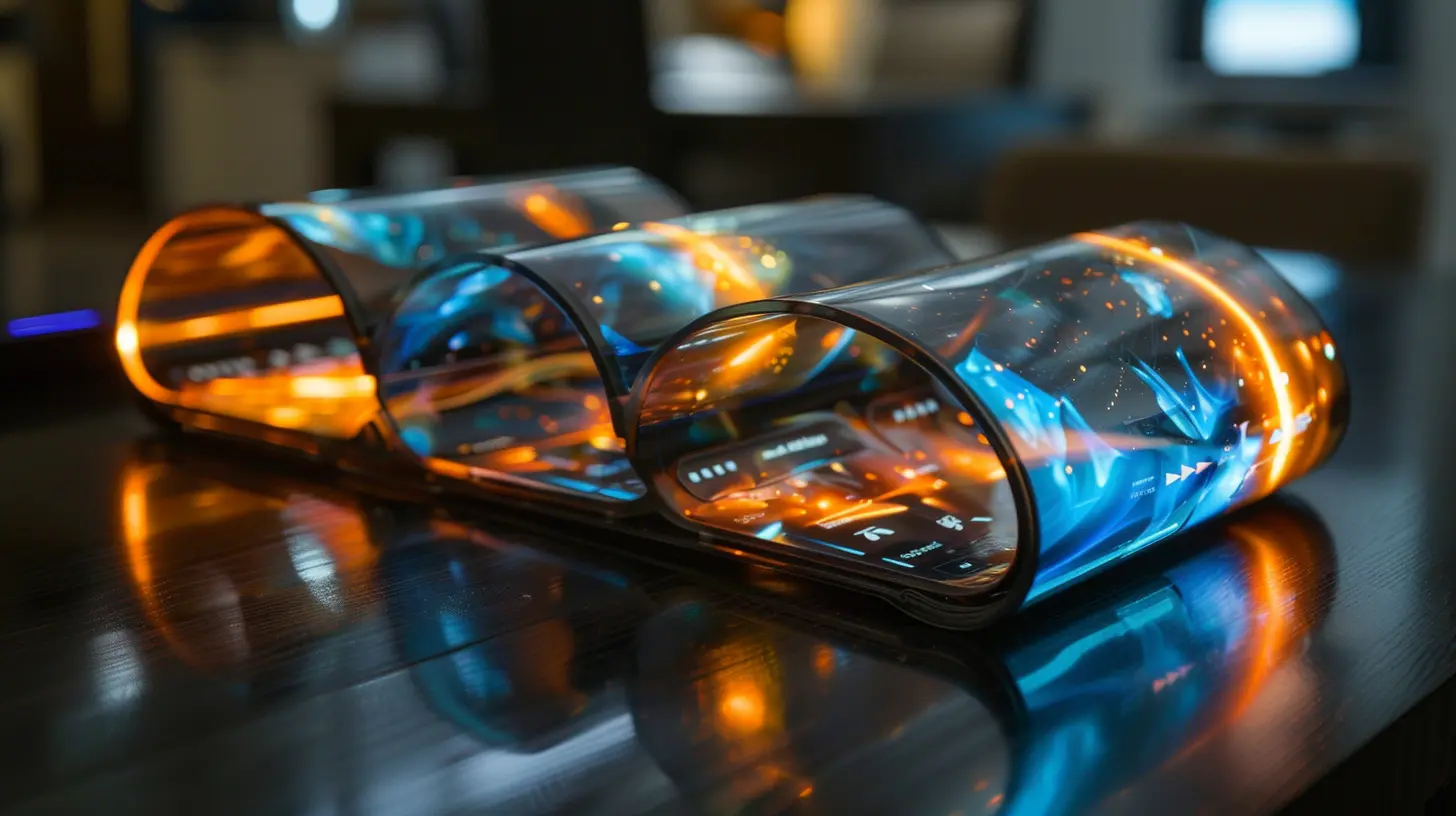
At this point, you might be wondering—how do these screens fold without shattering into tiny pieces? Good question!Traditional screens use rigid glass, which obviously isn’t ideal for bending. Foldable devices, on the other hand, rely on flexible OLED (organic light-emitting diode) technology. Unlike traditional glass screens, these are made from ultra-thin, bendable materials that can withstand folding and unfolding over time.
But it’s not just about the screens. The entire device, from the battery to the circuit board, has to be designed flexibly. Companies use special hinge mechanisms to ensure smooth folding action without putting too much stress on the fragile parts inside. Engineering at its finest!

The Challenges of Foldable Devices
Let’s not pretend everything is perfect—foldable devices have their fair share of challenges. While the idea is super cool, there are still a few kinks (pun intended) that need to be ironed out:1. Durability Concerns
No matter how many stress tests manufacturers run, foldable phones still seem fragile. Over time, the folding mechanism can develop creases, and in some cases, screens have even been known to break. Nobody wants to spend a small fortune on a gadget that might not last long.2. Pricey Price Tags
Speaking of a small fortune… these devices are not cheap. The high-tech materials, flexible displays, and complex hinges mean manufacturers charge premium prices. While we’re seeing some slightly more affordable models appear, foldables are still far from budget-friendly.3. Software Optimization
A foldable screen changes the way we use apps, which means software needs to catch up. Some apps don’t fully support the foldable form factor, leading to awkward user experiences. Developers are working on it, but it’s not yet seamless across the board.4. Battery Life Woes
Bigger screens mean higher power consumption. That’s a problem when trying to keep battery life reasonable. Manufacturers are working on improving battery tech, but we’re not quite at the point where you can expect all-day battery life with heavy use.
The Future of Foldable Devices
Alright, so we know foldable devices are cool, but where are they headed next? Spoiler alert: The future looks pretty exciting.1. More Affordable Models
As with any emerging tech, prices are bound to drop as the technology improves and production costs decrease. In a few years, we might see foldable devices that are as affordable as regular smartphones.2. Better Durability
Manufacturers are continuously refining their materials, and we’re already seeing improvements in durability with each new generation. Future foldable devices will likely have tougher screens, improved hinge mechanisms, and better resistance to wear and tear.3. Innovative Designs
Right now, most foldable phones either fold inward like the Samsung Galaxy Z Fold or outward like the Huawei Mate X. But what if we get devices that roll, stretch, or even bend in multiple ways? Companies like LG and TCL are already working on rollable screens, which could take foldable tech to a whole new level.4. Seamless Software Integration
As more developers optimize their apps for foldable screens, we’ll see a smoother user experience. Android and other operating systems are already making updates to better accommodate foldable devices, and this will only improve as adoption grows.5. Foldable Laptops & Tablets Going Mainstream
Phones aren’t the only bendable gadgets in town. We’re already seeing foldable laptops from brands like Lenovo and ASUS, and in the near future, we could get foldable tablets that offer the portability of an iPad but the productivity of a full-fledged laptop.6. Holographic & AR Enhancements
Imagine unfolding your phone and seeing a holographic projection pop up. Sounds far-fetched? Maybe not. With advancements in augmented reality (AR) and holographic displays, foldable tech could become an even more immersive experience.Are Foldable Devices the Future?
So, will foldable touchscreen devices completely take over the tech world? It’s hard to say for sure, but one thing is clear—this is more than just a passing trend. With constant improvements in durability, software, and affordability, foldables are on a steady path toward mainstream adoption.Of course, they won’t replace traditional smartphones or laptops overnight, but they do offer unique advantages that are hard to ignore. Whether you’re a multitasker who loves extra screen space or just someone who enjoys flashy, futuristic gadgets, foldable devices bring something genuinely exciting to the table.
Final Thoughts
Foldable touchscreen devices are still in their early days, but the potential is enormous. As technology continues to advance, we might just look back at today’s foldables and laugh at how "basic" they were—just like we do with old-school flip phones.So, whether you’re ready to jump on the bandwagon or still skeptical, one thing's for sure: the future of foldable tech is unfolding right before our eyes. (See what I did there?
all images in this post were generated using AI tools
Category:
Touchscreen DevicesAuthor:

Kira Sanders
Discussion
rate this article
2 comments
Elowen McBride
Foldable touchscreen devices hold exciting potential, blending portability with functionality. As technology advances, we can expect innovative designs that reshape user experiences and everyday interactions.
August 22, 2026 at 11:57 AM
Kira Sanders
I completely agree. The possibilities with foldable touchscreen devices are truly fascinating, and I can't wait to see how they transform our daily lives.
Nolan Walker
Foldable touchscreen devices are the future! I can't wait to see how they change our everyday interactions and experiences. Exciting times ahead!
July 6, 2026 at 3:44 AM