Will Extensions Shape the Metaverse Experience?
15 July 2026
The metaverse is not a single place. It is not a game, a social network, or a virtual reality headset. It is a sprawling, interconnected system of digital spaces, economies, and identities. Right now, it feels fragmented. You log into one world, you are a cartoon avatar. You log into another, you are a photorealistic human. Your inventory does not carry over. Your friends list is siloed. The whole thing feels like the early web in 1995, before browsers, before search engines, before extensions.
That is where the real question lies. Will extensions shape the metaverse experience? The short answer is yes, but not in the way most people think. Extensions will not just add features to the metaverse. They will define its architecture, its economy, and its very concept of ownership. To understand why, you have to look at what extensions actually do in a computing environment, and then map that onto the unique challenges of persistent virtual worlds.

The Browser Analogy That Everyone Gets Wrong
People love to compare the metaverse to the early web. They say that Web3 is like Web1, and that we need a "browser" for the metaverse. That is a useful mental model, but it misses a critical point. The web browser succeeded because it was a standardized rendering engine. HTML, CSS, and JavaScript gave developers a common language. The metaverse has no equivalent. There is no universal protocol for rendering a 3D object, handling physics, or managing an avatar's skeleton.Extensions in the browser world are lightweight add-ons that modify the behavior of a single application: the browser. They block ads, manage passwords, or inject custom CSS. But in the metaverse, the "browser" is the entire platform. If you think of Meta's Horizon Worlds or VRChat as browsers, then extensions become something far more powerful. They become the tools that allow users to customize not just their view of the world, but the world itself.
The mistake is to think of extensions as mere plugins. They are not. They are the mechanism by which the metaverse becomes malleable. Without a standardized way to extend functionality, each metaverse platform becomes a walled garden. Extensions are the keys to the gates.

Why Native Platforms Fail at Scale
Every major metaverse platform today ships with a set of built-in tools. Horizon Worlds has its block-based scripting. Roblox has Lua. Decentraland has its SDK. These are not extensions. They are the core platform. The problem is that no single team can anticipate every use case. They cannot build the perfect physics engine for every type of game. They cannot design the ideal social interaction model for every community. They cannot predict what tools artists will need next year.This is where extensions shine. A well-designed extension system allows third-party developers to fill the gaps. It turns a platform from a product into a foundation. Look at what happened with Minecraft. The base game is a sandbox, but the modding community turned it into a platform for education, architecture, and complex automation. Mods like OptiFine, WorldEdit, and Create are extensions that completely reshaped the experience. Mojang did not build those. They built the hooks that allowed them to exist.
The same logic applies to the metaverse. The platforms that survive will be the ones that open their internals to extension developers. The ones that try to control every aspect of the experience will stagnate. They will become the AOL of the metaverse, while open platforms become the internet.

The Three Layers of Metaverse Extensions
To understand how extensions will shape the experience, you have to break them down into three distinct layers. Each layer addresses a different problem, and each layer has its own trade-offs.Layer One: Interface Extensions
This is the most obvious layer. Interface extensions change how you see and interact with the metaverse. They are the equivalent of browser extensions that modify the user interface. In a virtual world, this could mean custom HUDs, alternative inventory managers, or specialized navigation tools.A practical example is a spatial bookmarking extension. In the current metaverse, if you find a cool location in Decentraland, you have to remember the coordinates or rely on the platform's built-in bookmarks. An interface extension could allow you to tag locations with notes, share them with friends, or even create a visual map overlay that shows points of interest based on your social graph. This is not a feature the platform would prioritize. It is niche. But for power users, it is transformative.
The trade-off here is performance. Every interface extension adds rendering overhead. In VR, where frame rate is critical for comfort, a poorly optimized extension can cause motion sickness. Developers must be ruthless about efficiency. A good interface extension should use less than 1% of the rendering budget. Anything more becomes a liability.
Layer Two: Logic Extensions
Logic extensions change how the world behaves. They modify physics, AI behavior, or game rules. This is the layer that enables user-generated content to go beyond simple asset placement.Consider a logic extension that introduces realistic weather systems. The base platform might have a static skybox. An extension could add rain, wind, and temperature simulation. It could affect how avatars move, how plants grow, or how structures degrade. This is not just cosmetic. It changes gameplay. A survival world with a weather extension becomes fundamentally different from one without.
The danger with logic extensions is conflicts. If two extensions both try to control the physics engine, you get unpredictable behavior. This is the same problem that plagued early web browsers with conflicting JavaScript libraries. The solution is sandboxing and a clear priority system. Extensions must declare their dependencies and their scope. A well-designed platform enforces these rules at the runtime level, not just in documentation.
Layer Three: Economic Extensions
This is the layer that most people overlook, and it is the most important. Economic extensions modify how value flows through the metaverse. They handle transactions, royalties, and ownership proofs. In a blockchain-based metaverse, this layer is where extensions interact with smart contracts.A real-world example is a cross-platform marketplace extension. Right now, if you buy a virtual item in one metaverse, you cannot use it in another. An economic extension could create a bridge. It could lock the item in a smart contract on one chain and mint a representation on another. This is not trivial. It requires trust, liquidity, and standardized metadata. But it is exactly the kind of innovation that a platform cannot build internally. It requires specialized knowledge of multiple blockchains, legal frameworks, and user behavior.
The risk here is security. Economic extensions handle real money. A bug in a smart contract interface can drain wallets. A malicious extension can steal credentials. The platform must implement strict auditing requirements and revocation mechanisms. Users should be able to see exactly what permissions an economic extension requests, and they should be able to revoke those permissions instantly.
The Developer's Dilemma: Open vs. Controlled
Every metaverse platform faces a fundamental choice. How much control do you give to extension developers? Too little, and your platform feels rigid and limited. Too much, and you risk fragmentation, security holes, and a poor user experience.The current landscape shows both extremes. On one side, you have platforms like Roblox, which offers a controlled scripting environment. Developers can build almost anything within Roblox's constraints, but they cannot modify the core engine. On the other side, you have platforms like VRChat, which allows for more advanced modding through external tools. The trade-off is that VRChat's extension ecosystem is less stable and more prone to exploits.
The best approach is a tiered permission system. Extensions should be categorized by their capabilities. A simple UI extension might require only a rendering hook. A logic extension might require access to the physics engine. An economic extension might require wallet connectivity. Each tier comes with a different level of review, sandboxing, and user consent. This is not a new idea. It is how operating systems handle app permissions. The metaverse needs the same maturity.
Common Misconceptions About Metaverse Extensions
There are several myths floating around that need to be addressed. The first is that extensions are only for power users. That is false. Extensions can be designed for mainstream users if they are packaged well. A "night mode" extension that reduces eye strain in bright virtual environments is not a power user tool. It is an accessibility feature. The key is making extensions discoverable and easy to install, like apps on a smartphone.The second misconception is that extensions will fragment the metaverse. The opposite is true. Extensions can actually unify disparate platforms by providing common interfaces. If a group of platforms agrees on a standard for avatar animation extensions, then a single extension can work across multiple worlds. This is how the web unified around JavaScript. Standards emerge from successful extensions, not from committee meetings.
The third misconception is that extensions are a security risk that should be minimized. Security is a real concern, but minimizing extensions is not the answer. The answer is better security models. Code signing, runtime sandboxing, and user-controlled permissions are proven solutions. The metaverse cannot afford to lock itself down out of fear. It must build safe mechanisms for extension development, just as mobile app stores had to evolve from the wild west of early smartphone apps.
Best Practices for Building Metaverse Extensions
If you are a developer looking to build extensions for the metaverse, there are several principles that separate successful projects from vaporware.First, focus on a single, well-defined problem. Do not try to build a "metaverse operating system." Build a tool that solves one pain point exceptionally well. The best browser extensions are laser-focused. uBlock Origin does one thing: block unwanted content. It does it better than any competing product. The same applies to metaverse extensions. A gesture recognition extension that lets you cast spells with hand movements is more valuable than a "universal toolkit."
Second, optimize for the target platform's constraints. If you are building for a VR platform, your extension must maintain 90 frames per second. If you are building for a mobile metaverse, your extension must be battery-efficient. Profile your code relentlessly. A laggy extension will be uninstalled immediately, regardless of its features.
Third, design for composability. Your extension should work alongside other extensions, not replace them. Use well-documented APIs. Avoid global state. If your extension modifies the world, it should do so in a way that other extensions can detect and adapt. This is the difference between a plugin and a platform. Plugins are isolated. Platform extensions are interconnected.
Fourth, plan for revocation and updates. Users will change their minds. They will install extensions that turn out to be malicious. Your extension architecture must allow for remote disabling and seamless updates. This is especially critical for economic extensions, where a compromised extension can cause financial harm.
The Role of Standards Bodies
Extensions cannot thrive in a vacuum. They need standards. Right now, the metaverse is a collection of proprietary platforms, each with its own scripting language, rendering engine, and economic model. This is unsustainable. For extensions to truly shape the metaverse experience, there must be a common ground.This is where organizations like the Metaverse Standards Forum come into play. But standards are not imposed. They emerge from successful implementations. The most effective path is for a few major platforms to adopt a shared extension API. Once that API gains traction, smaller platforms will follow. The key is to keep the core specification minimal. Define the hooks, the permission model, and the data formats. Leave the implementation details to the platforms.
The worst outcome would be a single company controlling the extension standard. That would recreate the walled garden problem at a higher level. The standard must be open, royalty-free, and governed by a neutral body. This is not idealism. It is practical. History shows that open standards outlast proprietary ones. TCP/IP beat IPX. HTTP beat Gopher. OpenXR is slowly beating proprietary VR runtimes. The same will happen with metaverse extensions.
What Users Should Look For
If you are a user or a investor trying to evaluate a metaverse platform, the extension ecosystem is a strong signal of long-term viability. Ask the following questions.Does the platform have a documented extension API? If the documentation is vague or nonexistent, the platform is not serious about third-party development.
Can extensions run in a sandboxed environment? If extensions have full access to the platform's internals, security is an afterthought.
Is there a marketplace or repository for extensions? A curated marketplace indicates that the platform is investing in the ecosystem. A complete lack of discoverability means extensions are an afterthought.
Can extensions be uninstalled cleanly? If removing an extension leaves behind residual data or broken functionality, the platform's architecture is flawed.
Are there examples of extensions that fundamentally change the experience? Look for extensions that enable new genres of activity, not just cosmetic tweaks. A platform where extensions enable new game modes or economic models is a platform with real potential.
The Future of Extensions in the Metaverse
It is easy to imagine a future where the metaverse is nothing but extensions. The base platform becomes a thin layer that provides rendering, networking, and identity. Everything else is a user-installed extension. Your avatar is an extension. Your inventory system is an extension. The physics engine is an extension. The economy is an extension.This is not science fiction. It is the logical endpoint of the trend we see in every successful computing platform. The web browser started as a monolithic application. Now it is a host for extensions that do everything from email to video editing. The smartphone started as a phone with apps. Now apps define the entire experience. The metaverse will follow the same path.
The question is not whether extensions will shape the metaverse experience. They will. The question is which platforms will embrace this reality and which will resist it. The ones that resist will become the ghost towns of the digital frontier. The ones that embrace it will become the foundations of a new digital civilization.
The metaverse is not being built by a single company. It is being built by thousands of developers, each adding a small piece. Extensions are the glue that holds those pieces together. They are the mechanism by which the metaverse becomes more than the sum of its parts. They are the future, and that future is already being written, one extension at a time.
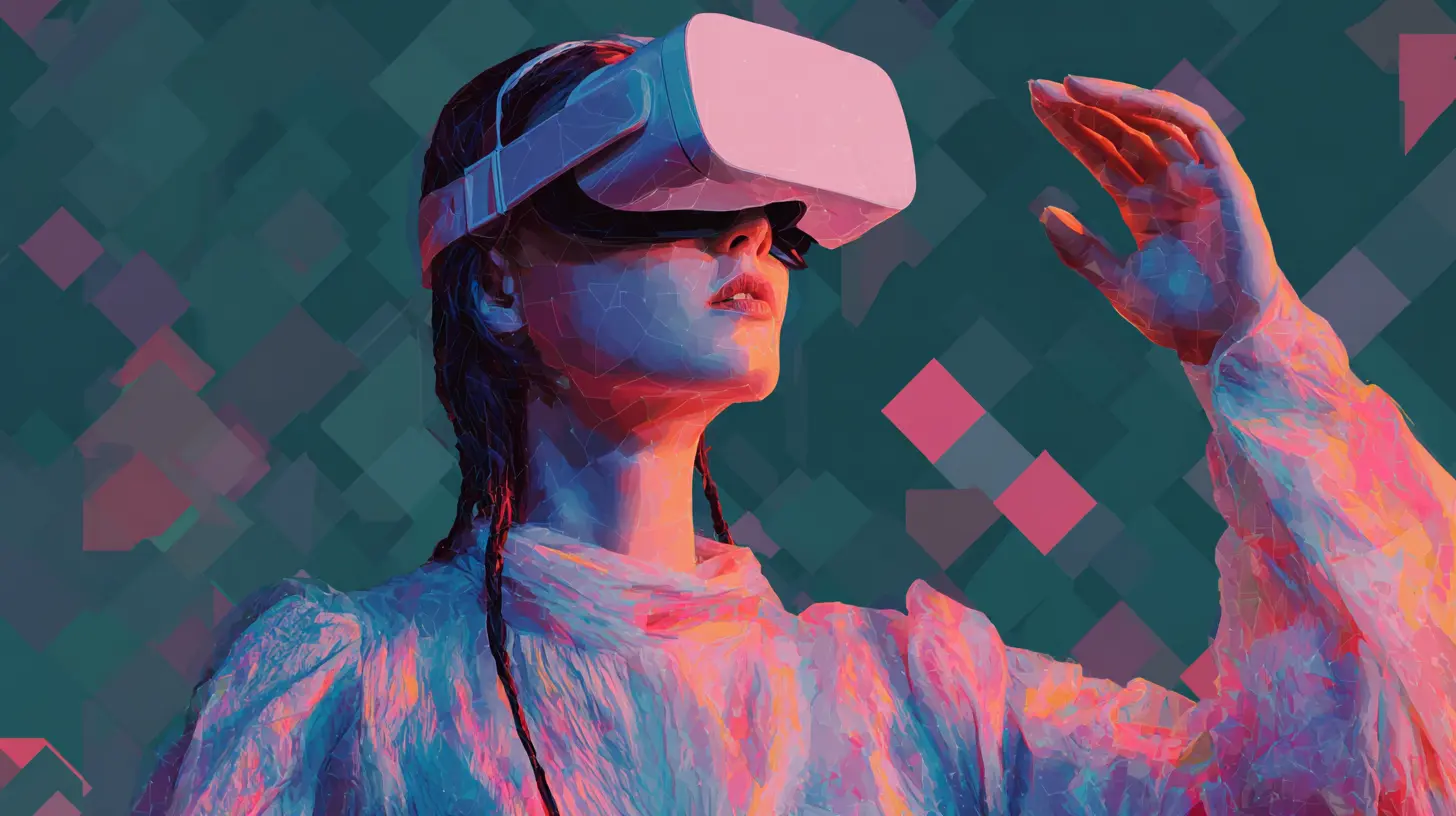
all images in this post were generated using AI tools
Category:
Browser ExtensionsAuthor:

Kira Sanders
Discussion
rate this article
1 comments
Ximena Ruiz
Extensions weave new threads in the fabric of the metaverse, painting vibrant landscapes of interaction. As boundaries blur and possibilities expand, we glimpse a future where imagination dances freely and connection breathes life into digital realms...
July 22, 2026 at 2:46 AM
Kira Sanders
Absolutely. Extensions are key to enhancing engagement and creativity in the metaverse. They open doors to new experiences that redefine how we connect and interact.