Why Global Tech Treaties Are Closer Than You Think
18 October 2026
When people hear "global tech treaty," they picture a slow-moving diplomatic circus: years of summits, watered-down language, and a final document nobody enforces. That picture is outdated. A quiet architecture of binding and semi-binding agreements has been assembling around technology for the past decade, and it is tightening faster than most engineers, founders, and policy teams realize.
This matters beyond geopolitics. The rules being written now determine where you can host data, how you design AI systems, what encryption you can ship, how you handle cross-border transfers, and what happens when a regulator in one country decides your product violates a rule in another. If you build or operate technology, these agreements are already shaping your architecture decisions, whether you have read them or not.
This article explains where global tech governance actually stands, why the pace is accelerating, what the emerging structures look like, and how to prepare without overreacting to headlines.
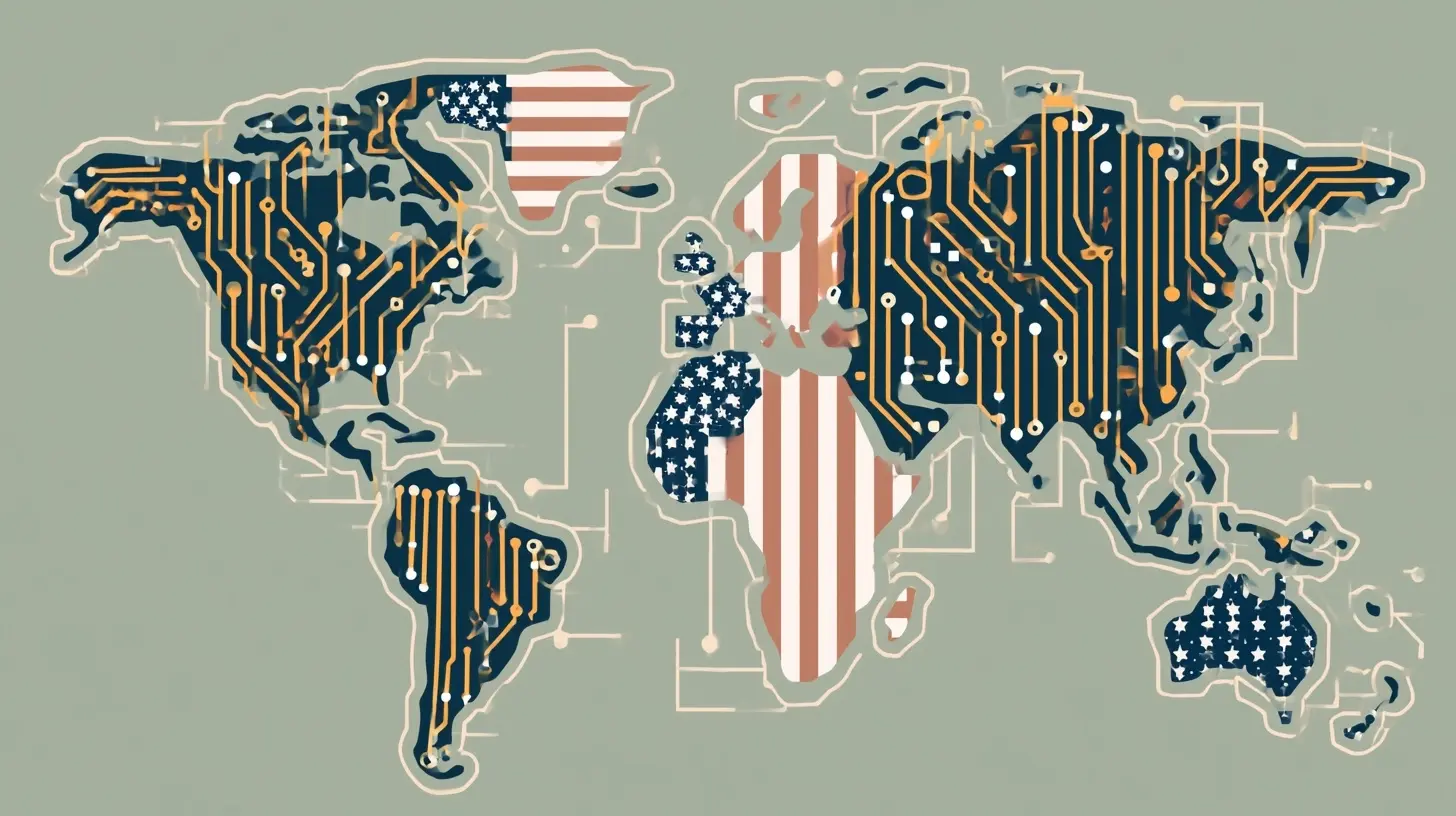
The Misconception: Treaties Are Slow, So Tech Rules Must Be Slow Too
The classic mental model of international law comes from arms control and trade: multiyear negotiations, ratification fights, and enforcement that depends on great-power willingness. That model is real, but it is not the only mechanism at work.Three things have changed.
First, regulators now coordinate directly. Networks like the Global Privacy Assembly and the International Conference of Data Protection and Privacy Commissioners let agencies share enforcement priorities and draft guidance informally. A privacy regulator in one jurisdiction increasingly knows what its counterparts are investigating, and companies face parallel inquiries rather than isolated ones.
Second, treaty language is being reused. When one jurisdiction writes a definition, others borrow it. The result is de facto harmonization even without a single global statute. You see this in how "personal data," "data controller," and "high-risk AI" get defined across different legal systems. The definitions are not identical, but they rhyme closely enough that a single compliance program can often serve multiple markets.
Third, technical standards bodies have become the plumbing of international law. Standards from ISO, IEC, and IEEE, plus sectoral bodies, are frequently referenced by regulation. When a law says "appropriate technical measures," the practical meaning is often whatever the referenced standard says. That turns standard-setting into a form of treaty-making by another name, with faster cycles and less public attention.
The net effect: formal treaties move slowly, but the governance layer around technology is thickening through regulation, standards, and enforcement cooperation. That is why the headline claim holds. The substance of global tech rules is arriving faster than the formal treaty process suggests.

What Counts as a "Global Tech Treaty" in Practice
Precision helps here, because the term gets used loosely.There are three broad layers.
Binding multilateral agreements. These include trade agreements with digital chapters, mutual legal assistance treaties, and sector-specific conventions. They are legally binding on ratifying states, though enforcement varies.
Regional and bilateral arrangements. These often move faster than global ones. Data adequacy decisions, mutual recognition of certification schemes, and bilateral cooperation on cyber incident response fall here. They are less glamorous but more operational.
Soft law and standards. Declarations, principles, model contracts, and technical standards are not treaties in the strict sense, but they shape behavior because regulators, courts, and procurement processes treat them as benchmarks.
A practical rule: if a document changes what a regulator will accept, a court will consider, or a customer will require in a contract, treat it as governance regardless of its legal label. That framing prevents the common mistake of dismissing soft law as irrelevant.

The Forces Pulling Agreements Together
Several pressures are pushing jurisdictions toward convergence, even where politics diverge.Cross-border data flows are unavoidable
No serious economy can operate without data crossing borders. Cloud infrastructure, payment networks, supply chains, and incident response all depend on it. Total fragmentation is expensive, so governments have strong incentives to build interoperable mechanisms, even if they argue about the details.Enforcement has gone cross-border
When a regulator fines a company, the fine is only meaningful if it can be collected and if the company cannot simply relocate. That pushes agencies toward cooperation agreements, joint investigations, and reciprocal recognition of certain findings. Each of these is a small treaty in effect.Security incidents ignore borders
Ransomware, supply chain compromises, and critical infrastructure attacks cross jurisdictions by design. Incident notification, evidence sharing, and attribution all require legal channels. Those channels are being built now, often through bilateral and regional arrangements that later get folded into broader frameworks.AI raised the stakes
AI systems raise questions that no single country can answer alone: model provenance, training data rights, safety evaluations, and liability. The response has been a wave of principles, then standards, then regulation. Because the underlying technical problems are similar everywhere, the solutions converge. That convergence is the engine behind what looks like a global treaty in slow motion.
The Emerging Architecture: What It Actually Looks like
Rather than one grand agreement, expect a mesh. Several components are already visible.Data transfer mechanisms. Adequacy findings, standard contractual clauses, and certification schemes form a patchwork that functions as a de facto transfer regime. Companies that map these mechanisms carefully can move data across many jurisdictions with one coherent program.
AI governance frameworks. Principles-based frameworks are being translated into standards and then into procurement requirements. The pattern is familiar from privacy: principles first, standards second, enforcement third. Each stage narrows the range of acceptable practice.
Cybersecurity baseline requirements. Sectoral and cross-sector baseline requirements are converging around similar controls: asset inventory, incident reporting timelines, supply chain risk management, and minimum security-by-design expectations. The convergence is not accidental. It reflects shared threat models.
Digital trade rules. Trade agreements increasingly include provisions on cross-border data flows, source code protection, and customs duties on electronic transmissions. These provisions are binding and enforceable through trade dispute mechanisms, which makes them some of the strongest tech governance instruments available.
Mutual recognition of certifications. When one jurisdiction accepts another's certification for a product category, that is functional harmonization. It reduces duplicate testing and creates pressure for standards to converge further.
The mesh has a property worth internalizing: it is resilient. If one strand weakens politically, others continue to operate. That resilience is why the overall direction is toward more coordination, not less, even when individual agreements stall.
Why This Is Closer Than It Looks: The Ratchet Effect
International tech governance has a ratchet quality. Once a mechanism exists, it rarely disappears entirely. It may be paused, narrowed, or renamed, but the institutional infrastructure persists.Consider how this plays out.
A regulator builds capacity to investigate cross-border cases. That capacity does not vanish when political attention shifts. It gets reused for the next issue.
A standard gets referenced in procurement. Once vendors certify against it, switching costs rise, and the standard becomes sticky.
A company builds a compliance program for one market. That program becomes the template for the next market, which reduces the perceived cost of further convergence.
Each step is small. Cumulatively, they create a governance floor that is higher than most observers expect. This is the core reason the treaties feel closer than the formal calendar suggests. The infrastructure is being built ahead of the formal instruments, and formal instruments tend to ratify what infrastructure already does.
Real-World Examples of Convergence in Action
Abstract claims are easy. Concrete patterns are more useful.Privacy definitions traveling. Definitions of personal data and controller obligations have migrated across jurisdictions with local adjustments. The result is that a single data map, built carefully, can support compliance in multiple markets. Companies that treated each jurisdiction as a blank slate spent far more than necessary.
Incident reporting timelines compressing. Reporting windows for significant cyber incidents have been shortening across jurisdictions. The practical effect is that organizations now design detection and escalation around the shortest applicable deadline, which effectively harmonizes internal processes even where external rules differ.
AI impact assessments. Several frameworks require some form of risk or impact assessment for high-risk AI. The terminology differs, but the operational core is similar: document the use case, assess harms, define mitigations, and keep records. Teams that build one assessment template with jurisdiction-specific addenda move faster than teams that build separate programs.
Certification reciprocity. Where mutual recognition exists, vendors avoid duplicate audits. The strategic implication is that choosing certifications with broad recognition is often worth a premium over cheaper, narrower ones.
Each example points to the same lesson: convergence is operational before it is legal. The legal instruments often follow practice.
The Trade-Offs: What Convergence Costs
Balanced analysis requires acknowledging the downsides. Convergence is not free.Loss of local flexibility. Harmonized rules can fit some markets poorly. A small jurisdiction may adopt a standard designed for larger economies and find it disproportionately expensive.
Regulatory lock-in. Early standards can entrench approaches that later prove technically inferior. Once certification schemes are built around a standard, replacing it is costly.
Compliance theater. When rules converge on documentation requirements, organizations can produce paperwork that satisfies auditors without improving outcomes. This is a real risk in security and AI governance alike.
Power concentration. Standard-setting bodies and large regulators shape rules that smaller players must follow. That can disadvantage startups and firms outside major markets.
Political fragility. Agreements can be paused or reinterpreted. Companies that build strategy around a single agreement rather than a portfolio of mechanisms expose themselves to political risk.
The practical takeaway is not to resist convergence but to design for it without betting everything on one instrument.
Common Mistakes Organizations Make
Several patterns recur, and each is avoidable.Treating each jurisdiction as unique. Over-customization multiplies cost and slows response. Most jurisdictions share a common core; build for the core and add local modules.
Waiting for final rules. By the time rules are final, procurement requirements and customer expectations have often moved. Early engagement with drafts and standards reduces rework.
Ignoring standards until they are cited. Standards are where the technical detail lives. Teams that track standards early can influence them and prepare ahead of citation.
Confusing soft law with irrelevance. Soft law shapes enforcement discretion and contract terms. Dismissing it leads to surprises.
Building compliance without engineering input. Governance designed without engineers produces controls that do not fit systems. The result is expensive workarounds and shadow processes.
Assuming one agreement will settle everything. The mesh structure means no single instrument resolves all questions. Strategy should be portfolio-based.
Best Practices for Getting Ahead
Practical guidance is more useful than prediction.Build a regulatory map tied to architecture. For each market, record the data transfer mechanism, the security baseline, the AI rules that apply, and the reporting obligations. Link each to the system components it touches. This makes impact analysis fast when rules change.
Standardize the core, localize the edges. Create one internal control framework, then map local requirements onto it. Document where local rules exceed the core so you know the delta.
Track standards, not just laws. Assign ownership for monitoring relevant standards bodies. Early awareness is cheaper than late remediation.
Design for the strictest plausible requirement in high-risk areas. In security and AI safety, building to the highest credible bar often costs less than retrofitting later, provided you avoid over-engineering low-risk systems.
Use contractual mechanisms deliberately. Standard contractual clauses and similar instruments are not just paperwork. They allocate risk and define obligations. Review them with the same rigor as technical design.
Invest in evidence quality. Regulators increasingly ask for evidence, not assertions. Logging, testing records, and assessment documentation are the currency of enforcement conversations.
Engage early where possible. Comment periods and standards drafts are opportunities to shape rules and to learn. The cost of engagement is small compared with the cost of misalignment.
How to Read the Signals Without Overreacting
Not every announcement signals a binding change. A useful filter has three questions.First, does it change what a regulator can require? If yes, treat it as material.
Second, does it change what customers or procurement will demand? If yes, treat it as near-term.
Third, does it create a mechanism that will persist? If yes, treat it as structural.
Items that pass none of these tests are usually noise. Items that pass all three deserve a place on your roadmap.
What to Expect Next
Predicting specific instruments is risky. Predicting direction is safer.Expect more mutual recognition arrangements, because they reduce duplication and are politically easier than full harmonization. Expect standards to carry more legal weight, because regulators prefer referencing technical work over writing it. Expect incident reporting and supply chain requirements to keep converging, because threat models are shared. Expect AI governance to follow the privacy pattern: principles, standards, enforcement.
Also expect friction. Divergence will persist in areas tied to national security, content moderation, and encryption. The mesh will have gaps, and those gaps will be contested.
Conclusion
Global tech treaties are closer than they look not because a single grand agreement is imminent, but because the substance of global governance is already here, distributed across regulations, standards, trade rules, and enforcement cooperation. The formal instruments tend to ratify what practice has already built.For technology leaders, the implication is straightforward. Stop waiting for a single treaty. Build a portfolio approach: a regulatory map tied to architecture, a standardized core with local modules, early tracking of standards, and evidence quality that stands up to scrutiny. That approach works whether the next instrument arrives in two years or ten, and it positions you to shape the rules rather than react to them.
all images in this post were generated using AI tools
Category:
Tech PolicyAuthor:

Kira Sanders
Discussion
rate this article
1 comments
Patricia McNeil
Global tech treaties are essential for international cooperation on privacy, security, and innovation standards.
October 18, 2026 at 5:10 AM