The Sustainability of Open Source Operating Systems
21 July 2026
The phrase "free as in freedom, not as in free beer" has been repeated so often in open source circles that it has lost most of its meaning. But when we talk about sustainability, that distinction becomes brutally real. Money has to come from somewhere. People need to eat. Servers need to run. Security patches need to be written. And yet, the dominant narrative around open source operating systems still leans heavily on volunteerism and goodwill.
I have spent over fifteen years working with Linux distributions, BSD variants, and various niche operating systems in production environments. I have watched projects flourish, stagnate, and die. I have seen companies build entire business models on open source foundations, only to abandon them when the economics shifted. This article is not a cheerleading session for open source. It is a honest look at what keeps these systems alive, what kills them, and what the rest of us should understand before betting our infrastructure on them.

The Core Tension: Freedom vs. Funding
The fundamental challenge of any open source operating system is that it gives away its primary product. Unlike Windows or macOS, where you pay for a license and that money funds development, open source OS projects must find other ways to generate revenue. The tension is not ideological in the abstract sense. It is practical. A kernel developer cannot pay rent with pull requests.Linux itself is the most obvious success story, but it is also the most misleading example. The Linux kernel is sustained by a constellation of corporations that depend on it. Google, Red Hat (now IBM), Intel, Amazon, Meta, and others employ kernel developers directly. Their motivation is not altruism. They need the kernel to work well for their specific hardware and workloads. The kernel is a shared cost center for the entire tech industry.
But what about the distributions? Ubuntu is backed by Canonical, which sells support contracts, cloud images, and IoT services. Red Hat Enterprise Linux generates billions in subscription revenue. SUSE Linux Enterprise has a similar model. These are not charities. They are businesses that happen to release their source code under open licenses.
The problem arises with distributions and operating systems that lack a clear corporate sponsor or a viable revenue model. Debian, for example, is entirely community-driven. It has no corporate parent. It survives on donations, volunteer labor, and the occasional sponsored infrastructure. Debian is remarkably stable and well-maintained, but it also moves slowly, and its governance can be messy. The same applies to the BSD family. FreeBSD has a foundation that raises money, but the core development team is small. OpenBSD is famous for its security focus, but its funding is thin.
The sustainability question is not whether open source operating systems can exist. They clearly can. The question is whether they can keep up with the pace of modern hardware, security threats, and user expectations without burning out their maintainers or becoming dependent on a single corporate benefactor.
The Maintainer Burnout Problem
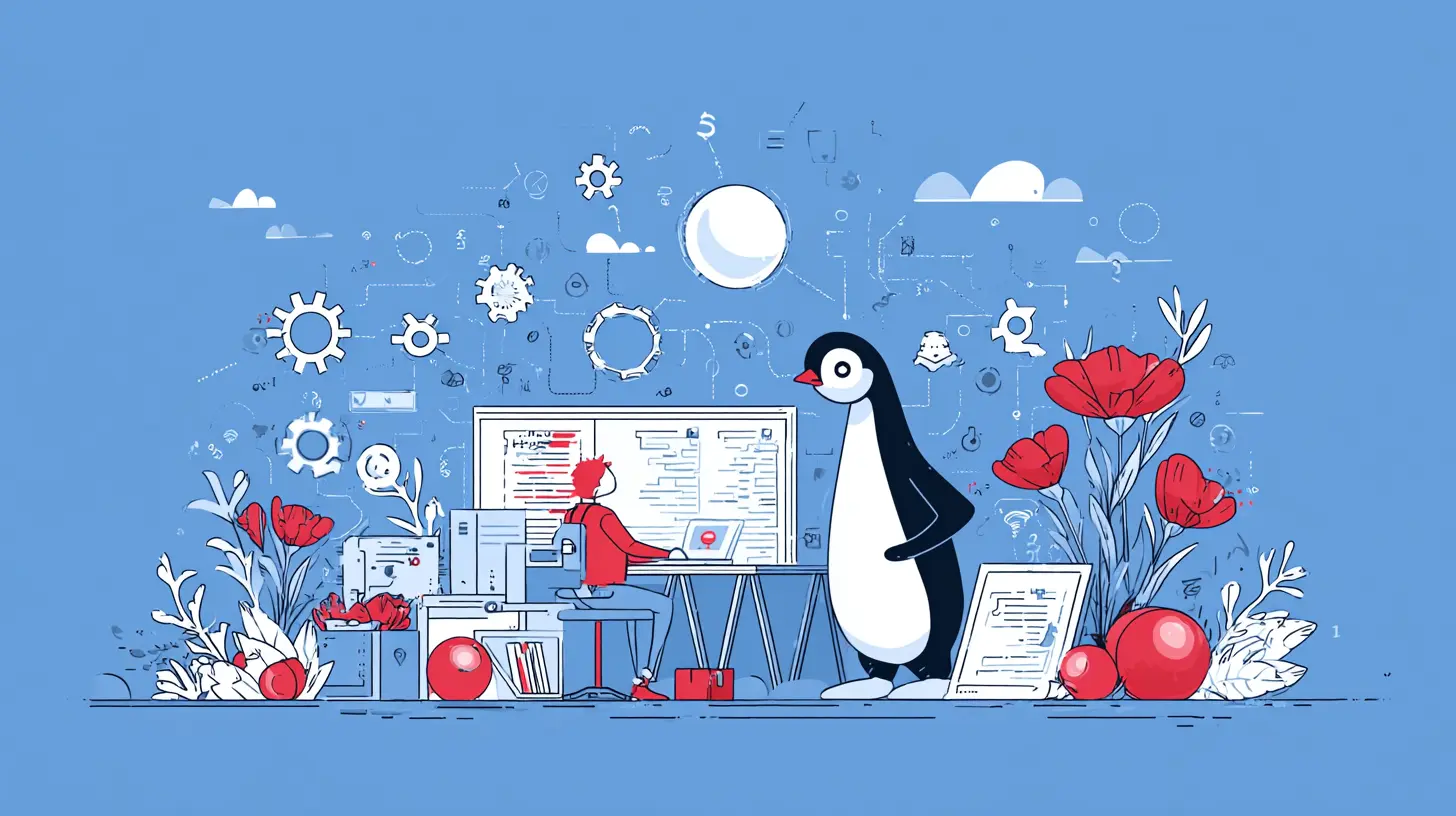
One of the least discussed aspects of open source sustainability is human sustainability. Operating system development is not glamorous work. It involves endless debugging, hardware compatibility testing, documentation writing, and handling user bug reports. Most of this work is invisible. A well-functioning OS looks effortless. The effort behind it is anything but.I have watched talented developers leave open source projects because they were exhausted. They were handling more bug reports than they could respond to. They were the only person maintaining a critical subsystem. They were dealing with entitled users who demanded features but never contributed code or money. The emotional toll is real, and it is a major factor in why some projects stagnate.
The Linux kernel has a formal process for maintainer handover and a large enough pool of contributors to absorb departures. Smaller projects like Gentoo, Void Linux, or Alpine Linux do not. If one or two key people step away, the entire distribution can enter a zombie state where it still exists but stops evolving. Alpine Linux, for instance, is critical for Docker containers, but its development pace is dictated by a very small team.
The practical advice here is simple. If you depend on a niche open source operating system for production, you need to know who the maintainers are and what their long-term commitment looks like. Check the project's mailing list archives. Look at the commit history. See if there is a clear succession plan. If the answer is vague or nonexistent, you are taking a risk.
The Economics of Distribution Maintenance
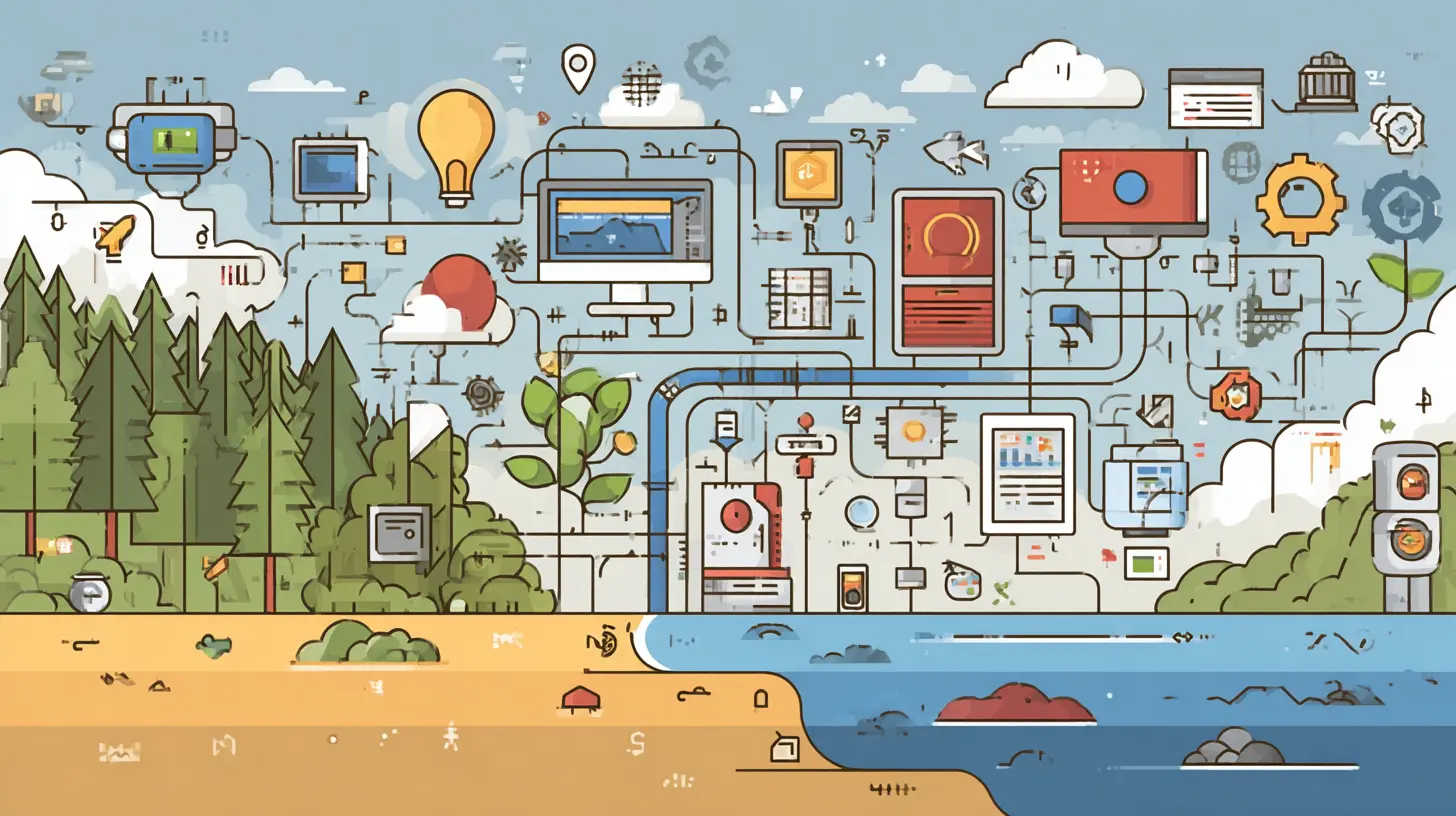
Maintaining a Linux distribution is not just about writing code. It involves packaging thousands of software components, testing them together, managing dependencies, applying security patches, and ensuring that the whole thing boots and runs reliably. This is a huge amount of work, and it is mostly invisible to end users.Canonical employs hundreds of people to do this for Ubuntu. Red Hat has thousands. The community distributions like Debian and Arch Linux rely on volunteers. The difference in quality and timeliness is noticeable. Debian's stable releases are extremely reliable, but they are also years behind the latest software versions. Arch Linux is bleeding-edge, but it breaks more often and requires more manual intervention.
There is no perfect middle ground. The resources required to maintain a distribution that is both current and stable are enormous. That is why most distributions choose a philosophy. Debian chooses stability. Arch chooses currency. Fedora chooses a middle path with rapid releases but shorter support windows. Each choice has trade-offs.
The common mistake is assuming that all Linux distributions are equally well-maintained. They are not. Some distributions have full-time security teams. Others rely on a single person checking security advisories in their spare time. If you are deploying a server, you need to know which category your distribution falls into.

Security Patches and the Long Tail
Security is where the sustainability rubber meets the road. An operating system that does not receive timely security patches is a liability. This is not hypothetical. The Heartbleed vulnerability in OpenSSL affected virtually every Linux distribution. The response time varied wildly. Red Hat had patches within hours. Some smaller distributions took weeks.The challenge is that security patching is not exciting work. It involves backporting fixes to older versions of software, testing them, and pushing updates to users. This requires infrastructure, automation, and people who understand the codebase. For a distribution that supports a five-year lifecycle, that is a lot of ongoing work.
The misconception is that open source software is inherently more secure because the code is visible. That is true in theory, but only if someone is actually looking at the code. A vulnerability in an obscure component of a niche operating system might go unnoticed for years. The Linux kernel itself has thousands of contributors, but the BSD kernels have far fewer. That does not mean BSD is less secure. It means the attack surface is different, and the response capacity is smaller.
My recommendation is to look at the distribution's security advisory page. How often do they publish advisories? How quickly do they respond to critical CVEs? If the answer is unclear, that is a red flag. For production systems, stick with distributions that have a documented security team and a track record of rapid response.
Corporate Sponsorship: The Double-Edged Sword
Corporate backing can solve funding problems, but it introduces other risks. When a company controls the direction of an open source operating system, it can steer development toward its own interests. This is not necessarily bad. Red Hat's contributions to the Linux kernel are immense. But it does mean that the community's priorities may not always align with the sponsor's.The most dramatic example is the CentOS situation. CentOS was a free, community-maintained rebuild of Red Hat Enterprise Linux. It was widely used in production because it was stable and binary-compatible with RHEL. In 2020, Red Hat announced that CentOS would shift from being a downstream rebuild to an upstream development branch called CentOS Stream. This effectively killed the traditional CentOS as a production OS.
The backlash was severe. Users who had built their infrastructure around CentOS were forced to migrate. Some moved to AlmaLinux or Rocky Linux, both of which are community forks that aim to maintain compatibility with RHEL. Others switched to Ubuntu or Debian. The lesson is that corporate sponsorship can change on a whim, and the community has no recourse.
This does not mean you should avoid corporate-backed distributions. It means you should understand the relationship. Is the distribution a direct product of the company, or is it an independent project that the company supports? Ubuntu is Canonical's product. Fedora is a community project sponsored by Red Hat, but Red Hat has significant influence. Debian is independent. Choose accordingly.
The BSD Perspective
Linux dominates the conversation, but the BSD operating systems offer a different sustainability model. FreeBSD, OpenBSD, and NetBSD are developed by smaller, more focused communities. They have permissive licenses, which means companies can take the code and use it without contributing back. This is both a strength and a weakness.The strength is that BSD code ends up in many commercial products. Apple's macOS and iOS use significant amounts of FreeBSD code. Netflix's content delivery appliances run FreeBSD. Sony's PlayStation operating system is based on FreeBSD. These companies benefit from the work of the BSD community, but they rarely contribute directly.
The weakness is that the BSD projects have less corporate funding than Linux. The FreeBSD Foundation raises money through donations and sponsorships, but it is a fraction of what Linux receives. OpenBSD is famously frugal. Its developers are known for writing clean, secure code, but they also work with limited resources.
The practical implication is that BSD systems tend to be more conservative in their feature adoption. They prioritize stability and correctness over novelty. This is fine for servers and embedded systems, but it means that desktop and laptop support is often behind Linux. If you need the latest hardware support, BSD is usually not the best choice.
The Role of Open Source Foundations
Foundations like the Linux Foundation, the FreeBSD Foundation, and the Open Source Initiative play a critical role in sustainability. They provide legal structure, manage trademarks, and sometimes fund development. But they are not magic. A foundation is only as effective as its funding and governance.The Linux Foundation is essentially a consortium of corporations. It does not develop code directly. It hosts projects and provides infrastructure. The actual development is done by employees of member companies. This model works well for large projects like the kernel, but it does little for smaller operating systems that lack corporate backing.
The FreeBSD Foundation is more hands-on. It directly funds specific development efforts, such as improving wireless networking or adding support for new ARM hardware. But its budget is limited. In 2023, the FreeBSD Foundation reported revenue of around two million dollars. That is enough to support a few developers, but not a full-scale operating system.
The lesson is that foundations are not a substitute for a sustainable community or business model. They are a support structure. The real work still has to be done by people who are either paid to do it or motivated to do it for free.
Practical Advice for Choosing an Open Source OS
If you are evaluating an open source operating system for a project, do not just look at the features. Look at the sustainability indicators.First, check the development activity. How many commits are made per month? How many unique contributors? A project with one or two active developers is fragile. A project with dozens of contributors from multiple organizations is more resilient.
Second, look at the funding. Does the project have a clear revenue source? Is it donations, corporate sponsorship, or a commercial product? If the answer is "we rely on volunteers," understand that volunteer availability can fluctuate unpredictably.
Third, evaluate the governance. Who makes decisions? Is there a benevolent dictator, a board, or a community vote? Governance matters because it determines how conflicts are resolved and how the project evolves. A project with transparent governance is easier to trust.
Fourth, consider the ecosystem. What software is packaged? What hardware is supported? What documentation exists? A sustainable operating system is not just about the kernel. It is about the entire stack of applications and tools that make it useful.
Fifth, think about your own contribution. If you depend on an open source operating system, you have a responsibility to support it. That does not necessarily mean writing code. It can mean donating money, reporting bugs, writing documentation, or simply advocating for the project. Sustainability is not a spectator sport.
Common Misconceptions
One common misconception is that open source operating systems are free to use and therefore cost nothing. This ignores the cost of maintenance, training, and support. A free OS that requires constant manual intervention can be more expensive in the long run than a paid OS with professional support.Another misconception is that community-driven projects are more democratic. In practice, many open source projects are run by a small group of core contributors who make most of the decisions. The community has influence, but not control. This is not necessarily bad, but it is worth understanding.
A third misconception is that open source operating systems are immune to vendor lock-in. They are not. If you build your infrastructure around a specific distribution's packaging system, configuration tools, or API, migrating to another distribution can be painful. The freedom to change is theoretical. The practical cost of changing can be high.
The Future of Open Source OS Sustainability
The landscape is shifting. Cloud computing and containers have changed what people expect from an operating system. Many developers no longer care about the host OS. They care about the container runtime. This has reduced the pressure on distributions to provide a polished desktop experience, but it has increased the importance of minimal, secure base images.Alpine Linux is a good example. It is tiny, secure, and widely used in Docker images. But its development team is small. If Alpine were to lose momentum, the container ecosystem would feel the impact. The same applies to CoreOS, which was acquired by Red Hat and eventually folded into Fedora CoreOS.
The rise of immutable operating systems like Fedora Silverblue, Vanilla OS, and NixOS represents a different approach to sustainability. By separating the base system from user applications and using atomic updates, these distributions reduce the maintenance burden. They also make it easier to roll back changes, which improves reliability.
But immutable systems introduce their own challenges. They require more disk space. They can be harder to debug. They break traditional assumptions about how an operating system works. Whether they are more sustainable in the long run remains to be seen.
Conclusion
The sustainability of open source operating systems is not a binary question. It is a spectrum. Some projects are well-funded and professionally maintained. Others are held together by a handful of dedicated volunteers. The key is to understand where your chosen operating system falls on that spectrum and whether its sustainability model aligns with your needs.Do not assume that because a project is popular, it is sustainable. Do not assume that because a project is open source, it will be maintained forever. Do your homework. Support the projects you depend on. And be prepared to adapt when the landscape changes.
Open source operating systems have transformed the technology industry. They are not going away. But their long-term survival depends on a combination of funding, community engagement, and realistic expectations. The sooner we stop treating sustainability as an afterthought, the better off we will all be.
all images in this post were generated using AI tools
Category:
Operating SystemsAuthor:

Kira Sanders
Discussion
rate this article
1 comments
Noah Mitchell
This article raises important points about the sustainability of open source operating systems. It's vital to consider their role in promoting innovation while also addressing environmental impacts. I'm eager to see how the community continues to evolve in this area.
July 23, 2026 at 4:35 AM
Kira Sanders
Thank you for your insights! It's encouraging to see the community actively engaging with sustainability and innovation. Let's hope for continued progress together.