The Role of Artificial Intelligence in Modern Cameras
28 October 2026
A decade ago, the phrase "AI camera" mostly meant a phone that could detect a smile or stitch a panorama. Today it means something far more consequential. Artificial intelligence has moved from being a novelty feature buried in a menu to the layer that governs autofocus, exposure, noise reduction, subject recognition, and even how a scene is interpreted before the shutter is pressed. This shift is not just a marketing story. It changes what photographers can reliably capture, what they must still control themselves, and where the technology can quietly work against them.
This article looks at how AI actually functions inside modern cameras, where it genuinely helps, where it introduces trade-offs, and how to decide when to trust it and when to switch it off. The goal is not to celebrate or dismiss AI, but to explain it well enough that you can make informed decisions with the camera in your hands.
What "AI in a Camera" Actually Means
The term gets used loosely, so it helps to separate the main categories.Computational imaging is the broadest category. It covers techniques where the camera combines multiple frames or sensor readings to produce a single image. Multi-frame noise reduction, HDR merging, and handheld night modes all fall here. Many of these methods predate modern machine learning, but AI has made them faster and more aggressive.
Machine learning for recognition is the category most people mean when they say AI. Neural networks trained on large image datasets learn to identify faces, eyes, animals, vehicles, and specific body poses. This is what powers subject-detection autofocus and scene-recognition modes.
Generative and reconstruction models are newer. These include AI upscaling, in-camera sharpening and denoising driven by trained networks, and features that fill in or reconstruct detail. This is the most controversial category because the camera is no longer just capturing light; it is making calculated guesses about what should be there.
Semantic scene analysis sits between recognition and processing. The camera classifies the scene, for example a backlit portrait or a fast-moving sport, and adjusts exposure, color, and focus strategy accordingly.
Understanding which category a feature belongs to matters. Recognition-based autofocus is largely a tool that helps you capture reality more accurately. Generative reconstruction is a tool that alters the record. Both can be useful, but they carry very different implications for anyone who cares about fidelity.
How AI Autofocus Changed Practical Photography
Subject-detection autofocus is probably the most transformative and least controversial application of AI in cameras. Older autofocus systems relied on contrast detection or phase detection across generic regions of the frame. They were fast but dumb. They did not know what a face was, so they could lock onto a high-contrast background instead of a person's eye.Modern systems use trained neural networks to locate eyes, faces, heads, and bodies, and increasingly to track animals, birds, and vehicles. The practical effect is enormous. A wildlife photographer tracking a bird in flight no longer has to keep a single focus point manually glued to a moving target. The camera recognizes the bird and holds focus on it.
Why does this work so well? Because recognition narrows the problem. Instead of asking "where in this frame should I focus," the system asks "where is the subject I have been told to prioritize." That reduces ambiguity and lets the autofocus engine commit faster.
But there are real limits worth understanding.
Detection is not the same as focus accuracy. A camera can recognize an eye and still miss critical focus if the lens cannot move fast enough, if light is too low, or if the subject is moving erratically. Recognition improves the targeting; it does not eliminate the physics.
Training data shapes behavior. A model trained heavily on human faces and common pets may perform poorly on unusual subjects. Photographers working with reptiles, insects, or abstract subjects often find that generic subject detection offers little advantage, and sometimes interferes.
Subject priority can be wrong. If two people are in frame, the camera may choose the wrong one. Most systems let you designate a priority subject, but this is a step many users skip, leading to frustration.
The practical advice here is straightforward. Learn how your camera's subject detection is configured, assign a button to toggle it, and practice switching between detection modes and traditional single-point or zone autofocus. The best photographers treat AI autofocus as a fast assistant, not an autopilot.
Scene Recognition and Exposure Decisions
Scene-recognition AI classifies what the camera is looking at and adjusts exposure, white balance, and contrast accordingly. Point a phone or a modern mirrorless camera at a sunset and it may warm the colors and protect the highlights. Point it at a backlit subject and it may lift the shadows.This is genuinely useful in fast-moving situations where you cannot meter manually. It is also where AI can quietly override your intent. A camera that decides a scene is a "portrait" may brighten faces and soften contrast in a way that undercuts a moody, low-key look you wanted. A camera that detects "snow" may brighten the frame to compensate for the meter reading, which is helpful, but it may also wash out detail you wanted to preserve.
The key insight is that scene recognition optimizes for what the model considers a good image, and that definition is statistical. It reflects the average of what most people prefer. If your creative intent diverges from the average, the AI will fight you.
Best practice: use scene recognition when speed matters and your intent is conventional. Switch to manual or semi-manual exposure when you want a specific look. Many cameras let you disable scene detection entirely or limit it to specific modes, and it is worth knowing where that setting lives.
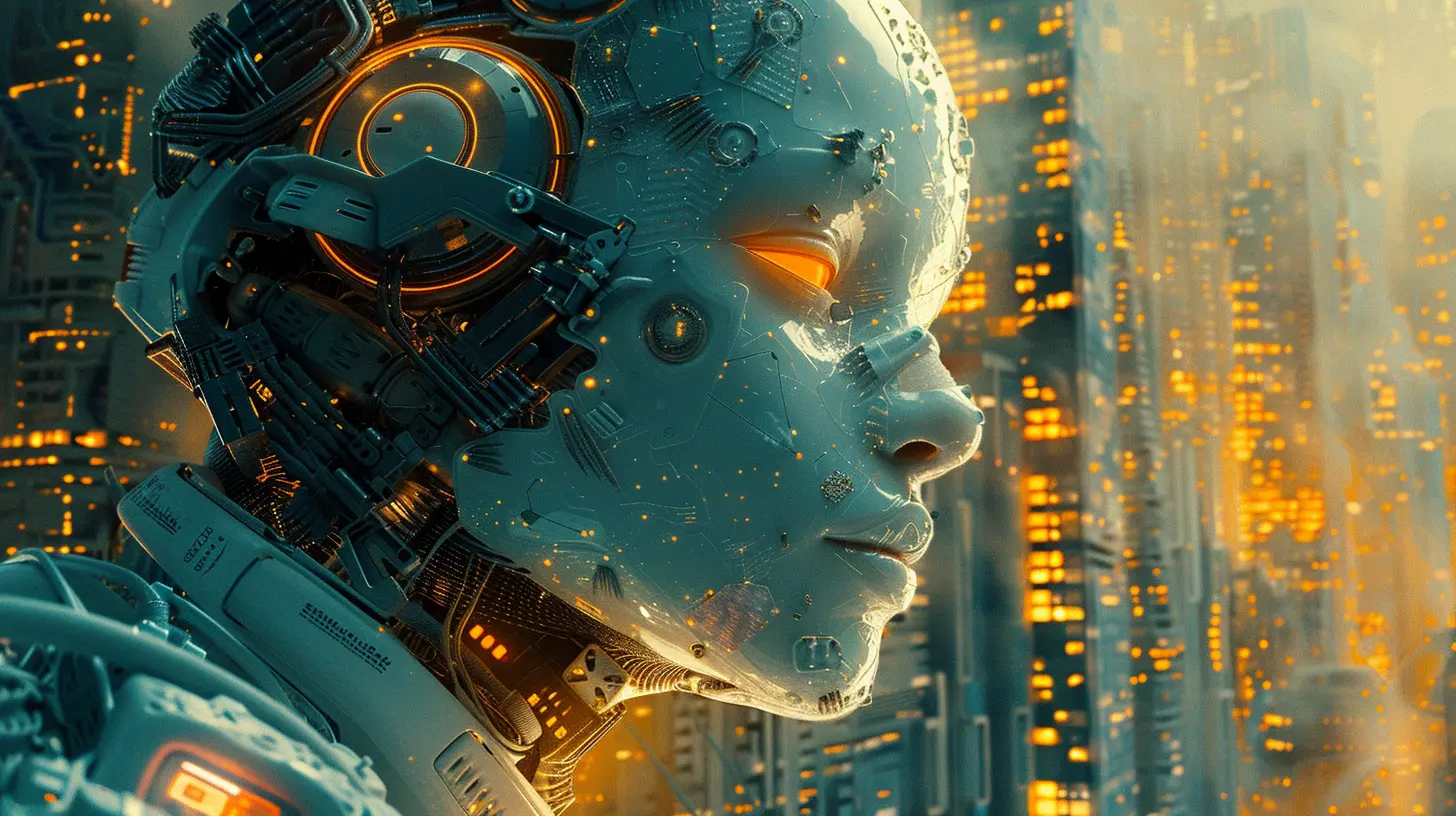
Noise Reduction, Sharpening, and the Reconstruction Question
This is where the conversation gets more nuanced and where photographers should pay the closest attention.Modern sensors, especially in phones and smaller cameras, rely heavily on computational processing. Multi-frame stacking reduces noise by combining several exposures. AI-driven denoising goes further, using trained networks to distinguish signal from noise and reconstruct detail that the sensor struggled to capture.
The results can be impressive. High-ISO images that would have been unusable a decade ago now look clean. But there is a trade-off that deserves honest treatment.
AI denoising can invent texture. When a model is trained to produce clean, detailed images, it may generate plausible-looking detail that was not actually captured. Fine patterns in fabric, foliage, or skin can be smoothed or replaced with synthetic texture. At normal viewing sizes this is often invisible. At large print sizes or under close inspection, it can matter.
Aggressive sharpening creates artifacts. Overly strong AI sharpening can produce halos around edges, crunchy-looking textures, and a plastic quality that many photographers find unpleasant.
The record is altered. For documentary, forensic, scientific, and journalistic work, any processing that reconstructs rather than records detail raises legitimate questions. Many professional contexts now require knowing whether an image was computationally altered and to what degree.
None of this means AI processing is bad. It means it is a tool with a character. For social media, event photography, and low-light casual work, the benefits usually outweigh the costs. For fine-art printing, archival documentation, or any use where evidentiary accuracy matters, you should understand what the camera is doing and consider shooting in a mode that minimizes reconstruction, such as RAW capture with processing applied later under your control.
A useful habit: shoot RAW plus JPEG when your camera supports it. The JPEG shows you what the AI pipeline produced, while the RAW file preserves the sensor data so you can process it yourself later. This gives you both the convenience and the option to reclaim control.
AI in Smartphones Versus Dedicated Cameras
The two markets use AI differently, and understanding the difference helps set expectations.Smartphones have small sensors and limited optics, so they lean heavily on computation. AI is not a bonus feature; it is essential to producing a usable image. Night modes stack many frames, AI fills in detail, and portrait modes simulate background blur using depth estimation. The results can be excellent, but they are fundamentally synthetic in ways that dedicated cameras usually are not.
Dedicated cameras have larger sensors and better optics, so they need less reconstruction. Their AI tends to focus on autofocus, subject recognition, and convenience features rather than wholesale image synthesis. This is changing as manufacturers add more computational features, but the philosophy differs. A dedicated camera is still primarily a light-recording device. A phone is increasingly an image-generation device that happens to start with a photograph.
Neither approach is inherently superior. A phone will often produce a more pleasing image straight out of camera in difficult conditions because its AI is tuned aggressively for that. A dedicated camera gives you more control and more honest data, which matters when you intend to process the image yourself or need fidelity.
Common Misconceptions Worth Correcting
Several ideas about AI cameras circulate widely and are worth addressing directly."AI makes the camera smart enough that skill does not matter." This is false. AI automates specific tasks, but composition, timing, light management, and understanding your subject remain human skills. A camera that tracks a subject perfectly still cannot tell you whether the moment is worth capturing.
"AI autofocus means I never miss focus." Recognition improves hit rates but does not guarantee them. Low light, low contrast, fast motion, and cluttered scenes all degrade performance. Photographers who understand their autofocus system's weaknesses still outperform those who trust it blindly.
"AI processing is just a filter." Filters apply uniform transformations. AI processing makes decisions based on content. That is a meaningful difference, especially for anyone concerned with accuracy.
"Turning AI off gives you a pure image." Even with AI features disabled, every digital camera applies some processing. The question is not whether processing happens but how much and under whose control. RAW capture is the closest thing to a neutral starting point, and even that involves some interpretation by the sensor and firmware.
When to Trust AI and When to Take Control
A practical framework helps more than abstract debate.Trust AI when: conditions are changing fast, your subject is one the model recognizes well, you need speed over precision, and the output is for casual or time-sensitive use. Event photography, family photos, travel snapshots, and wildlife action are good candidates.
Take control when: you need a specific creative look, the scene is unusual in ways the model may misread, accuracy matters, or you plan to print large or process heavily. Studio work, landscape photography with careful exposure blending, documentary work, and any situation where the camera's interpretation conflicts with your intent all call for manual intervention.
Always know your off switches. The most valuable thing you can do is learn where subject detection, scene recognition, and computational processing can be disabled or limited. A photographer who knows how to turn features off is far more capable than one who only knows how to turn them on.
Practical Recommendations Before You Buy
If you are choosing a camera and AI features are part of your decision, consider these points.Look beyond the feature list. A camera that advertises animal eye detection may perform well on dogs and poorly on birds, or vice versa. Reviews that test real scenarios are more useful than spec sheets.
Check whether the camera lets you customize how AI features behave. Can you assign subject detection to a button? Can you limit which subjects it recognizes? Can you disable computational processing while keeping autofocus assistance? Flexibility matters more than raw capability.
Consider firmware support. Some manufacturers improve AI features significantly through updates. A camera with a strong update history is often a better long-term investment than one with a longer feature list at launch.
Think about your workflow. If you process RAW files, the camera's AI processing matters less because you will override much of it. If you shoot JPEG and share directly, the out-of-camera AI pipeline matters a great deal.
The Bottom Line
Artificial intelligence has made modern cameras more capable in ways that are genuinely useful. Subject-detection autofocus alone has expanded what many photographers can capture. Computational processing has made low-light photography far more accessible. These are real gains, not hype.At the same time, AI introduces a layer between you and the scene. It makes decisions, and those decisions reflect statistical averages rather than your intent. The photographers who get the most from modern cameras are those who understand what the AI is doing, use it where it helps, and take control where it does not. That is not a rejection of the technology. It is the mature way to use it.
The camera is still a tool. AI makes it a more powerful one, and like any powerful tool, it rewards the person who knows when to use it and when to set it aside.
all images in this post were generated using AI tools
Category:
Camera GearAuthor:
Kira Sanders