The Role of AI in Improving Touchscreen Interactions
14 May 2026
Let’s face it—our lives revolve around screens. Whether you’re navigating your phone, tapping your tablet, or working on a touchscreen laptop, we're practically glued to these glass surfaces. But have you ever stopped to think about how smart your screen actually is? I mean, really smart. That's where artificial intelligence (AI) steps in and starts turning magic into reality.
In this article, we're diving deep into how AI is revolutionizing touchscreen interactions. From more accurate responses to predictive gestures and personalized experiences, AI is not just behind the curtain—it’s running the whole show.
The Frustration With Touchscreens—And Why AI Is the Fix
We’ve all been there. You tap an app and nothing happens. You swipe up, and your screen stubbornly stares back like it’s stuck in quicksand. Touchscreens have come a long way, but they’re still not perfect.The truth is, touchscreens lack context. They don’t always know what you meant to do, especially when your finger slips, you're wearing gloves, or you’re dealing with a greasy screen from a late-night pizza binge. That’s where AI shows its superpower—understanding intent.
So, What Exactly Does AI Do for Touchscreens?
Let’s break it down. AI isn’t some vague magical force—it’s a combination of algorithms and machine learning trained to make sense of human behavior. When applied to touchscreens, it changes the game in several amazing ways:1. Predictive Touch Recognition
Ever notice how your phone sometimes autocorrects a gesture before you even complete it? That’s not a fluke—that’s AI predicting your next move.AI models learn from your habits. If you often open Instagram after unlocking your phone, AI can pre-load it. If your tapping is a little off-center due to a cracked screen or chubby thumbs (no judgment), AI adjusts for that. It starts to think how you think.
2. Smarter Gesture Interpretation
AI doesn't just look at where you touched—it looks at how you touched. Was it a flick, a press, a swipe, or a two-finger twist? AI studies pressure, speed, and even angle to determine your intent.Think about gaming! AI-enhanced touchscreens can translate subtle finger movements into complex in-game actions. That’s the kind of accuracy that wins battles and tops scoreboards.
3. Noise and Error Reduction
Let’s say you accidentally palm your screen while watching videos. Classic move. AI can differentiate between intentional and accidental inputs. It basically cleans up all the "noise" so your touchscreen only reacts to the real stuff.This kind of context-aware intelligence is why modern phones don’t go haywire every time you put them in your pocket or brush them against your sleeve.
4. Multi-Touch Mastery
Handling a single touch is one thing, but dealing with all ten fingers at once? That’s a circus without AI. Advanced AI lets devices interpret simultaneous multi-touch inputs, making multi-user interactions and complex gestures feel natural and smooth.It’s what makes pinch-to-zoom and three-finger swipes buttery smooth instead of a laggy nightmare.
5. Adaptive User Interfaces
AI doesn’t stop at recognizing touch—it also adapts the interface based on your behavior. If you tend to miss the reply button in your messaging app, AI nudges it slightly or enlarges it for better reach.Imagine a touchscreen that evolves with you, learning your rhythm, your quirks, and your preferences. That’s next-level personalization.
Where AI Meets Touch: Real-World Applications
Let’s look at some real-world places where AI and touchscreens are creating that wow factor.Smartphones – The Obvious Starting Point
Most modern smartphones already have AI baked into their operating systems. From smoother scrolling to intelligent autocorrect and predictive text, your phone has a mini-AI lurking inside, watching how you touch and learning from you every day.Google’s Pixel phones use AI to improve touchscreen responsiveness and performance dynamically, especially during gaming or heavy usage. Apple’s iPhones also integrate machine learning to prevent ghost touches and improve Face ID interactions.
Automotive Touchscreens – Because Safety Matters
Touchscreens in cars? Cool. Distracting? Totally. But AI is coming to the rescue.By using AI to predict driver behavior and adapt controls accordingly, touchscreen interfaces in vehicles are becoming safer and more intuitive. Some systems even learn your temperature preferences and music habits during certain drives, adjusting them automatically. Talk about a co-pilot!
Public Kiosks and ATMs – Bye-Bye, Laggy Screens
Who hasn’t stabbed at a slow touchscreen kiosk while trying to buy movie tickets? AI helps these systems adjust sensitivity in real-time, compensate for user error, and even detect false touches from raindrops or sleeves.Some high-tech ATMs are now using AI to track how users typically interact with the screen—helping to speed up transactions and enhance accessibility for impaired users.
Medical Devices – Touch Precision That Saves Lives
In high-stakes environments like hospitals, touchscreens must be crisp and responsive. AI ensures spot-on touch accuracy, even when medical staff are wearing gloves or using styluses. It also helps prevent accidental touches from cables or foreign objects, which is crucial in operating rooms or ambulances.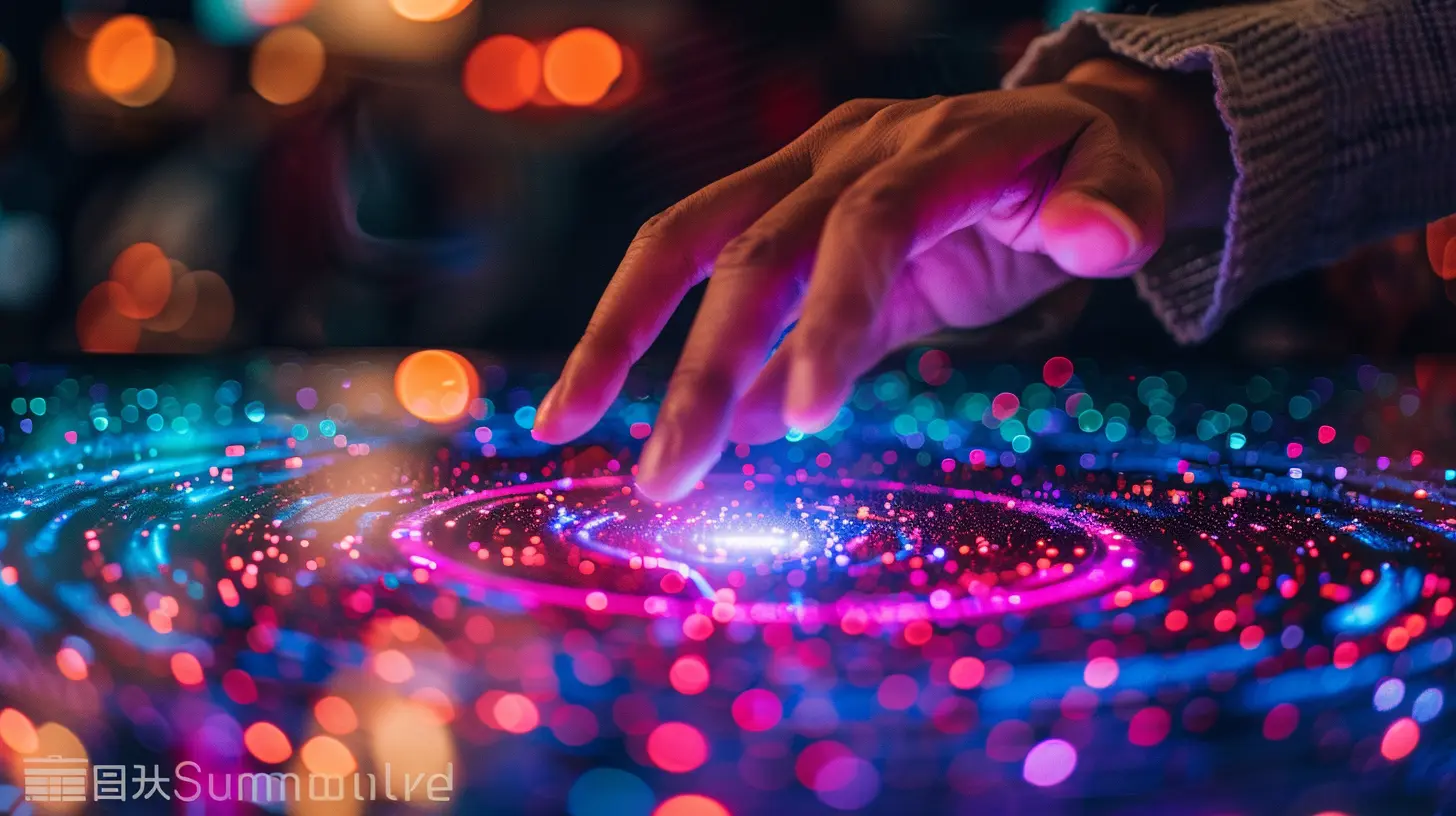
The AI-Powered Touchscreen Experience: What's Under the Hood?
Alright, let’s get a bit technical—just a smidge, I promise.Machine Learning Models
At the core of AI-enhanced touch responsiveness are machine learning (ML) models. These models get fed thousands—sometimes millions—of touch interactions. Over time, they learn which gestures are intentional, which aren’t, and how different users behave on a screen.It’s like the touchscreen is being trained to "read your mind" based on your fingers.
Sensor Fusion
AI also taps into sensor fusion—that’s tech speak for combining data from various sensors like accelerometers, gyroscopes, and proximity sensors. So now your device doesn’t just feel your touch—it senses your movement, posture, and how you’re holding the device.This leads to incredibly nuanced touch interpretations and zero-lag feedback.
Edge AI Processing
Rather than sending all your touches to the cloud for analysis (which would cause lag), many devices are using edge AI chips. These are specialized processors that handle AI computations on the device itself for lightning-fast responses.Apple’s Neural Engine and Google’s Tensor chip are perfect examples of edge AI making real-time touch decisions fast and fluid.
The Future of AI in Touchscreen Tech
We’re not stopping here. The future looks even more mind-blowing.Emotion-Sensitive Touchscreens
Imagine a screen that can tell when you're angry, distracted, or tired—just by how you touch it. AI is already being trained to detect emotional states via touch pressure, speed, and grip. This could lead to interfaces that adjust based on your mood. Feeling rushed? Your device simplifies your screen layout.Context-Aware Input
We’re heading toward truly context-aware systems, where your environment, mood, and activity all inform how your touchscreen behaves. At the gym? Your phone might auto-enlarge buttons. At night? Touch sensitivity may lower to prevent accidental presses in bed.Mixed Reality and AI Touch Integration
With AR and VR rising fast, touchscreens aren't going to remain flat. Holo-screens and virtual touch panels will become more mainstream—and you guessed it, AI will be vital in interpreting gestures in mid-air, predicting interactions, and ensuring precision in 3D space.
The Challenges Ahead (Because It's Not All Rainbows)
No tech advancement comes without its hurdles.- Privacy Concerns: AI requires data. Specifically, it learns from your behavior. While local processing helps, users and developers must ensure transparency and security.
- Standardization Issues: Different devices use different AI models for touch. This leads to inconsistent experiences across platforms.
- Hardware Limitations: Not all devices can support on-device AI due to chip or RAM constraints—meaning affordable devices may lag behind.
Even so, these are bumps—not brick walls—and researchers are already tackling many of these issues head-on.
Wrapping It All Up
Touchscreen tech has come a long way, but with AI, it's entering a whole new dimension. We're moving from basic tap-and-swipe to intelligent, intuitive, and personalized interactions. AI isn't just an upgrade—it’s the brain that makes your screen truly smart.So the next time your phone reacts faster than your thoughts, or your tablet knows what app you need before you do, remember—it’s not reading your mind. It’s just powered by some seriously clever AI.
And this, my friend, is just the beginning.
all images in this post were generated using AI tools
Category:
Touchscreen DevicesAuthor:

Kira Sanders
Discussion
rate this article
2 comments
Merida Spencer
Finally, AI can help my fingers stop playing hide and seek with my touchscreen... just tap already!
June 14, 2026 at 12:20 PM
Kira Sanders
I totally get that! AI can really bridge the gap between intention and action on touchscreens. Here's to smoother interactions ahead!
Chloe Kirkpatrick
This article highlights an exciting frontier in technology. As AI enhances touchscreen interactions, we're not just seeing improvements in usability but also in accessibility. It's inspiring to think about how these advancements can make devices more intuitive, opening doors for everyone to engage with technology seamlessly.
May 20, 2026 at 4:44 AM
Kira Sanders
Thank you for your thoughtful comment! I'm glad you found the potential for AI in enhancing usability and accessibility exciting. It's an important step toward making technology more inclusive for everyone.