The Global Race for Semiconductor Independence
4 August 2026
There is a quiet anxiety that has settled over the technology industry. It is not about the next iPhone feature or the latest AI model. It is about something far more fundamental: the physical ability to make the chips that power everything. For decades, the semiconductor supply chain was a model of global efficiency. Design happened in the United States, manufacturing concentrated in Taiwan and South Korea, materials came from Japan, and equipment came from Europe. It worked. It was cheap. And it was fragile.
That fragility became undeniable in 2021 when a drought in Taiwan threatened water supplies for TSMC's fabs. Then came the pandemic-driven demand surge, the automotive chip shortage, and the geopolitical escalation around the island of Taiwan. Suddenly, governments realized that a single point of failure in the East China Sea could halt the world's economy. The response has been a frantic, expensive, and deeply complicated race for semiconductor independence. But independence is a misleading word. No country can truly make a chip entirely on its own. What nations are actually pursuing is resilience, leverage, and a seat at the table. Understanding the difference between those goals and the reality of the supply chain is the first step to making sense of this global scramble.
Why the Supply Chain Became So Concentrated
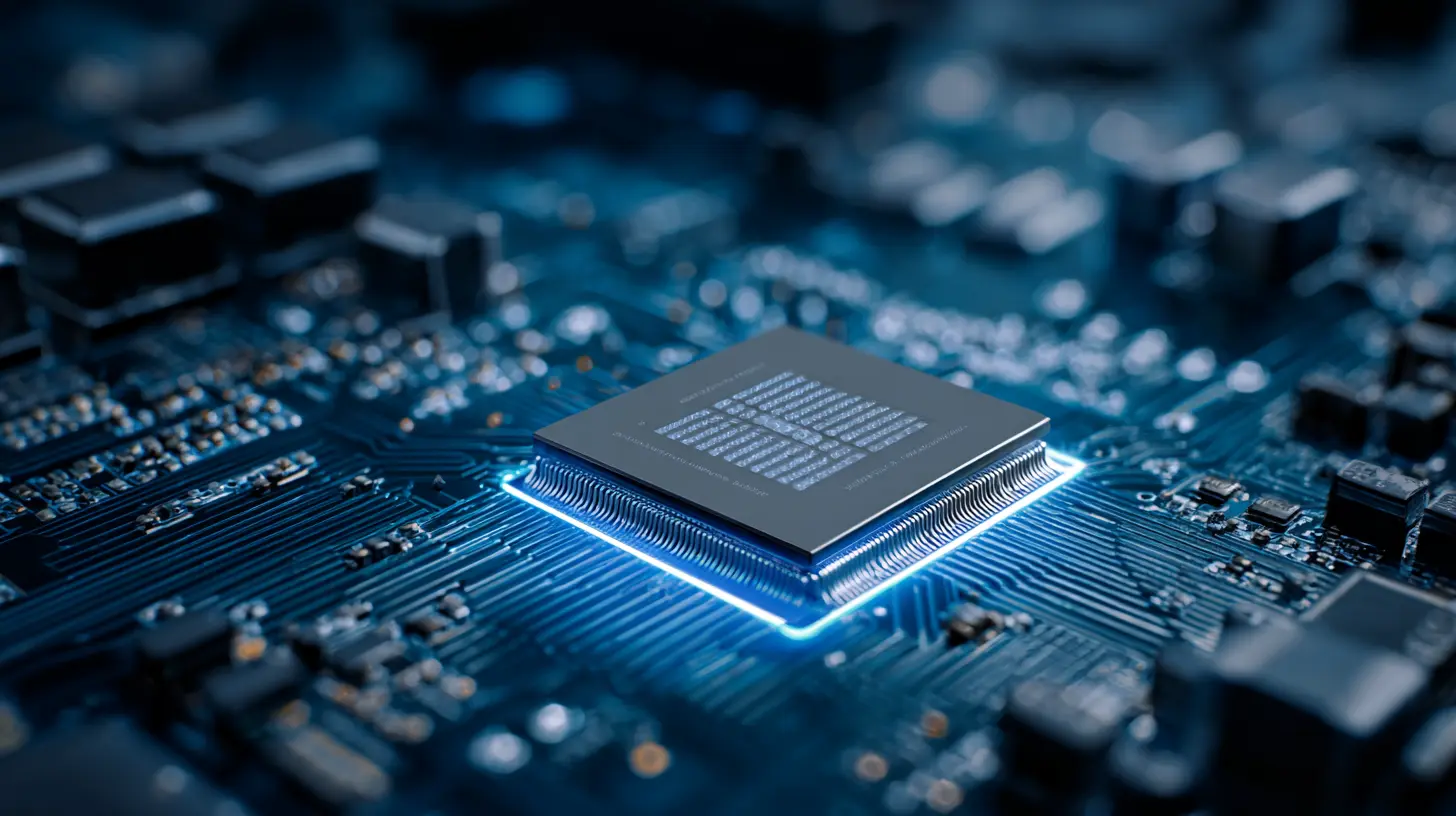
To understand why we are in this mess, you have to understand how we got here. Chips are not made in a day. A modern logic chip, like the ones in your phone or data center, goes through over a thousand process steps over a span of three to four months. Each step requires precision measured in atoms. The capital cost is staggering. A leading-edge fab, like TSMC's N3 plant, costs upwards of twenty billion dollars to build. That is not a typo. Twenty billion dollars for one building.For decades, only a handful of companies could justify that expense. TSMC pioneered the pure-play foundry model, meaning they did not design chips themselves. They just made them for other people. This was a brilliant business decision because it allowed them to aggregate demand from hundreds of clients. Apple, AMD, Nvidia, Qualcomm all became customers. By sharing the cost of the fab across so many clients, TSMC could afford to invest in the next generation of equipment while everyone else fell behind.
The economics of scale created a virtuous cycle. More clients meant more revenue, which meant more R&D, which meant better technology, which attracted more clients. By 2020, TSMC produced over 90 percent of the world's most advanced chips. Samsung was the only other player in the same league, and even they lagged in yield rates. This concentration was not a conspiracy. It was a natural outcome of an industry where the cost of entry is measured in tens of billions and the time to catch up is measured in decades.
But the same economics that made TSMC so successful also created a systemic risk. If Taiwan Strait shipping lanes were disrupted, the world would lose access to nearly all advanced logic chips within weeks. There is no spare capacity anywhere else. The United States, Europe, Japan, and China all woke up to this reality around the same time. And they all started writing checks.
The United States: The CHIPS Act and the Limits of Money
The United States has the strongest hand in chip design. Nvidia, AMD, Intel, Qualcomm, Apple, and Broadcom all design world-class chips. But they rely on foreign foundries for manufacturing. The CHIPS and Science Act, passed in 2022, allocated fifty-two billion dollars in subsidies for domestic semiconductor manufacturing and research. That sounds like a lot. In the context of this industry, it is a down payment.The first problem is that building a fab takes time. TSMC broke ground on its Arizona fab in 2021, originally planning to start production in 2024. That timeline has slipped to 2025 or later. Intel is building new fabs in Ohio and Arizona, but they have faced their own yield issues and leadership turmoil. The reality is that even with unlimited money, you cannot compress the learning curve. You need experienced engineers, and there are not enough of them in the United States. The country has a shortage of semiconductor process engineers, lithography specialists, and chemical experts. The universities are graduating far fewer than the industry needs.
The second problem is that the CHIPS Act focuses on leading-edge logic, but the supply chain is much broader. Advanced packaging, memory, and substrates are equally critical. The United States has almost no advanced packaging capacity. TSMC's CoWoS packaging, which is essential for AI accelerators like Nvidia's H100, is done almost entirely in Taiwan. The United States is trying to build a packaging ecosystem, but it is starting from nearly zero.
The third problem is cost. Operating a fab in the United States is significantly more expensive than in Taiwan. Construction costs are higher, labor is more expensive, and the regulatory environment is stricter. TSMC has acknowledged that its Arizona fabs will not be as profitable as its Taiwan fabs. The government subsidies help, but they do not close the gap entirely. Companies will only build fabs in the United States if they have guaranteed customers. And those customers will only pay higher prices if they have no alternative. This is a chicken-and-egg problem that the CHIPS Act tries to solve with demand-side incentives, but the results are still uncertain.
The most common mistake people make is assuming that the CHIPS Act will make the United States self-sufficient. It will not. It will reduce dependence on Taiwan for leading-edge logic, but it will not eliminate it. By 2030, the United States will likely produce about 20 percent of the world's leading-edge chips, up from zero today. That is a massive improvement, but it is not independence. It is redundancy.

The European Union: The Chips Act and the Ambition Gap
The European Union passed its own European Chips Act in 2023, aiming to double its global market share from 10 percent to 20 percent by 2030. That is an ambitious goal, but the EU faces a different set of challenges than the United States. Europe has no leading-edge chip designers of the scale of Nvidia or Apple. It has Infineon, STMicroelectronics, and NXP, which are strong in automotive and industrial chips, but these are not leading-edge logic. They are mature-node chips, often using 28-nanometer or larger geometries.The EU's strength is in equipment. ASML, based in the Netherlands, is the sole producer of extreme ultraviolet lithography machines, which are essential for making the most advanced chips. This gives Europe enormous leverage. Without ASML, no one can make a leading-edge chip. But ASML is a supplier, not a manufacturer. The EU cannot rely on ASML alone to build a domestic semiconductor ecosystem.
The EU Chips Act is also constrained by state aid rules. The bloc is wary of subsidizing individual companies too heavily, for fear of distorting competition. This creates a tension. To attract a fab from TSMC or Intel, the EU must offer subsidies comparable to those in the United States or Asia. But the political appetite for that kind of spending is limited, especially in countries like Germany and France that have their own fiscal constraints.
Intel has committed to building a massive fab complex in Magdeburg, Germany, but the project has faced delays due to rising construction costs and a weaker-than-expected demand outlook. The EU's real opportunity may lie in the automotive sector. European carmakers need a steady supply of mature-node chips, and they are increasingly willing to pay a premium for chips made in Europe. If the EU can build a reliable, high-quality mature-node ecosystem, it does not need to compete with TSMC on the leading edge. It can own the automotive and industrial niche.
The trade-off here is between ambition and pragmatism. The EU wants to be a player in advanced chips, but its comparative advantage is in equipment and specialized applications. Trying to replicate the TSMC model would be a waste of money. Instead, the EU should focus on what it does well: precision manufacturing, automotive-grade reliability, and equipment innovation. That is a more realistic path to resilience.
China: The Long March to Self-Reliance
China is the most aggressive player in this race, not because it wants to be, but because it has to be. US export controls, imposed in 2022 and tightened in 2023, restrict China's access to advanced chipmaking equipment, including ASML's EUV machines and even some DUV machines. This has forced China to develop its own semiconductor ecosystem, from scratch, under extreme pressure.China's domestic champion is SMIC, which has made remarkable progress. In 2023, SMIC produced a 7-nanometer chip for Huawei's Mate 60 phone, using older DUV equipment and a technique called multi-patterning. This was a significant achievement, but it comes with severe trade-offs. Multi-patterning is slower and more expensive. The yield rates are lower, and the power consumption of those chips is higher than a comparable TSMC chip. In other words, China can make advanced chips, but not at scale, not at cost, and not with the same efficiency.
China's approach is not purely technological. It is also strategic. The government has poured billions into domestic equipment makers like SMEE, which is trying to build its own lithography machines. But SMEE's best DUV machine is still several generations behind ASML. The gap is not just in technology; it is in the entire ecosystem. ASML's machines rely on thousands of suppliers across Europe, the United States, and Japan. China does not have that ecosystem, and building it will take decades.
There is also the question of talent. China has a large pool of engineers, but the best ones often prefer to work in software or finance, where the pay is better and the work is less risky. Semiconductor manufacturing is hard, unglamorous, and capital-intensive. The Chinese government is trying to change that perception, but it is an uphill battle.
The common misconception is that China is on the verge of catching up. That is not accurate. China is perhaps five to seven years behind TSMC in leading-edge logic, and that gap is not closing. What China is doing is building a parallel ecosystem that is good enough for its domestic market. That is not independence in the global sense, but it is independence from US sanctions. For China, that is the goal. They do not need to beat TSMC. They need to survive without it.
Japan and South Korea: The Quiet Powerhouses
Japan and South Korea are often overlooked in this race, but they are critical players. Japan has a deep history in semiconductors. In the 1980s, Japan was the world's largest chip producer. It lost that lead to South Korea and Taiwan, but it retained a strong position in materials and equipment. Japanese companies like Tokyo Electron, Shin-Etsu, and JSR supply the chemicals, wafers, and photoresists that are essential for chipmaking. Without Japanese materials, no fab in the world can operate.Japan is now trying to rebuild its manufacturing base. The government has partnered with TSMC to build a fab in Kumamoto, which started production in 2024. This is a smart move. Japan does not have the design expertise of the United States, but it has the materials, the equipment, and a disciplined manufacturing culture. By hosting TSMC, Japan gets access to leading-edge technology while keeping its supply chain close to home.
South Korea is in a different position. Samsung is the only company outside Taiwan that can make leading-edge logic chips. But Samsung has struggled with yield rates on its most advanced nodes, losing customers like Nvidia and Qualcomm to TSMC. South Korea's real strength is memory. Samsung and SK Hynix control over 70 percent of the global DRAM and NAND market. Memory is just as critical as logic, especially for AI and data centers. Without memory, no chip can function.
South Korea's challenge is that it is caught between the United States and China. It relies on China for both manufacturing and sales. Samsung has a massive fab in Xi'an, and China is a huge market for South Korean memory chips. The US pressure to restrict exports to China puts South Korea in a difficult position. The country is trying to balance its security alliance with the United States and its economic dependence on China. That balancing act is becoming harder every year.
The Real Problem: Advanced Packaging and the Hidden Bottleneck
Most of the public debate focuses on lithography and process nodes. But the real bottleneck in the next decade will be advanced packaging. As Moore's Law slows down, chipmakers are turning to chiplets and 3D stacking to improve performance. This means taking multiple smaller dies and packaging them together into a single module. This is not a simple assembly process. It requires extreme precision, thermal management, and new materials.TSMC's CoWoS packaging is the gold standard. It is used for Nvidia's H100 and A100 AI accelerators. The demand for CoWoS has exploded, and TSMC cannot build enough of it. The company is expanding its packaging capacity in Taiwan, but it is also building a new packaging facility in the United States. The problem is that advanced packaging is even more concentrated than logic manufacturing. TSMC controls over 60 percent of the advanced packaging market. Intel and Samsung are trying to catch up, but they are years behind.
For countries pursuing semiconductor independence, packaging is often an afterthought. The CHIPS Act in the United States includes some funding for packaging, but it is a small fraction of the total. This is a mistake. You can have the best logic chips in the world, but if you cannot package them, you cannot use them. The race for independence is not just about fabs. It is about the entire ecosystem, including materials, equipment, packaging, and testing.
Common Mistakes and Misconceptions
The biggest misconception is that building a fab is the hardest part. It is not. The hardest part is building the ecosystem around it. A fab is useless without a steady supply of ultra-pure chemicals, specialty gases, photoresists, and precision equipment. It is useless without experienced engineers who understand the physics of lithography and the chemistry of etching. It is useless without a supply chain that can deliver spare parts within hours, not weeks.Another misconception is that government subsidies can solve the problem. They cannot. Subsidies can lower the cost of capital, but they cannot create demand. If a company builds a fab and no one buys its chips, the fab becomes a stranded asset. The United States and Europe are trying to create demand through government procurement and security-of-supply agreements, but this is a slow process. The private sector moves faster than the public sector, and the government cannot force companies to buy more expensive domestic chips if they can get cheaper ones from Taiwan.
A third mistake is assuming that independence means doing everything domestically. That is neither feasible nor desirable. The semiconductor supply chain is global for a reason. Each region has a comparative advantage. The goal should be to reduce critical dependencies, not to eliminate them. For example, the United States does not need to make its own lithography machines. It needs to ensure that ASML is not controlled by a hostile power. That is a diplomatic and security issue, not a manufacturing issue.
What Should Countries Actually Do?
The answer is not to build a parallel universe of fabs. It is to build resilience through diversification and stockpiling. Countries should identify the top ten critical dependencies in their semiconductor supply chain and work to create at least two alternative sources for each. This is not glamorous, but it is effective.For the United States, the priority should be advanced packaging and mature-node capacity. The leading-edge logic is important, but the country already has a strong design base. The real vulnerability is in packaging and in the production of older chips used in cars, medical devices, and defense systems. These chips are not sexy, but they are essential.
For Europe, the priority should be automotive-grade chips and equipment. Europe does not need to compete with TSMC. It needs to secure its industrial base. That means investing in mature-node fabs that can produce reliable, high-quality chips for cars and industrial machinery.
For Japan, the priority should be materials and equipment. Japan is already the leader in this area, but it needs to deepen its moat. The government should support R&D in next-generation materials, such as gallium nitride and silicon carbide, which are essential for power electronics.
For South Korea, the priority should be memory and packaging. The country has a strong position in memory, but it needs to diversify its customer base and reduce its dependence on China. It should also invest heavily in advanced packaging, which is a natural extension of its memory expertise.
The Human Cost and the Way Forward
There is a human dimension to this race that is often ignored. Building a semiconductor ecosystem requires a skilled workforce. The United States and Europe are facing a severe shortage of semiconductor engineers. The average age of a process engineer in the United States is over fifty. The universities are not graduating enough replacements. This is not a problem that money can solve overnight. It requires a long-term investment in education, apprenticeships, and immigration.There is also a geopolitical risk. The race for semiconductor independence is not just an economic competition. It is a security competition. The United States and its allies are trying to contain China's technological rise. China is trying to break free from that containment. This dynamic will not be resolved by market forces alone. It will require diplomatic engagement, export control coordination, and a recognition that total decoupling is impossible and undesirable.
The world is not heading toward semiconductor independence. It is heading toward semiconductor interdependence, but with more redundancy and more resilience. That is a good thing. A system with multiple centers of production is more stable than a system with one dominant player. But building that system will take decades, hundreds of billions of dollars, and a level of international cooperation that is currently in short supply.
The race is not a sprint. It is a marathon. And the countries that succeed will be the ones that understand that independence is not about doing everything alone. It is about having the ability to act even when others cannot. That is a subtle but crucial distinction. The winners will not be the ones with the most fabs. They will be the ones with the most options.
all images in this post were generated using AI tools
Category:
Tech PolicyAuthor:

Kira Sanders
Discussion
rate this article
1 comments
Megan Blevins
This article highlights a crucial shift in the semiconductor industry. It's important to consider how nations are investing in local manufacturing to reduce reliance on imports. Watching how this race unfolds will be fascinating and essential for future tech developments.
August 9, 2026 at 4:00 AM
Kira Sanders
Thanks for your insights! The shift towards local manufacturing is indeed a game changer for the tech landscape. It'll be interesting to see how this unfolds.