Everything You Need to Know About Blockchain in 2026
26 April 2026
Welcome, friend. Pull up a chair, grab your favorite beverage, and let’s talk about something that’s been quietly reshaping the world while you weren’t looking. You’ve heard the buzzwords—crypto, NFTs, Web3—but 2026 is the year blockchain finally grows up. No more hype trains, no more get-rich-quick schemes. This is the year the technology sheds its awkward teenage phase and becomes the invisible backbone of how we trust, trade, and transact. Ready? Let’s dive in.

What Is Blockchain? (A Quick Refresher for 2026)
Imagine a giant, shared notebook that everyone in the world can see, but nobody can tear pages out of. Every time someone writes something new—say, a transaction, a contract, or a vote—the entire page gets locked, stamped with a unique code, and chained to the page before it. That’s blockchain. It’s a digital ledger, but not the boring kind your accountant uses. It’s decentralized (no single boss), immutable (can’t be altered), and transparent (anyone can verify).In 2026, this “notebook” has become smarter, faster, and more energy-efficient than ever. We’re talking about blockchains that process thousands of transactions per second—faster than Visa—while using less electricity than a coffee shop. Think of it as the internet of trust, where middlemen like banks, lawyers, and notaries are becoming optional. Sound scary? It’s actually liberating.

Why 2026 Is the Tipping Point for Blockchain
You might be thinking, “Didn’t we hear this back in 2021?” Fair point. The crypto winter of 2022–2023 was brutal. Hype collapsed, scams were exposed, and many wrote blockchain off as a fad. But here’s the thing: every major technology has a “trough of disillusionment” before it becomes mainstream. The internet had the dot-com crash. Blockchain had its own hangover. Now, in 2026, the hangover is over, and the real work has begun.What changed? Three things: regulation, scalability, and real-world use cases. Governments finally stopped panicking and started building clear rules. Developers solved the “scalability trilemma” (security, decentralization, speed—you can have all three now). And companies like Walmart, FedEx, and even your local hospital are using blockchain for things that actually matter, like tracking food safety or securing medical records. It’s no longer about trading JPEGs of monkeys. It’s about making systems work better.

How Blockchain Works in 2026: The Nuts and Bolts
Let’s get a little technical, but I promise to keep it painless. In 2026, most blockchains use a consensus mechanism called Proof-of-Stake (PoS), not the old energy-guzzling Proof-of-Work (PoW) that Bitcoin used. Think of PoS like a lottery: you “stake” some of your digital coins as collateral, and if you’re chosen to validate a block of transactions, you earn a reward. If you cheat, you lose your stake. It’s faster, greener, and more democratic.Then there are “Layer 2” solutions—think of them as express lanes on a highway. They bundle thousands of transactions off the main blockchain and only record the final result. This means fees are pennies, not dollars. And “sharding” (splitting the network into smaller pieces) has become standard. In 2026, you can send money across the world in seconds for a fraction of a cent. The “waiting for confirmations” days are over.

Blockchain in Finance: Beyond Bitcoin
Let’s talk about the elephant in the room: money. Bitcoin is still around, but it’s now seen as “digital gold”—a store of value, not a payment method. The real action in 2026 is in decentralized finance (DeFi). Imagine a bank that lives entirely on code, with no tellers, no loan officers, and no 9-to-5 hours. You can lend your digital dollars and earn 5% interest instantly. Or borrow against your crypto without a credit check. Or trade stocks, bonds, and even real estate tokens 24/7 from your phone.But here’s the kicker: central banks have joined the party. Over 80 countries now have their own Central Bank Digital Currencies (CBDCs). The U.S. has the “Digital Dollar,” China’s e-CNY is everywhere, and the EU’s “Digital Euro” just launched. These aren’t cryptocurrencies—they’re government-backed digital cash. They combine the convenience of Venmo with the stability of a traditional bank. And they run on blockchain. So yes, your grandma might soon be using blockchain without even knowing it.
Supply Chain: The Unsung Hero of Blockchain
You know how you can scan a QR code on a bag of coffee and see exactly where the beans were grown, when they were roasted, and how they shipped? That’s blockchain in action. In 2026, supply chains are the biggest real-world use case. Companies use blockchain to track everything from diamonds (to ensure they’re conflict-free) to lettuce (to trace E. coli outbreaks in minutes instead of weeks).Why does this matter? Because trust is expensive. Today, if you buy a “fair trade” product, you’re relying on a third-party certification. With blockchain, the proof is baked into the product’s digital history. You can verify it yourself. It’s like having a tamper-proof receipt for every step of a product’s journey. For businesses, this means less fraud, fewer recalls, and happier customers. For you, it means knowing that your sneakers weren’t made by child labor. That’s powerful.
Healthcare: Your Medical Records, Finally in Your Hands
Here’s a question: why do you have to fill out the same medical forms every time you visit a new doctor? Because your health data is locked inside silos owned by hospitals, insurance companies, and pharmacies. In 2026, blockchain is breaking those silos. Imagine a digital health ID that you control. Every lab result, prescription, and vaccination record is stored on a blockchain, encrypted, and only accessible with your permission.When you see a new specialist, you grant them a temporary key to your records. They see your full history, not just what you remember. No duplicates, no errors, no waiting for faxes. And because the data is immutable, nobody can tamper with it. This isn’t science fiction. Estonia has been doing this for years. In 2026, it’s spreading to the U.S., India, and beyond. Your health data becomes yours again.
Voting and Governance: Can Blockchain Fix Democracy?
Let’s be honest: elections are messy. Paper ballots get lost, machines get hacked, and recounts take forever. Blockchain promises a solution: a secure, transparent, and verifiable voting system. In 2026, several countries and municipalities are piloting blockchain voting for local elections. Here’s how it works: you cast your vote using a digital ID, it gets encrypted and recorded on the blockchain, and anyone can audit the results in real-time without revealing who you voted for.But—and this is a big but—blockchain isn’t a magic wand. It can’t fix voter suppression or misinformation. And the technology must be bulletproof against hacks. Still, early pilots in places like Switzerland and South Korea have shown promising results. Imagine never having to wait in line at a polling station again. Imagine knowing your vote actually counted. Blockchain might not save democracy, but it can make it more trustworthy.
NFTs in 2026: Not Dead, Just Different
Remember when NFTs were just overpriced cartoon apes? Yeah, that was weird. In 2026, NFTs have evolved into something far more useful: digital proof of ownership for anything. Think of an NFT as a unique digital certificate that can’t be copied. Today, they’re used for concert tickets (no scalping, because the ticket is tied to your identity), real estate deeds (no title fraud), and even university diplomas (no fake degrees).Musicians and artists use NFTs to sell directly to fans, keeping 90% of the revenue instead of the 10% they got from record labels. Gamers own their in-game items and can sell them across different games. And yes, some people still collect digital art, but it’s a niche, not a frenzy. The hype is gone. The utility is here.
The Environmental Question: Is Blockchain Green Yet?
You’ve heard the horror stories: Bitcoin mining uses more electricity than entire countries. But remember, Bitcoin is the old guard. In 2026, most blockchains are built on Proof-of-Stake, which uses 99.9% less energy. Ethereum, the second-largest blockchain, switched to PoS in 2022, and its energy consumption dropped by over 99%. That’s like replacing a gas-guzzling SUV with a bicycle.Moreover, many new blockchains are “carbon negative” by design, meaning they invest in renewable energy credits or plant trees for every transaction. And some projects use blockchain to track carbon offsets, making it harder for companies to greenwash. Is blockchain perfect for the planet? No. But it’s no longer the environmental villain it once was. In fact, it might become part of the solution.
What About Security? Can Blockchain Be Hacked?
Let’s address the elephant in the room: if blockchain is so secure, why do people keep losing money? The answer is nuanced. The blockchain itself—the underlying code—is incredibly hard to hack. To alter a single transaction, you’d need to control more than half of the network’s computing power (a “51% attack”), which is impractical for large blockchains. But the apps built on top of blockchain? Those are vulnerable.Smart contracts can have bugs. Wallets can be phished. Exchanges can be hacked. In 2026, security has improved dramatically thanks to formal verification (mathematically proving that code is correct) and quantum-resistant cryptography (to protect against future quantum computers). But the human element remains the weakest link. If you lose your private key (like a password), your funds are gone forever. No “forgot password” button. So yes, blockchain is secure—but you need to be smarter, too.
The Role of Governments: Regulation in 2026
For years, blockchain operated in a legal gray area. Not anymore. In 2026, most major economies have clear regulations. The U.S. finally passed the “Digital Asset Market Structure Act,” which defines whether a token is a commodity (regulated by the CFTC) or a security (regulated by the SEC). The EU’s “MiCA” (Markets in Crypto-Assets) framework is already in effect, providing a passport for crypto companies across 27 countries.What does this mean for you? More consumer protection. If a crypto exchange goes bust, your funds are insured up to a certain amount. If a DeFi protocol is fraudulent, regulators can shut it down. Some purists hate this—they wanted blockchain to be free from government control. But regulation also brings legitimacy. Banks, pension funds, and insurance companies can now invest in blockchain assets without fear of legal repercussions. That’s why the market cap of blockchain-based assets has tripled since 2024.
Jobs and Careers in Blockchain (2026 Edition)
Thinking of jumping into the field? Good news: blockchain skills are in high demand. But the days of “become a crypto millionaire overnight” are over. In 2026, the jobs are more traditional: blockchain developers (who code smart contracts), compliance officers (who navigate regulations), and project managers (who oversee implementation). Salaries are competitive—entry-level blockchain developers earn around $120,000 in the U.S., and senior roles can hit $250,000.But you don’t need to be a coder. There’s demand for legal experts who understand digital assets, marketers who can explain complex tech to everyday users, and even artists who design NFT collections for brands. The key is to combine blockchain knowledge with your existing skills. A lawyer who knows smart contracts is worth a fortune. A supply chain manager who understands blockchain can transform a company. Don’t think of it as a separate career—think of it as a superpower for your current one.
The Challenges That Remain
I’d be lying if I said everything was rosy. Blockchain still faces hurdles. User experience is clunky—setting up a wallet and managing private keys isn’t as easy as using a bank app. Interoperability (different blockchains talking to each other) is improving but remains a patchwork. And scams haven’t disappeared; they’ve just gotten more sophisticated. In 2026, you still need to be skeptical of projects promising “guaranteed returns” or “revolutionary new tokens.”Scalability is mostly solved, but at a cost: some blockchains have become more centralized to achieve speed, which defeats the original purpose. And then there’s the cultural challenge. Many people still associate blockchain with speculation and crime. Overcoming that stigma will take time, education, and—most importantly—useful applications that improve daily life.
The Future: Where Do We Go From Here?
So, what’s next? By 2030, experts predict blockchain will be as invisible as the internet is today. You won’t say “I’m using blockchain” any more than you say “I’m using TCP/IP” when you browse the web. It will just work. Your digital identity, your property records, your medical history, and your financial transactions will all run on secure, decentralized networks.We’re heading toward a world where trust is programmable. Where you can prove you’re you without showing a passport. Where artists get paid every time their song is played, not just once. Where voting is as easy as ordering pizza. It’s not utopia—technology never is. But it’s a more efficient, more transparent, and more equitable version of the world we have now.
Final Thoughts: Should You Care?
Absolutely. Whether you’re a business owner, a student, or just someone who wants to understand the future, blockchain is relevant to you. You don’t need to buy any tokens or join a Discord server. But you should pay attention. Start by noticing how the products you buy are tracked, how your bank handles digital payments, and how your personal data is managed. Chances are, blockchain is already involved.The best part? You don’t need to be a tech wizard to participate. Just stay curious. Ask questions. And remember: every revolutionary technology starts as a confusing mess. The internet was once just a way for scientists to share files. Blockchain is going through the same journey. In 2026, we’re finally seeing the destination. And it’s pretty amazing.
So, what do you think? Ready to explore the blockchain-powered world? Or are you still skeptical? Either way, the conversation is just beginning. And I’d love for you to be part of it.
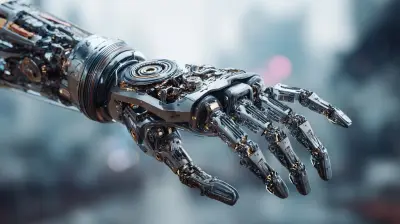
all images in this post were generated using AI tools
Category:
Technology GuidesAuthor:

Kira Sanders
Discussion
rate this article
2 comments
Zephyra Yates
Insightful overview, but future predictions should consider regulatory impacts carefully.
April 27, 2026 at 4:11 AM
Kira Sanders
Thank you for your feedback! You're right; regulatory factors will play a crucial role in shaping the future of blockchain. I'll keep that in mind for future discussions.
Vireo Powell
Exciting future ahead! Blockchain will transform industries and empower innovation!
April 26, 2026 at 11:24 AM
Kira Sanders
Absolutely! The potential of blockchain is immense, and we're just starting to scratch the surface. Exciting times ahead!