Operating Systems in Autonomous Vehicles: What Lies Ahead
4 July 2026
The operating system inside a self-driving car is not a minor detail. It is the silent arbiter between life and death. Every millisecond, it decides which sensor stream gets priority, which actuator command is safe, and which software component must be terminated before it causes a cascade failure. This is not a desktop OS with a real-time patch. It is a fundamentally different kind of software architecture, one that the automotive industry is still learning to build correctly.
Most people assume that autonomous vehicles will succeed or fail based on better cameras, lidar, or artificial intelligence. Those are necessary, but they are not sufficient. The operating system that runs the vehicle must guarantee timing, safety, and security simultaneously. That is a trilemma that no single OS solves perfectly today. What lies ahead is not a single winner but a convergence of design philosophies, each with painful trade-offs.
The Real-Time Imperative: Why Milliseconds Matter
When a pedestrian steps into the road, the perception stack must detect them, the prediction module must estimate their trajectory, and the planning module must compute a new path. All of this must happen within a hard deadline. If the OS is busy servicing a network request or swapping memory pages, the car might not brake in time.Traditional operating systems like Linux are designed for fairness and throughput. They try to give every process a slice of CPU time. That is exactly the wrong behavior for a safety-critical system. If a high-priority brake control thread needs to run immediately, the OS must preempt whatever is currently executing, even if that means starving a less important task. This is called priority-based preemptive scheduling, and it is the foundation of real-time operating systems (RTOS).
The key insight here is that real-time does not mean fast. It means predictable. A system that always responds in 10 milliseconds is better than one that usually responds in 1 millisecond but sometimes takes 100 milliseconds. Autonomous vehicles need both low latency and bounded latency. That combination is harder to achieve than most engineers realize.
Common Misconception: Linux Can Be Made Real-Time
Many teams start by trying to patch Linux with real-time extensions like PREEMPT_RT. This works for soft real-time applications like audio processing or robotics in controlled environments. But for automotive safety levels, it falls short. The Linux kernel is enormous. Its memory management, interrupt handling, and driver model were never designed for hard real-time guarantees. You can reduce latency jitter, but you cannot eliminate the possibility of a scheduling inversion caused by a kernel subsystem taking a lock.I have seen projects spend months tuning PREEMPT_RT parameters only to discover that a specific network driver causes a 50-millisecond interrupt latency spike under load. In a production vehicle, that is a recall event waiting to happen. The safer approach is to use a microkernel or a hypervisor that isolates the real-time critical functions from the Linux user space.
The Hypervisor Approach: Running Multiple OSes on One ECU
Modern autonomous vehicles are not running one operating system. They are running several, often on the same system-on-chip. A hypervisor partitions the hardware into virtual machines, each running its own OS. The safety-critical control functions run on a certified RTOS like QNX or VxWorks. The infotainment and advanced driver-assistance system (ADAS) user interface runs on Linux or Android. The sensor fusion and perception stacks might run on a third OS optimized for GPU and neural network acceleration.This approach solves the certification problem. The RTOS can be certified to ISO 26262 ASIL-D, the highest automotive safety integrity level, without being contaminated by the complexity of Linux. If the Linux side crashes, the RTOS keeps the car safe. If a hacker compromises the infotainment system, they cannot touch the brake controller.
The Hidden Cost: Resource Partitioning
The trade-off is that hypervisors introduce overhead. Memory bandwidth, cache contention, and interrupt virtualization all steal cycles from the real-time side. In a desktop environment, a 5% performance hit is acceptable. In a vehicle, that 5% might be the difference between stopping in time and not.Engineers must carefully measure the worst-case execution time of the real-time tasks with the hypervisor active. This is not a one-time measurement. As the perception models grow larger and the sensor data rates increase, the hypervisor's scheduling policy can become a bottleneck. The best practice is to over-provision the real-time partition by at least 30% to account for future software growth, but that wastes silicon area and power.
The Rise of the Microkernel in Automotive
The microkernel architecture is gaining serious traction in autonomous vehicle operating systems. Unlike a monolithic kernel where the entire OS runs in privileged mode, a microkernel runs only the absolute minimum in kernel space: inter-process communication, scheduling, and memory management. Everything else, including device drivers, file systems, and network stacks, runs as user-space processes.This design has profound implications for safety and security. If a driver crashes, it does not bring down the kernel. The microkernel can restart that driver without affecting other processes. In an autonomous vehicle, a failed lidar driver can be respawned in milliseconds while the vehicle relies on camera and radar data temporarily. That is impossible with a monolithic kernel where a driver crash often means a kernel panic.
Why QNX Dominates but Faces Challenges
QNX is the most widely used microkernel in production autonomous vehicles today. It is certified to ASIL-D, has a proven track record in aerospace and medical devices, and provides deterministic scheduling. However, its ecosystem is limited. Finding developers who understand QNX internals is difficult and expensive. The toolchain is proprietary. Integrating open-source libraries often requires porting efforts that smaller teams cannot afford.The alternative is seL4, a formally verified microkernel that mathematically proves the absence of certain bugs like buffer overflows and null pointer dereferences. Formal verification is not academic theater. It means the kernel's behavior is provably correct for all possible inputs. For a vehicle operating system, this is the gold standard. But seL4 has a steep learning curve. Its performance characteristics are different from QNX, and the ecosystem of drivers and middleware is still immature.
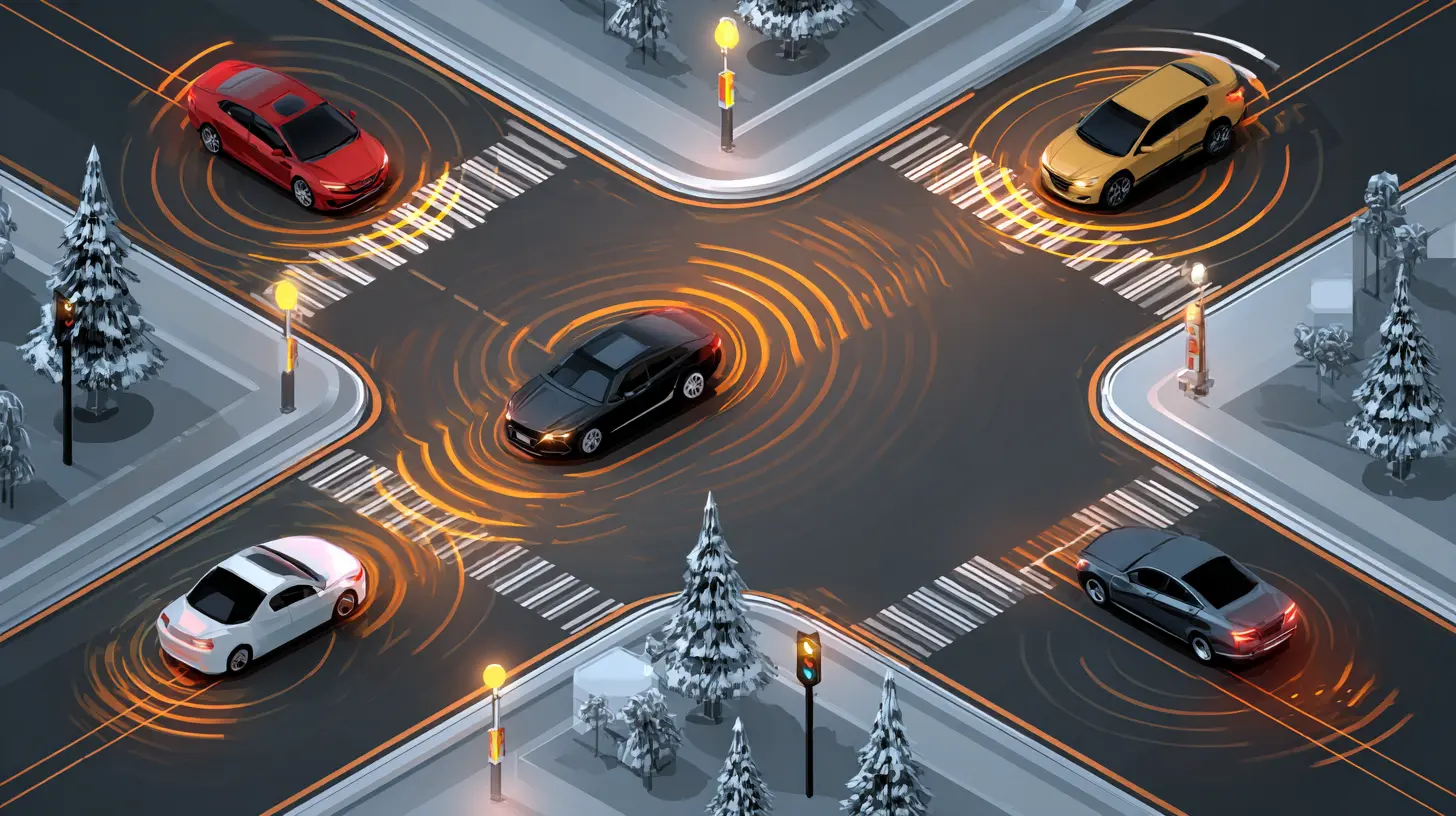
Linux in the Loop: The Perception and Planning Stack
Despite its real-time limitations, Linux plays an irreplaceable role in autonomous vehicles. The perception stack relies heavily on computer vision libraries, deep learning frameworks like PyTorch and TensorFlow, and ROS 2 for message passing. These tools were built on Linux and are not easily ported to a microkernel.The practical solution is to run Linux as a guest on a hypervisor, but this creates a new set of problems. Linux is not designed for deterministic wake-up from sleep states. Its memory management unit can introduce page faults at the worst possible moments. The graphics pipeline for visualizing sensor data can stall the CPU for unpredictable durations.
The Memory Wall
Autonomous vehicles generate enormous amounts of data. A single lidar sensor can produce millions of points per second. Cameras at 30 frames per second with 4K resolution generate gigabytes of raw data per minute. Moving that data from the sensor to the perception algorithm without copying it multiple times is a system-level design challenge.Linux's traditional approach of copying data between kernel space and user space is too slow. Zero-copy architectures, where the sensor writes directly into a memory region accessible by the application, are essential. But zero-copy requires careful coordination between the device driver, the memory management unit, and the application. If any component misbehaves, the system can corrupt memory or deadlock.
Some teams use shared memory pools managed by a resource monitor outside the OS. This works but adds complexity. The monitor must enforce access controls and handle the case where a sensor fails while holding a shared buffer. Without proper design, a failing sensor can lock up the entire perception pipeline.
The Orchestration Problem: Middleware and Service Discovery
An operating system alone is not enough. Autonomous vehicles need middleware to coordinate dozens of software components. The perception module publishes object detections. The localization module publishes vehicle pose. The planning module subscribes to both and computes trajectories. All of this must happen with low latency and reliable delivery.ROS 2, built on the Data Distribution Service (DDS) standard, is the most popular middleware for autonomous vehicle research. It provides publish-subscribe messaging, service discovery, and quality-of-service policies. But ROS 2 was designed for robotics, not production vehicles. Its discovery protocol can cause network storms when many nodes start simultaneously. Its real-time guarantees depend heavily on the underlying transport layer and the OS scheduling.
The DDS Divide
DDS is a powerful standard, but it is also complex. Different vendors implement DDS differently. The quality-of-service parameters that control reliability, durability, and deadline enforcement are easy to misconfigure. I have seen teams set the deadline policy incorrectly, causing the middleware to drop messages that were still valid. The result was a perception system that intermittently lost track of objects.For production vehicles, the middleware must be deeply integrated with the OS. The scheduler needs to know which threads are handling critical messages. The memory allocator needs to avoid fragmentation when messages arrive at high rates. These are not problems that a middleware library can solve alone. They require co-design between the OS kernel, the middleware, and the application.
Security: The OS as the Last Line of Defense
Autonomous vehicles are connected to the internet for over-the-air updates, cloud-based mapping, and remote diagnostics. That connectivity is a massive attack surface. A compromised infotainment system might give an attacker access to the CAN bus. A malicious update might replace the brake controller firmware.The operating system must enforce strict isolation between critical and non-critical domains. This goes beyond the hypervisor. The OS must support mandatory access control, where security policies are enforced regardless of user or process privileges. SELinux and AppArmor are commonly used on Linux, but they are complex to configure. A single misconfigured policy can either lock out legitimate functionality or leave a gap for attackers.
The Timing Attack Problem
Security is not just about preventing unauthorized access. It is also about preventing timing attacks. An attacker who cannot read the sensor data might still infer it by measuring how long the perception algorithm takes to process a frame. If the processing time correlates with the number of objects detected, the attacker can estimate the traffic density around the vehicle.Protecting against timing attacks requires the OS to make execution times constant regardless of input data. That is extremely difficult in practice. Caches, branch predictors, and out-of-order execution all leak timing information. Some researchers advocate for fully deterministic execution, where every instruction takes a fixed number of cycles. But that would require disabling most of the CPU's performance features, making the system too slow for real-time perception.
The Update Problem: How to Patch a Moving Car
Over-the-air updates are essential for fixing bugs and improving performance. But updating the operating system of a vehicle while it is being driven is a nightmare. If the update fails, the vehicle might be stranded or, worse, become unsafe.The OS must support atomic updates, where the system can roll back to the previous version if the update fails. This requires a dual-boot or A/B partition scheme. The OS boots from one partition while the other partition is updated. On the next boot, the system switches to the new partition. If the new partition fails to boot or reports errors, the system automatically falls back to the old partition.
The Stateful Challenge
The problem is that autonomous vehicles are not stateless. They have calibration data, learned driver preferences, and accumulated sensor biases. When the OS updates, this state must be preserved or migrated. If the update changes the memory layout of a critical data structure, the old state might be incompatible.Some teams solve this by using a persistent storage partition that is independent of the OS partitions. The OS reads its configuration from this partition at boot. But this creates a dependency: the new OS must be backward-compatible with the old configuration format. Over several updates, maintaining backward compatibility becomes a burden that slows innovation.
The Future: Unified or Heterogeneous?
There is a debate in the industry about whether autonomous vehicles will converge on a single operating system or remain heterogeneous. Proponents of unification argue that a single OS would simplify certification, reduce development costs, and make it easier to share code across vehicle platforms. They point to the success of Android in smartphones, where a single OS runs on diverse hardware.But automotive is not smartphones. The safety requirements are orders of magnitude higher. The hardware diversity is greater, from low-cost microcontrollers to high-performance GPUs. A single OS that tries to do everything would be either too complex to certify or too restrictive to support innovation.
The Likely Path
I believe the future is a layered architecture with a certified microkernel at the bottom, a Linux-based application framework in the middle, and domain-specific operating systems at the top. The microkernel handles safety-critical control and isolation. Linux handles perception, planning, and connectivity. Specialized OSes for neural network accelerators handle inference.This layering allows each layer to evolve independently. The microkernel can be certified once and remain stable for years. Linux can update frequently with new features and bug fixes. The neural network OS can be optimized for the latest hardware without affecting the rest of the system.
The challenge is the interfaces between layers. The communication protocol between the microkernel and Linux must be fast, secure, and formally specified. The memory sharing mechanism must prevent one layer from corrupting another. These interfaces are where most of the engineering effort will be spent in the coming years.
Practical Advice for Teams Building Autonomous Vehicle OSes
If you are building an autonomous vehicle operating system, start with the safety case, not the feature list. Define the worst-case failure modes and work backward to determine what guarantees the OS must provide. Do not assume that a general-purpose OS can be hardened after the fact. Safety must be designed in from the beginning.Use a hypervisor or microkernel for isolation. Do not try to run safety-critical and non-critical software on the same bare-metal OS. The certification burden alone will kill your project timeline. If you must use Linux, isolate it behind a hypervisor and limit its access to safety-critical hardware.
Invest in formal verification for the kernel. It is expensive and slow, but it pays off in reduced testing and certification costs. The automotive industry is moving toward higher safety standards, and formal methods will become a requirement, not an option.
Measure everything. Latency, jitter, memory usage, cache misses, interrupt response times. Do not rely on simulation. Run your OS on the target hardware with realistic sensor loads. The difference between simulation and reality is where bugs hide.
Plan for updates from day one. Design your partition scheme, rollback mechanism, and state migration strategy before you write a single line of production code. Retrofitting update capability is painful and error-prone.
The Bottom Line
The operating system in an autonomous vehicle is not a commodity. It is the foundation upon which safety, security, and performance are built. The industry is still in the early stages of understanding what a truly capable automotive OS looks like. The next five years will see rapid evolution as hypervisors mature, microkernels gain ecosystem support, and Linux adapts to meet real-time requirements.What lies ahead is not a single solution but a set of design patterns that teams must adapt to their specific hardware and safety requirements. The teams that succeed will be those that treat the OS as a first-class engineering problem, not an afterthought. They will invest in the hard work of verification, measurement, and interface design. They will resist the temptation to take shortcuts for the sake of speed.
The car of the future will drive itself. But only if the software beneath it is trustworthy. That trust starts with the operating system.
all images in this post were generated using AI tools
Category:
Operating SystemsAuthor:

Kira Sanders
Discussion
rate this article
2 comments
Dean Sawyer
The future of autonomous vehicles is exciting. With innovative operating systems, we are on the brink of a new era in transportation. Get ready for the journey ahead!
August 29, 2026 at 11:39 AM
Alanna McMaster
This article provides a fascinating look at the future of operating systems in autonomous vehicles. The potential for enhanced safety and efficiency is exciting. It will be intriguing to see how these systems evolve and integrate with emerging technologies. Great insights!
July 6, 2026 at 11:46 AM
Kira Sanders
Thank you for your thoughts! I'm glad you found the topic exciting. The evolution of these systems is definitely something to watch.