Is the Right to Repair Movement Gaining Legal Traction?
20 July 2026
The Right to Repair movement has moved from a niche consumer advocacy issue to a serious legal and legislative battleground. For decades, manufacturers have built ecosystems that lock customers into proprietary repair networks, restricted access to parts and diagnostic tools, and designed products that are difficult or impossible to service outside authorized channels. The question is no longer whether this is a problem. The question is whether the law is finally catching up.
The short answer is yes, but the picture is far more complicated than a simple victory lap. Legal traction is real, but it varies wildly by jurisdiction, industry, and the specific provisions of each law. Some victories are broad and symbolic. Others are narrow and practical. And some legislative efforts have backfired, creating loopholes that manufacturers exploit more effectively than ever.
This article breaks down the current legal landscape, the mechanisms driving change, the industries where traction is strongest, and the practical implications for consumers, repair shops, and manufacturers. If you are a business owner, policy advocate, or just someone tired of throwing away a perfectly good device because a battery is glued in, this is the state of play you need to understand.
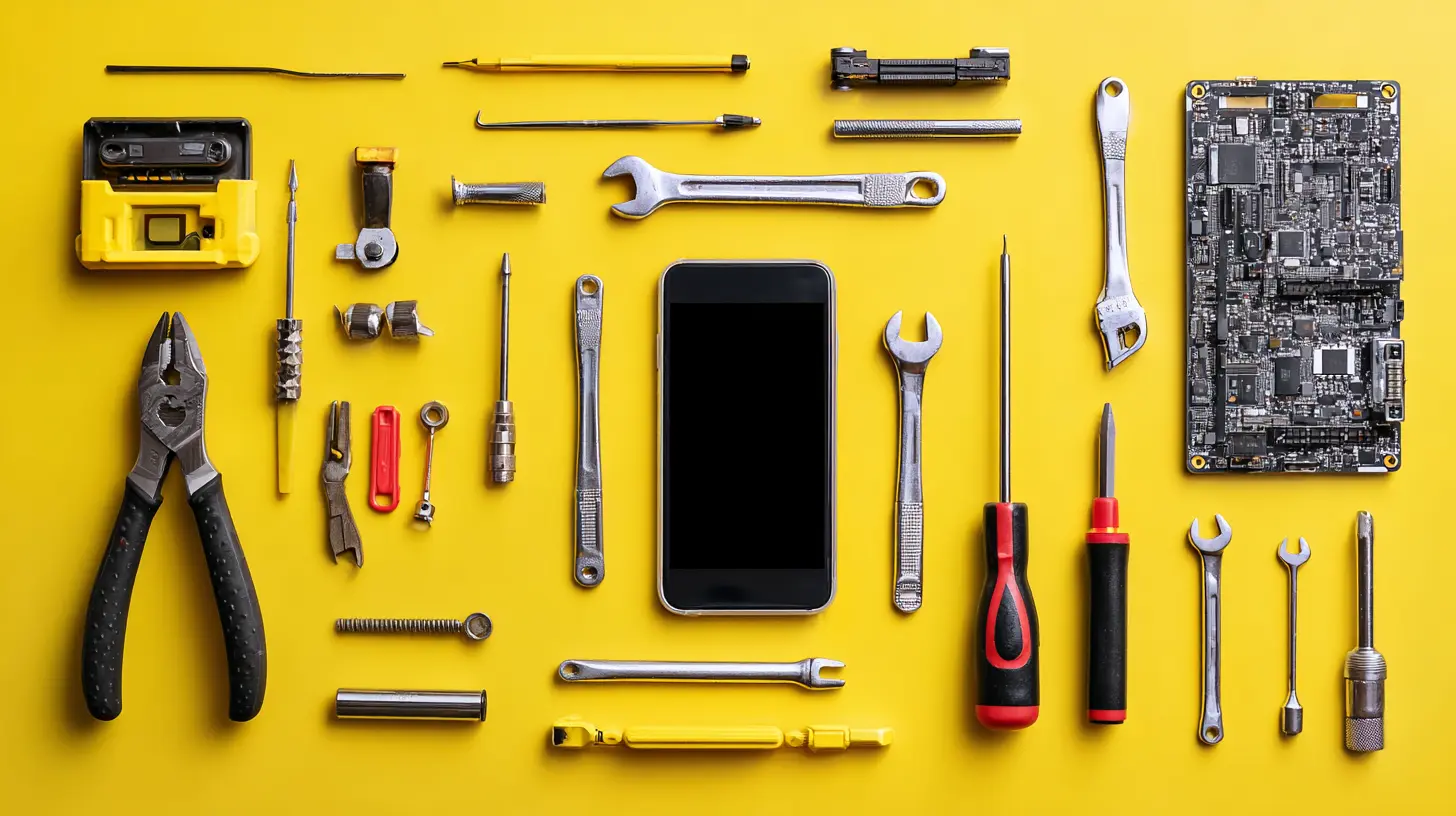
The Core Legal Mechanisms: What "Right to Repair" Actually Means
Before analyzing traction, we need to be precise about what the movement seeks. It is not one law. It is a bundle of rights, and different jurisdictions pursue different combinations.The most common legal demands include:
- Access to Parts: Manufacturers must sell spare parts to independent repair providers and consumers at fair prices, not just to authorized service centers.
- Access to Tools and Diagnostics: Specialized software, firmware flashing tools, and diagnostic equipment must be made available. This is often the hardest fight because it involves intellectual property and security claims.
- Access to Documentation: Service manuals, schematics, and repair instructions must be published or available on reasonable terms.
- Prohibition of Parts Pairing: This is a newer frontier. Manufacturers use software to verify that a replacement part is "genuine" and will disable features if a third-party part is installed, even if it is functionally identical. Laws are starting to target this practice directly.
- Right to Modify or Repair Without Voiding Warranty: Clear protections against manufacturers using the Magnuson-Moss Warranty Act (in the US) or equivalent laws elsewhere to claim that any non-authorized repair voids the entire warranty.
Legal traction is measured by how many of these provisions actually pass and survive legal challenges. It is not enough for a bill to be introduced. It must be enforceable.
United States: A State-by-State Patchwork with Federal Momentum
The United States is the most active battleground, but it is also the most fragmented. There is no federal Right to Repair law as of 2025. Instead, progress happens state by state, and the results are uneven.The Massachusetts Victory and Its Limits
Massachusetts passed the first automotive Right to Repair law in 2013, and voters overwhelmingly approved an expanded version in 2020 that extended the requirements to telematics data. This was a watershed moment. It forced automakers to provide independent mechanics with the same access to vehicle data that dealerships have.But the Massachusetts law has a critical limitation: it applies only to vehicles sold in the state. Manufacturers responded by building separate compliance systems for Massachusetts vehicles, which increased costs and complexity. Some observers argue this actually slowed national adoption because automakers could isolate the requirement rather than standardizing access across all vehicles. The lesson is that state-level laws, while valuable, create compliance headaches that can paradoxically entrench manufacturer control in states without laws.
New York's Digital Fair Repair Act: A Cautionary Tale
New York passed the Digital Fair Repair Act in 2022, the first broad electronics Right to Repair law in the US. It was celebrated as a huge win. Then the reality set in.The law was heavily amended before passage, and the final version contained a massive loophole: manufacturers could bundle groups of parts together and sell them as a single "assembly" at a price that made independent repair uneconomical. If a screen costs $200 and a manufacturer sells a screen-plus-camera-plus-battery assembly for $800, the law is technically satisfied, but the right to repair is meaningless in practice.
Also, the law exempted many products, including medical devices, gaming consoles, and security systems. Manufacturers have since used these exemptions creatively. The New York experience shows that getting a bill passed is not the same as getting a good bill passed. Many advocates now argue that a weak law is worse than no law because it gives the appearance of progress while entrenching manufacturer-friendly interpretations.
The Colorado Model: A More Thoughtful Approach
Colorado took a different path. In 2023, it passed a Right to Repair law for powered wheelchairs, and in 2024, it expanded to agricultural equipment. These laws are narrower in scope but far more specific in their requirements. They mandate that manufacturers provide parts, tools, and documentation to independent repair providers at "fair and reasonable" prices, and they explicitly prohibit parts pairing for covered equipment.The Colorado approach is instructive. By targeting specific industries where repair monopolies cause the most harm, the laws are easier to enforce and harder for manufacturers to circumvent. Agricultural equipment is a prime example. Farmers cannot afford to wait weeks for a dealer to come fix a combine during harvest season. Independent mechanics in rural areas need access to diagnostic software. Colorado's law directly addresses that pain point.
Federal Legislation: The REPAIR Act and the Fair Repair Act
On the federal level, two main bills have been introduced repeatedly: the REPAIR Act (focusing on vehicles) and the Fair Repair Act (covering electronics). Neither has passed both chambers. The political dynamics are complex. Consumer advocacy groups push hard, but manufacturer lobbying is intense. Apple, John Deere, and the auto industry have spent millions fighting these bills.The most likely path for federal legislation is a narrow bill focused on a single industry, such as agricultural equipment or medical devices, where the public interest argument is strongest. A broad consumer electronics bill faces steeper odds because of national security concerns (smartphones and computers can contain sensitive components) and intellectual property disputes.
The European Union: A More Centralized and Aggressive Approach
The European Union operates differently. Instead of state-by-state battles, the EU can pass directives that apply to all member states. This gives it a structural advantage in creating a unified legal framework.The Ecodesign Directive and the Right to Repair
The EU's Ecodesign Directive has been the primary vehicle. It started with requirements for energy efficiency but expanded to include repairability. Since 2021, manufacturers of certain appliances (washing machines, dishwashers, refrigerators, electronic displays) must make spare parts available for at least seven to ten years after the product is placed on the market. They must also provide repair information to professional repairers.This is real traction, but it has limits. The directive applies only to professional repairers, not consumers. And the definition of "spare parts" can be narrow. A motor is covered, but the plastic housing around it may not be. The EU is now working on a more comprehensive "Right to Repair" directive that would force manufacturers to repair products even after the warranty expires, at a reasonable cost, and would require them to inform consumers about their repair rights.
The French Repairability Index
France went further than any other country by introducing a mandatory repairability index for smartphones, laptops, televisions, washing machines, and lawnmowers. Products sold in France must display a score out of ten that rates how easy they are to repair. The score considers factors like availability of documentation, ease of disassembly, and spare parts availability.The index has been criticized for being too easy to game. Some manufacturers design products that score well on the index but are still difficult to repair in practice. The index also does not penalize parts pairing directly. However, it has shifted consumer awareness. People now see the score before buying, and manufacturers are competing on it. That is a form of market-driven traction that complements legal requirements.
The UK: Post-Brexit Divergence
The United Kingdom, after leaving the EU, initially adopted similar rules but is now considering diverging. The UK government has indicated it wants to take a "pro-innovation" approach that may weaken repair requirements to attract manufacturing investment. This is a reminder that legal traction can go in reverse. The UK's current position is uncertain, but advocates are watching closely.
Industries Where Traction Is Strongest and Weakest
Not all industries are equal in the Right to Repair fight. Some have seen genuine progress. Others remain nearly impenetrable.Agriculture: The Biggest Success Story
Agricultural equipment is where the movement has achieved its most concrete victories. The combination of state laws (Colorado, Nebraska, and others) and manufacturer agreements (John Deere signed a Memorandum of Understanding with the American Farm Bureau Federation in 2023, promising to provide farmers with access to diagnostic tools and repair information) has created real change.But there is a catch. The John Deere MOU is not legally binding. It is a voluntary commitment. Farmers report that while access has improved, the tools are still expensive and the software is still cumbersome. The MOU also does not cover older equipment. If you own a 2015 tractor, you may still be locked out. The lesson is that voluntary agreements can be a stepping stone, but they are not a substitute for enforceable law.
Consumer Electronics: Slow but Shifting
Smartphones, laptops, and tablets are the face of the movement, but legal traction here is weaker than in agriculture. Apple's shift toward offering self-service repair kits and selling parts directly to consumers is often cited as a victory for the movement. But Apple's program is expensive, requires specialized tools, and still relies on parts pairing. If you replace the screen on an iPhone 14 using a third-party part, Face ID will not work. Apple has stated it will eventually allow software calibration, but that promise has been slow to materialize.The real traction in consumer electronics is coming from the EU's repairability index and the threat of future legislation. Manufacturers are responding to the regulatory pressure, not to consumer demand alone. If you are a consumer, you can buy a Fairphone or a Framework laptop, which are designed for repairability, but these remain niche products. The mainstream market is still dominated by sealed devices.
Medical Devices: A Special Case
Medical devices present a unique challenge. The FDA regulates safety, and manufacturers argue that allowing independent repair of ventilators, infusion pumps, and imaging equipment could compromise patient safety. This is a legitimate concern, but it is also used as a shield to protect profitable service contracts.The Colorado wheelchair law is a notable exception, but it applies only to powered wheelchairs, which are simpler devices. For complex imaging equipment like MRI machines, the legal traction is nearly zero. Hospitals are often locked into service contracts with the original manufacturer, and independent service organizations face legal barriers. This is an area where the trade-off between safety and competition is genuinely difficult, and advocates need to engage with regulators, not just legislators.
Automotive: The Most Mature but Still Evolving
The automotive sector is the most mature in terms of Right to Repair. The 2012 Massachusetts law and the 2014 national memorandum of understanding (which automakers signed voluntarily) gave independent mechanics access to diagnostic tools and repair information. But the rise of software-defined vehicles and telematics has created new battles. Modern cars are rolling computers, and manufacturers can remotely disable features, update software, or monitor vehicle health. Independent mechanics need access to this data to diagnose and repair modern vehicles, but manufacturers are reluctant to share it.The Massachusetts 2020 law on telematics is a direct response to this. But automakers have sued to block it, arguing that it violates federal law and creates security risks. The case is ongoing. This is the next frontier for automotive Right to Repair, and it will determine whether independent repair shops can survive the transition to electric and connected vehicles.
Common Misconceptions and Mistakes
Several misconceptions plague the Right to Repair debate, and they lead to bad policy and bad consumer decisions.Misconception: Right to Repair Laws Force Manufacturers to Give Away Intellectual Property
This is false. Most laws require manufacturers to provide parts, tools, and documentation on "fair and reasonable" terms. They do not require giving away source code or trade secrets. The intellectual property argument is a red herring in most cases. The real issue is access to diagnostic software and firmware, which can be protected through licensing agreements. Manufacturers already license this to their authorized networks. The fight is about extending those licenses to independents.Misconception: Right to Repair Will Make Products Less Secure
This is a more nuanced claim. It is true that opening up access to software and firmware could create new attack vectors. But the current approach, where only the manufacturer can patch vulnerabilities, is not necessarily more secure. Many manufacturers are slow to patch, and some never patch older devices. Independent security researchers have found critical vulnerabilities in products that manufacturers refused to fix. In a well-designed system, independent repair can actually improve security by allowing third-party experts to audit and patch firmware.The real mistake is treating security and repairability as a binary trade-off. They are not. A product can be both repairable and secure if the manufacturer designs it that way. The problem is that many manufacturers use security as an excuse to block repair, not as a genuine concern.
Common Mistake: Assuming a Law Exists Means You Can Repair Anything
Even in jurisdictions with strong laws, there are practical barriers. Parts may be backordered for months. Diagnostic software may require a subscription that costs hundreds of dollars per year. Documentation may be poorly translated or incomplete. And the law may not cover older products. Consumers should always check the specifics of their local law before assuming they have a right to repair a particular device.
Practical Advice for Consumers and Businesses
If you are a consumer, start by checking the repairability score of any product you buy, especially in jurisdictions where scores are mandatory. Support companies that design for repairability. Avoid products that use heavy adhesive, soldered-in components, or proprietary fasteners. If you need a repair, ask the manufacturer for parts and documentation directly. Many will provide them now, even if the law does not require it.If you run an independent repair shop, join industry associations like the Repair Association or iFixit's Pro community. These groups track legislation and provide resources for navigating manufacturer access programs. Document every instance where a manufacturer refuses to sell you parts or provide diagnostic tools. This evidence is critical for advocacy and legal action.
If you are a policymaker, avoid the New York mistake. Do not pass a bill that has been gutted by amendments. Focus on narrow, enforceable provisions. Target industries where the harm is greatest and the opposition is weakest. And include explicit anti-circumvention language to prevent manufacturers from using bundling or pricing tricks to evade the law.
The Future: Where Traction Will Matter Most
The next five years will determine whether Right to Repair becomes a permanent legal fixture or fades into a series of symbolic gestures. The key battlegrounds are:- Parts Pairing: Laws that explicitly prohibit software-based verification of replacement parts will be the most impactful. The EU is moving in this direction. The US is not yet.
- Telematics and Connected Devices: As more products become internet-connected, the fight over data access will intensify. This includes cars, smart home devices, and industrial equipment.
- Agricultural and Medical Equipment: These industries have the strongest public interest arguments and the most organized advocacy. Expect more state-level laws here.
- Federal Preemption: Manufacturers are pushing for federal preemption that would override state laws with weaker national standards. This is the biggest threat to the movement. If a federal law passes that sets a low bar, it could freeze progress for a generation.
The legal traction is real, but it is fragile. Every victory requires constant vigilance. Every law needs enforcement. And every manufacturer concession needs to be tested in practice, not just celebrated on paper.
The movement has come a long way from the days when manufacturers openly declared that consumers had no right to repair their own property. But the finish line is not in sight. It is still a fight, and the next few years will decide whether it becomes a rout or a stalemate.
all images in this post were generated using AI tools
Category:
Tech PolicyAuthor:

Kira Sanders
Discussion
rate this article
1 comments
Denise Gibson
It's exciting to see the Right to Repair movement gaining momentum. Empowering consumers to fix their own devices not only fosters innovation but also promotes sustainability. This shift could reshape our relationship with technology, making it more accessible and user-friendly for everyone. Let's keep pushing for change!
July 30, 2026 at 2:40 AM
Kira Sanders
Absolutely, the Right to Repair movement is crucial for fostering innovation and sustainability. It's time we empower consumers and reshape our tech landscape. Let's continue to advocate for this change!