How OS Innovation Will Shape the Future of Smart Homes
22 October 2026
The smart home has a plumbing problem. Not the pipes behind the walls, but the invisible layer that decides whether your lights, locks, thermostat, and doorbell cooperate or spend their days in quiet conflict. That layer is the operating system, and it is the least discussed and most consequential part of the entire category.
Most coverage of smart homes focuses on devices: the newest sensor, the fanciest bulb, the camera with the better lens. That framing misses where the real leverage sits. A home is not a collection of gadgets. It is a system of systems, and systems are governed by the software that coordinates them. When that software is well designed, the home feels calm and responsive. When it is not, you get the familiar experience of standing in a dark hallway, thumbing through three apps, waiting for a hub to remember it exists.
Operating system innovation is what moves a smart home from a novelty to infrastructure. It is also what will decide whether the next decade of connected living is trustworthy, private, and genuinely useful, or an endless patchwork of half-working integrations. This article looks at where that innovation is heading, why it matters, and what you should watch for before you commit your home to any platform.
What "OS" Actually Means in a Smart Home
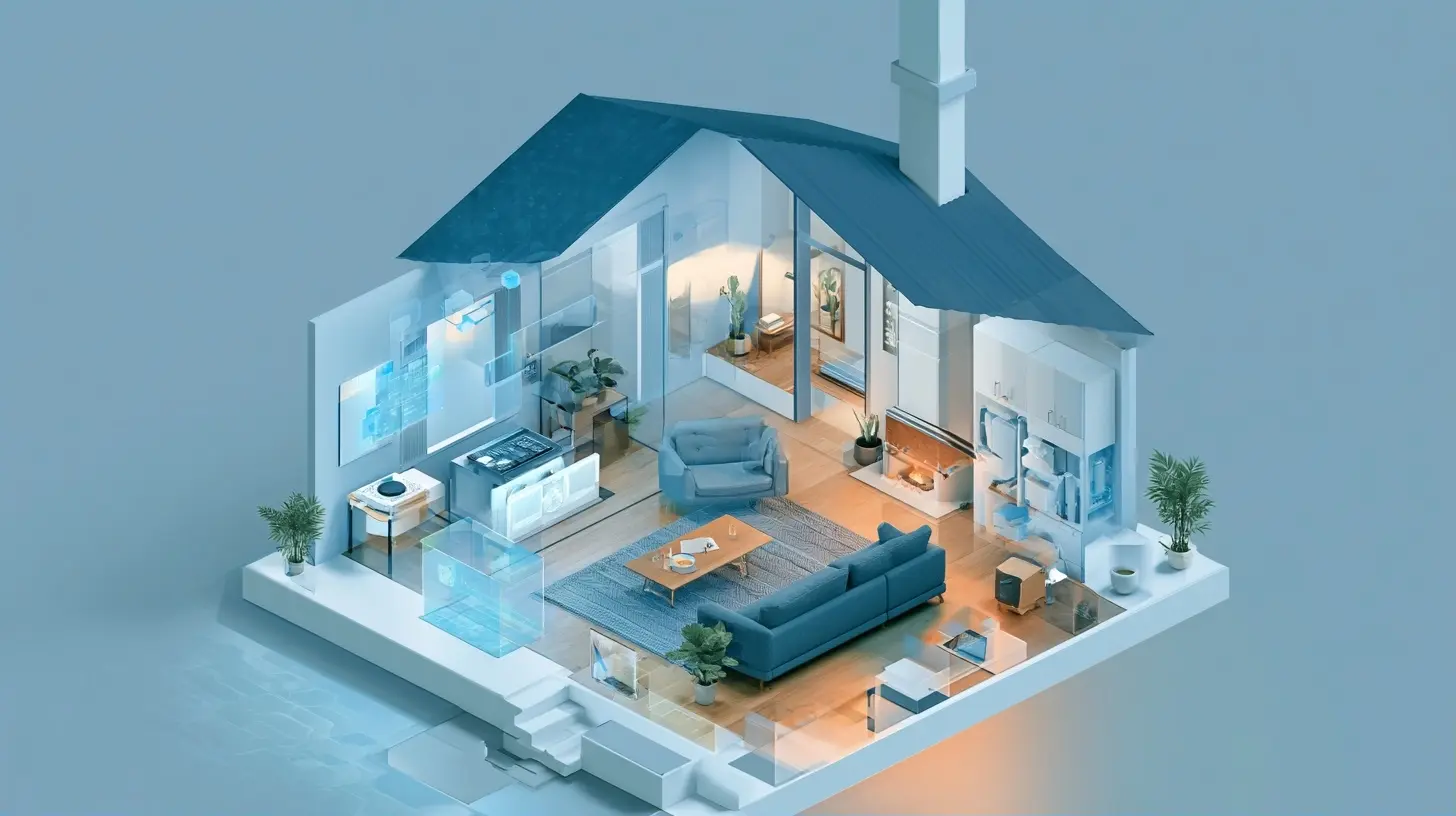
The word operating system carries baggage from phones and laptops. In a smart home, it means something broader and messier. There are at least four layers that people casually lump together:The device operating system, such as the firmware running on a camera or a smart lock. This is the lowest level and the most fragmented.
The hub or controller platform, which coordinates devices and runs automations. Think of a dedicated hub, a smart speaker acting as a controller, or a local server running home automation software.
The application and integration layer, which is how third-party devices talk to the platform through protocols and APIs.
The cloud services and companion apps that handle remote access, updates, and account management.
When people say "OS innovation," they usually mean the middle two layers, but the most important shifts are happening across all four. The reason this distinction matters is practical: a beautiful app on top of a fragile integration layer will still fail you at the worst moment, and a rock-solid local controller with a clumsy interface can still be the better long-term bet.
A useful analogy is the difference between a phone and a desktop computer. A phone is a tightly controlled appliance where the vendor decides what runs. A desktop is an open platform where you assemble components from different vendors. Smart homes today are caught between these models, and the operating system is where that tension gets resolved, or does not.
The Shift From Cloud-First to Local-First
For years, the default architecture was cloud-first. Your command went from your phone to a vendor server, then back down to the device. It worked, mostly, and it made remote access and setup easy for manufacturers. It also meant that when your internet dropped, your "smart" home became remarkably dumb. When a vendor shut down a service, devices that depended on it stopped working entirely.Local-first operating systems invert that. The controller on your premises makes the decisions, and the cloud becomes an optional convenience for remote access and backup. This is the single most important architectural shift in the category, and it is happening because users got tired of outages and because regulators began paying attention to the durability of connected products.
Why does local-first work better? Because automation logic is latency-sensitive and availability-sensitive. A motion-triggered light that waits for a round trip to a data center will always feel sluggish compared with one that is decided on a hub in the closet. More importantly, a local controller keeps functioning during an internet outage, which is exactly when you most want your locks, lights, and heating to behave predictably.
The trade-off is real. Local-first systems demand more from the user at setup. You may need to choose a hub, understand your network, and accept that remote access requires some configuration. Vendor support can be thinner. Updates are your responsibility in some setups. For a technically comfortable household, that is a fine bargain. For someone who wants to plug in a speaker and forget it, a well-run cloud service may still be the more sensible choice, at least until local-first platforms become as turnkey as the cloud ones.
The practical advice here is to ask a specific question before buying: if the manufacturer disappeared tomorrow, what would still work in my home? If the answer is "nothing," you are renting your home's intelligence rather than owning it.
Interoperability as the Core Operating System Problem
The hardest problem in smart homes is not making one device work. It is making many devices from different vendors work together without requiring the homeowner to become a part-time integrator.Historically, vendors solved this by building walled gardens. Their devices talked to their hub, and everything else was an afterthought. That model is collapsing under its own weight, partly because buyers now expect cross-brand compatibility, and partly because standards efforts have matured enough to make it feasible.
Matter and Thread are the most visible examples. Matter is an application-layer standard intended to let devices from different vendors work with a common controller. Thread is a low-power mesh networking protocol that many Matter devices use. Together they aim to reduce the integration burden. The important nuance, and the part marketing rarely explains, is that a standard is only as good as its implementation. Two devices can both claim Matter support and still behave differently in practice, because the standard defines a baseline while vendors add their own extensions and quirks.
This is where operating system innovation becomes genuinely valuable: a good platform abstracts away those quirks. It presents a consistent model of a light, a lock, or a sensor to the automation engine, and it handles the messy vendor-specific details underneath. A poor platform passes the mess straight through to you, which is why some hubs feel magical and others feel like a second job.
When evaluating any platform, look at how it handles the unglamorous cases. What happens when a device goes offline mid-automation? Does the system retry, fail gracefully, or leave your lights in a strange state? How are device states reconciled after a network blip? These behaviors are the real signature of operating system quality, far more than the feature list on the box.
Edge Computing and On-Device Intelligence
Another major shift is moving intelligence closer to the devices themselves. Instead of shipping every sensor reading to the cloud for processing, modern systems increasingly run logic on the hub or even on the device.The clearest example is camera analytics. Early smart cameras sent video to the cloud to detect people or packages. Newer systems perform detection on the device or on a local hub. This reduces bandwidth, cuts latency, and keeps footage in the home. The same pattern is spreading to audio processing, anomaly detection, and automation triggers.
Why does this matter beyond privacy? Because it changes what is economically feasible. Cloud processing has a marginal cost per event, which pushes vendors toward subscription models and rate limits. On-device processing has a fixed cost, so it scales better for always-on sensing. A home that can process events locally can afford to be more responsive and more generous with automation than one that pays for every cloud call.
The trade-off is capability. Local hardware is constrained compared with data center GPUs, so the most sophisticated models still run in the cloud. The sensible architecture is hybrid: latency-sensitive and privacy-sensitive tasks run locally, while heavy analysis and long-term pattern learning happen in the cloud when you opt in. Expect operating systems to get better at deciding where each task belongs, ideally without asking you to make that call per device.
Security and Update Models
A smart home operating system is a security boundary. Every connected device is a potential entry point, and the OS is what determines how well that boundary holds.The most underappreciated innovation in this space is not a feature at all. It is the update model. A platform that can reliably deliver security patches to devices over their lifetime is worth more than one with a longer feature list and no maintenance plan. Many early smart home products shipped with no meaningful update path, which is why so many of them are now abandoned and insecure.
Good operating systems are adopting practices borrowed from mainstream computing: signed firmware, secure boot, automatic updates with rollback, and clear end-of-support dates. Some are moving toward compartmentalization so that a compromised device cannot easily pivot to the rest of the home network.
Here is the uncomfortable part. Users often disable automatic updates because updates occasionally break things, and vendors often ship updates that do break things. The healthy equilibrium is a platform that updates conservatively, tests thoroughly, and lets you defer but not permanently ignore critical patches. If you are choosing a platform today, check its track record on security disclosures and how quickly it patched past issues. That history predicts future behavior better than any promise.
Automation Engines and the Move Beyond Triggers
The first generation of smart home automation was trigger-based: when the door opens, turn on the light. That model is easy to understand and easy to build, and it is also brittle. It does not handle context, and it produces the classic failure where a motion sensor turns lights off while someone is sitting still in a room.Newer operating systems are building more capable automation engines. They incorporate conditions, time windows, device states, and sometimes probabilistic reasoning. Some are adding local machine learning that learns household routines and proposes automations rather than requiring you to script everything.
This is genuinely promising, but it deserves skepticism. Learned automations can be opaque, and an automation you do not understand is one you cannot debug when it misbehaves. The best systems keep a human-readable explanation of why an automation fired, and they make it easy to override or pause without dismantling the whole setup.
A practical recommendation: start with explicit, simple automations you can reason about, and only add learned behavior once you trust the platform's transparency. The goal is a home that behaves predictably, not one that surprises you.
What This Means for Buyers and Homeowners
If you are building or buying into a smart home now, the operating system decision matters more than any single device. A few concrete guidelines follow from everything above.Prefer platforms with a credible local execution path. Even if you use cloud features today, the option to run core automations locally is insurance against outages and vendor changes.
Check the update policy in writing. How long will security updates be provided? What happens at end of support? A vendor that will not answer this question is telling you something.
Favor standards-based devices, but verify behavior in reviews rather than trusting the logo. Matter support is a good signal, not a guarantee.
Keep critical functions independent. Locks, heating, and safety-related devices should not depend on a single fragile integration chain. Where possible, retain manual overrides and local control.
Avoid over-automating early. Complexity compounds, and every automation is a small piece of software you now maintain. Build incrementally and remove what you do not use.
Common Mistakes and Misconceptions
A few myths deserve direct correction.The first is that more devices automatically means a smarter home. In practice, every device adds integration surface, failure modes, and maintenance. A smaller, well-chosen set on a solid platform will outperform a sprawling collection on a weak one.
The second is that cloud dependence is purely a cost issue. It is also a durability issue. Services get discontinued, terms change, and accounts get locked. Local capability is about resilience, not just monthly fees.
The third is that standards will make integration effortless. Standards reduce friction, but they do not eliminate vendor behavior differences or the need for a competent controller. The operating system still has to do the hard work of presenting a coherent model.
The fourth is that privacy and convenience are always in tension. Local processing shows they often are not. Many privacy-preserving designs are also faster and more reliable, which is a rare alignment of interests.
The Road Ahead
The next phase of smart home operating systems will be defined less by new device categories and more by the quality of the coordination layer. Expect to see stronger local execution, better handling of device quirks, more transparent automation, and update policies that treat longevity as a feature. Regulation around connected device security and support periods will push vendors in the same direction, though the details will vary by region.The homes that age well will be the ones where the operating system was chosen with the same care as the appliances. It is the difference between a house that adapts to you and one that slowly becomes a museum of abandoned apps. The technology is finally mature enough to make the first outcome realistic. The deciding factor is whether buyers start asking the right questions before they hand over their homes to a platform.
all images in this post were generated using AI tools
Category:
Operating SystemsAuthor:

Kira Sanders