How Operating Systems Are Powering the Internet of Things
19 October 2026
The Internet of Things rarely gets the credit it deserves for being an operating systems story. People talk about sensors, connectivity, cloud dashboards, and AI at the edge. But underneath every smart thermostat, industrial gateway, connected car, and wearable sits an operating system making thousands of quiet decisions per second: which task runs next, how much power to draw, what to do when memory runs out, and how to stay alive when the network disappears.
That layer is where the real engineering happens. Choosing the wrong OS for an IoT product can add months to development, shave years off battery life, or create security holes you cannot patch at scale. Choosing the right one can turn a modest microcontroller into a dependable platform that survives a decade in the field.
This article looks at how operating systems actually power IoT systems: the categories that matter, the trade-offs behind real decisions, the mistakes teams make again and again, and the practices that separate products that ship from prototypes that stall.

What Makes an IoT Operating System Different
A general-purpose OS like Linux or Windows assumes abundant memory, a steady power supply, a human nearby, and a network that mostly works. An IoT OS assumes the opposite. It runs on constrained hardware, often on a battery, frequently without a user interface, and on networks that drop packets, change addresses, and vanish for hours.That inversion changes the design priorities. An IoT OS typically cares about:
- Determinism. A motor controller must respond within microseconds, every time. Average performance means nothing if the worst case misses a deadline.
- Footprint. Code size and RAM use are measured in kilobytes, not gigabytes. Every byte has a cost in silicon, power, and money.
- Power behavior. The OS decides when the CPU sleeps, which peripherals stay powered, and how quickly the device wakes. These decisions dominate battery life.
- Reliability without supervision. No one reboots a sensor strapped to a pipeline in a remote location. The OS must recover from faults on its own.
- Updateability. Devices may live for ten years. The OS must support secure, reliable updates over the air, because the alternative is a truck roll or a recall.
A desktop OS is judged by what it lets users do. An IoT OS is judged by what it prevents: missed deadlines, drained batteries, memory corruption, and unpatched vulnerabilities.
The Four Families of IoT Operating Systems
Most IoT operating systems fall into four broad families. Understanding these categories matters more than memorizing product names, because the category determines the constraints you will live with.Bare-Metal Loops and Super-Loops
Strictly speaking, this is the absence of an OS: a single `while(1)` loop that polls inputs, does work, and sleeps. It is the right answer more often than people admit. For a device with one job, no concurrency, and a simple state machine, a super-loop is small, fast, and easy to reason about.The problem appears when requirements grow. Add a second sensor, a radio stack, and a firmware update process, and the loop becomes a tangle of timing hacks. The moment you need preemption, priorities, or blocking waits, you have outgrown the loop and should move to a real kernel.
Real-Time Operating Systems (RTOS)
An RTOS provides a scheduler, tasks, inter-task communication, and timing services, with bounded latency. FreeRTOS, Zephyr, ThreadX, and NuttX are common examples. The defining promise is predictability: a high-priority task preempts lower ones within a known, small number of cycles.RTOSes dominate deeply embedded IoT because they hit a sweet spot. They run on microcontrollers with tens to hundreds of kilobytes of RAM, they offer deterministic scheduling, and they stay out of your way. The trade-off is that you usually supply the networking stack, file system, and security services yourself, or assemble them from the ecosystem. That flexibility is powerful and also a source of integration pain.
Embedded Linux
When a device needs a full TCP/IP stack, a filesystem, multiple processes, a rich driver ecosystem, and the ability to run languages like Python or Node.js, embedded Linux is often the pragmatic choice. Buildroot and the Yocto Project are the standard ways to produce trimmed images. Single-board computers and application processors make this affordable at scale.Linux brings enormous leverage: mature networking, container support, strong security tooling, and a vast talent pool. It also brings baggage. Boot times stretch into seconds, power draw is measured in watts rather than microamps, and a full image can be hundreds of megabytes. For mains-powered gateways and hubs, that is fine. For a coin-cell sensor, it is impossible.
Real-time variants exist, and the PREEMPT_RT patch set has matured considerably, but soft real-time on Linux still differs from the hard determinism of a microcontroller RTOS. Know which one your application actually requires.
Specialized and Managed IoT Platforms
A fourth category includes purpose-built systems: RTOSes bundled with vendor cloud agents, safety-certified kernels for automotive and medical use, and managed platforms where the vendor handles updates and security. These reduce integration work and can shorten time to market, at the cost of lock-in and less control over the stack. They make sense when certification, supply chain guarantees, or a small team matter more than flexibility.
Scheduling: The Heart of the Matter
Every OS answers one question constantly: what runs next? The answer defines the device's behavior under load.A preemptive priority scheduler lets a critical task interrupt everything else. That is exactly what you want for a control loop reading an IMU at 1 kHz. It is exactly what you do not want if a poorly behaved high-priority task can starve the rest of the system. Priority inversion, where a low-priority task holds a lock a high-priority task needs, is a classic failure mode; mechanisms like priority inheritance exist precisely to contain it, and teams that skip them ship intermittent, maddening bugs.
Cooperative scheduling, where tasks yield voluntarily, is simpler and avoids many race conditions. It also means one careless task can freeze the device. For small systems with disciplined code, cooperative scheduling is underrated. For anything with third-party components, preemption is usually safer.
A practical rule: match the scheduling model to your worst-case timing requirement, not your average one. If a missed deadline causes a reboot, a crash, or a safety issue, you need hard real-time guarantees and should verify them with measurement, not assumption. If late work merely means a slightly stale dashboard reading, a softer model will save you complexity.

Memory and Storage: Where IoT Systems Break
Memory is the constraint that shapes everything else. Two failure patterns dominate.The first is heap fragmentation. A long-running device that allocates and frees variable-size blocks will eventually fail to find a contiguous region, even with plenty of free memory in total. The fix is architectural: prefer static allocation, fixed-size pools, and memory budgets decided at design time. Many production RTOS codebases ban dynamic allocation after initialization entirely. That sounds extreme until you have debugged a device that dies after 40 days in the field.
The second is stack overflow. Each task gets a stack, and underestimating it produces corruption that manifests far from the cause. Enable stack watermarking or canary checks in development, and size stacks from measured high-water marks rather than guesses.
Storage has its own rules. Flash memory wears out. Logging every sensor reading to internal flash will destroy it. Wear leveling, circular buffers, and writing only meaningful events are standard practice, and on Linux systems, mounting temporary data in RAM and minimizing writes to the root filesystem extends device life considerably.
Power Management Is an OS Feature
Battery life is usually marketed as a hardware property, but it is largely an OS behavior. The kernel decides when to enter sleep states, which clocks to gate, and how aggressively to batch work.The core technique is duty cycling: wake, sense, transmit, sleep. An RTOS with tickless idle can sleep between events instead of waking on a fixed timer, which can cut average current dramatically. On Linux, runtime power management and suspend states serve the same purpose at a larger scale.
The common mistake is optimizing the sleep current while ignoring wake overhead. If the radio takes 50 milliseconds to reconnect after each wake, a device that wakes every minute spends a meaningful fraction of its energy on reconnection. Batching readings, using wake-on-radio features, and letting the network stack retain state across sleeps often matter more than shaving microamps from the idle state.
Measure, do not estimate. Power profilers that capture current draw at high resolution reveal surprises, like a peripheral left enabled or a debug UART drawing milliamps around the clock.
Connectivity Stacks and the OS Boundary
In most IoT designs, the networking stack is part of the OS or tightly coupled to it. That coupling has consequences.On microcontrollers, stacks like lwIP or the native stacks in Zephyr and FreeRTOS handle TCP/IP, while protocols such as MQTT, CoAP, and BLE run above them. Memory for socket buffers competes directly with application RAM, and tuning buffer counts is a real design decision: too few and throughput collapses under bursty traffic; too many and you run out of RAM.
On Linux gateways, the kernel handles networking and the application speaks whatever protocol fits. This is where protocol gateways shine: a Linux hub can translate between BLE, Zigbee, and MQTT, presenting a unified interface to the cloud while microcontrollers on the edge stay simple.
A frequent architectural error is putting heavy protocol logic on constrained nodes when a gateway could absorb it. Push complexity toward devices with power and memory, and keep leaf nodes dumb and reliable. The opposite mistake also happens: centralizing so much that the gateway becomes a single point of failure. Decide deliberately where intelligence lives, and document why.
Security: The OS as the Trust Anchor
Security in IoT is not a feature you add later; it is a property of the platform. The OS enforces memory isolation, manages keys, controls boot, and applies updates.Key practices that depend on OS support include:
- Secure boot. The OS verifies firmware signatures at startup using hardware root of trust. Without this, an attacker with physical access can flash anything.
- Memory protection. MPUs on microcontrollers and MMUs on Linux isolate tasks. An RTOS using an MPU can contain a compromised task; one running everything in privileged mode cannot.
- Credential storage. Keys belong in secure elements or protected flash, never in plain firmware images. Check that your OS and hardware combination supports this before committing to a chip.
- Over-the-air updates with rollback. A failed update that bricks a device is a security incident too. A/B partitions and automatic rollback turn a risky operation into a routine one.
A misconception worth correcting: "we use TLS, so we are secure." TLS protects data in transit. It says nothing about a device running unsigned firmware, sharing default credentials, or exposing debug interfaces. The OS layer is where those gaps get closed or left open.
Real-World Patterns That Work
Some patterns recur in successful deployments.The two-tier architecture. Battery-powered sensors run a small RTOS and speak a low-power protocol. A mains-powered gateway runs Linux, aggregates data, handles encryption and updates, and talks to the cloud. Each tier uses the OS that fits its constraints. This is the dominant pattern in building automation and industrial monitoring for good reason: it isolates cost and complexity where they can be afforded.
The safety-certified path. Automotive and medical devices often use an RTOS with certification evidence, sometimes paired with a rich OS on a separate core for user-facing features. Mixing certified and uncertified software on one chip is possible with hypervisors, but the isolation guarantees must be verified, not assumed.
The brownfield bridge. Factories with decades-old machinery add Linux gateways that speak legacy protocols like Modbus on one side and MQTT on the other. The OS choice here is about protocol breadth and remote manageability, not raw performance.
Common Mistakes and How to Avoid Them
Choosing an OS before understanding the workload. Teams sometimes pick a platform because it is popular, then discover its scheduling or memory model does not fit. Write down your worst-case timing, memory, power, and update requirements first. The OS shortlist follows from those numbers.Underestimating update infrastructure. Retrofitting secure OTA onto a device without A/B partitions or rollback is painful. Plan the update path on day one, even if the first firmware version never uses it.
Treating the RTOS as free. An RTOS is small, but the integration work around networking, storage, and security is not. Budget engineering time for assembling and validating the stack, or choose a platform that bundles it.
Ignoring the toolchain and debugging story. A kernel with poor tracing, no RTOS-aware debugger support, and a fragile build system will cost more than its technical merits save. Evaluate the ecosystem, not just the scheduler.
Skipping long-run testing. Many IoT failures appear only after weeks of uptime. Soak tests with simulated network loss, power cycling, and memory monitoring catch the fragmentation and leak bugs that short tests miss.
Best Practices Worth Adopting
- Define measurable requirements before selecting an OS: deadline tolerance, battery target, update cadence, security level, expected lifetime.- Prefer static memory allocation and fixed pools on constrained devices; measure stack usage rather than guessing.
- Use tickless idle and verify power behavior with a profiler on real hardware.
- Enable memory protection where the hardware allows it, and keep tasks least-privileged.
- Implement secure boot and signed updates from the first production build; retrofitting is expensive and error-prone.
- Keep leaf nodes simple and push complexity to powered gateways.
- Run soak tests that mimic field conditions, including connectivity loss and firmware updates.
- Track the OS vendor's security advisories and have a patch cadence, because an unpatched kernel is a liability with a long tail.
Making the Decision
There is no universally best IoT operating system, and anyone who claims otherwise is selling something. The right choice flows from constraints. If you need microsecond determinism on a microcontroller, an RTOS is the answer. If you need a rich protocol gateway on mains power, embedded Linux wins. If your device does one thing and always will, a super-loop may beat both on simplicity. If certification or a small team dominates, a managed platform can be worth the lock-in.What matters is making the choice deliberately, with numbers instead of vibes, and treating the OS as the foundation of reliability, power behavior, and security rather than an afterthought. The devices that survive a decade in the field are rarely the ones with the most features. They are the ones whose operating system was chosen to match the job.
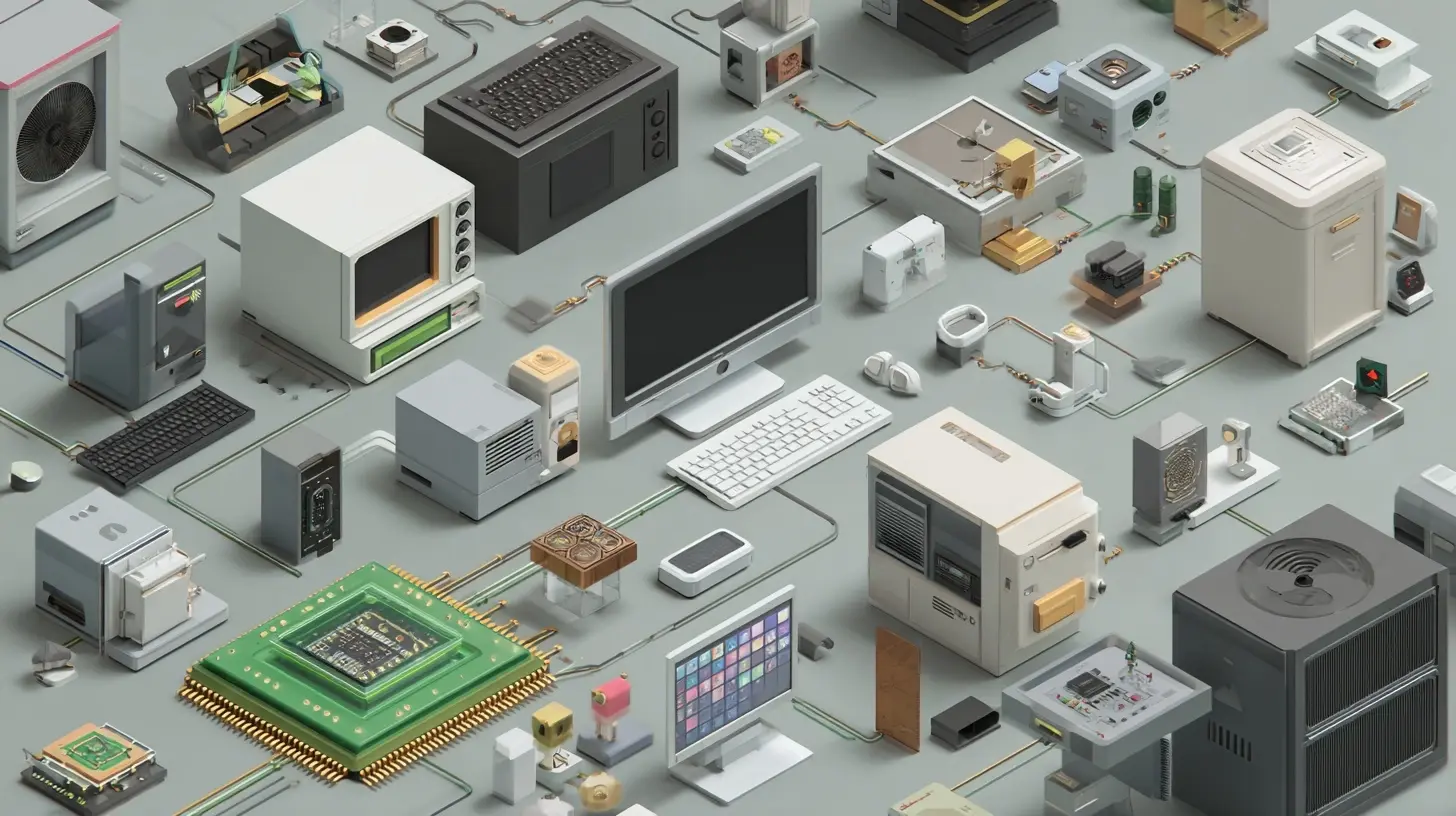
all images in this post were generated using AI tools
Category:
Operating SystemsAuthor:

Kira Sanders