Getting Started with Python Programming in 2026
24 April 2026
Alright, let’s cut the crap. You’ve decided to learn Python in 2026. Good for you. But let me guess—you’ve been staring at a blinking cursor, drowning in tutorial hell, wondering if you’re too late to the party. Spoiler alert: you’re not. Python in 2026 isn’t just alive; it’s the cockroach of programming languages—surviving every apocalypse, thriving in every niche, and somehow still getting faster. If you think Python is just for data nerds or AI bros, you’re missing the point. It’s the Swiss Army knife of code, and you’re about to learn how to wield it without cutting yourself.
So, grab a coffee (or tea, I don’t judge), and let’s dive into the messy, glorious world of Python programming in 2026. No fluff, no filler—just the real talk you need to go from zero to writing code that doesn’t suck.
Why Python in 2026 Isn’t Just a Trend—It’s a Survival Skill
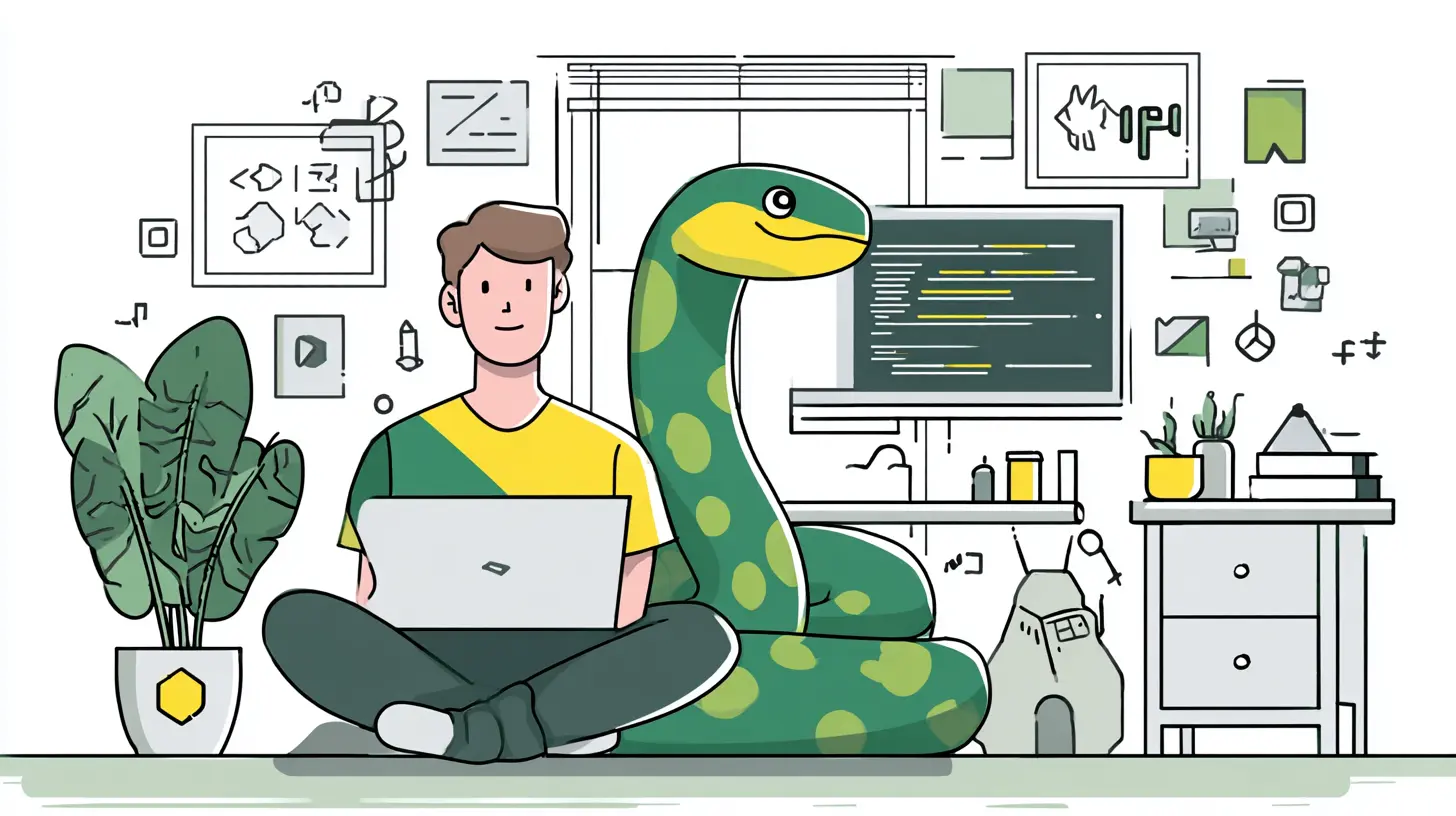
Let’s be honest: every year someone declares that Python is dying. “It’s too slow!” “JavaScript is eating its lunch!” “Rust is the future!” Yeah, yeah, we’ve heard it all before. But here we are in 2026, and Python is still the most googled, most taught, most used language on the planet. Why? Because it’s the duct tape of the digital world. It holds everything together, from web apps to AI models to rocket ship navigation systems.Think of Python as that friend who shows up to every party, knows everyone, and somehow makes everything work without breaking a sweat. In 2026, Python isn’t just for beginners—it’s for everyone. The language has evolved. The standard library is fatter. The ecosystem is so rich that you can build an entire startup with just Python and a prayer. And with the rise of AI-assisted coding tools (yes, even ChatGPT’s grandkids), Python has become the lingua franca of automation. If you can’t write Python in 2026, you’re basically a digital illiterate.
The Myth of "Python Is Too Slow" (And Why You Shouldn't Care)
I can already hear the haters: “Python is slow. It’s interpreted. You’ll never build anything real.” First of all, chill. Second, you’re wrong. Sure, Python isn’t winning any speed races against C++ or Rust. But here’s the thing: in 2026, performance bottlenecks are rarely about the language. They’re about architecture. Python’s speed is more than enough for 90% of real-world applications. And for that other 10%? You can use PyPy, Numba, or just write the hot path in C. It’s 2026—we have tools for that.Think of Python like a Toyota Camry. It’s not a Ferrari, but it’ll get you to work every day without breaking down. And when you need to race, you can swap the engine. The real cost of programming isn’t CPU cycles—it’s your time. Python saves you time. And time is money, baby.
Setting Up Your Python Environment in 2026 (Without Pulling Your Hair Out)
Okay, enough pep talk. Let’s get our hands dirty. Setting up Python in 2026 is easier than ever, but there are still pitfalls. Here’s the no-BS guide.Step 1: Ditch the Official Python Installer (Seriously)
Don’t download Python from python.org like it’s 2015. Use a version manager. In 2026, the gold standard is pyenv (or uv if you’re feeling fancy). Why? Because you’ll need multiple Python versions for different projects. One project might need Python 3.12, another might be stuck on 3.10 for legacy reasons. With pyenv, you can switch versions faster than you can say “dependency hell.”bash
curl https://pyenv.run | bash
pyenv install 3.13.1
pyenv global 3.13.1
Boom. You’re now running the latest stable Python. (Yes, Python 3.13 is out in 2026. No, it doesn’t have GIL removal yet—don’t believe the hype.)
Step 2: Use a Virtual Environment (Or Else)
Look, I know it’s tempting to just `pip install` everything globally. Don’t. You’ll end up with a broken system Python and a million conflicts. In 2026, the cool kids use virtualenv or poetry or pdm. My advice? Start with `python -m venv`. It’s built-in, it’s simple, and it works.bash
python -m venv my_project_env
source my_project_env/bin/activate
Now you’ve got a clean sandbox. Install whatever you want. Break it. Rebuild it. No consequences. That’s the beauty of isolation.
Step 3: Pick an Editor (And Stick With It)
VS Code is still the king in 2026, but JetBrains PyCharm is giving it a run for its money. Don’t overthink this. Download VS Code, install the Python extension, and you’re golden. If you’re feeling rebellious, try Neovim with a Python LSP. But only if you enjoy pain.
The Absolute Basics: What You Need to Know (And What You Can Skip)
You don’t need to learn every single Python feature to start building. Here’s the cheat sheet for 2026.Variables and Data Types (Boring but Necessary)
python
name = "Sassy Coder"
age = 2026 - 1990 Yes, I'm old
is_cool = True
Python is dynamically typed, which means you don’t have to declare types. But in 2026, you should use type hints. They’re not mandatory, but they make your code readable and help IDEs catch bugs.
python
def greet(name: str) -> str:
 return f"Hello, {name}!"
Control Flow: If, Else, and While (Your First Superpower)
python
if age > 30:
 print("You're old enough to know better.")
else:
 print("You still have time to make mistakes.")
Loops are your friends. `for` loops in Python are beautiful.
python
for i in range(10):
 print(f"This is iteration {i}")
Functions: The Building Blocks of Sanity
Functions let you write code once and reuse it. In 2026, we write functions that do one thing and do it well.python
def calculate_tax(income: float, tax_rate: float = 0.2) -> float:
return income * tax_rate
Notice the default parameter? That’s Python’s way of being both flexible and lazy.
The Real Power of Python: Libraries That Do the Heavy Lifting
Python’s superpower isn’t the language itself—it’s the ecosystem. In 2026, there’s a library for everything. Here are the ones you need to know.For Web Development: FastAPI Over Flask
Flask was cool in 2010. In 2026, FastAPI is the king of Python web frameworks. It’s async, it’s fast, and it generates automatic API docs. If you’re building a web app, start here.python
from fastapi import FastAPIapp = FastAPI()
@app.get("/")
def read_root():
return {"message": "Hello, 2026!"}
For Data Science: Polars Over Pandas
Pandas is a bloated mess. In 2026, Polars is the new hotness. It’s faster, uses less memory, and has a cleaner API. Don’t believe me? Try loading a 10GB CSV with Pandas and watch your laptop cry. Then try Polars. You’re welcome.For AI: PyTorch (Still)
TensorFlow had its moment. In 2026, PyTorch is the undisputed champion of deep learning. It’s flexible, it’s Pythonic, and it runs on everything from your laptop to a GPU cluster. If you want to play with AI, learn PyTorch.For Automation: Click or Typer
Want to build command-line tools? Skip `argparse`. Use Click or Typer. They’re declarative, they’re beautiful, and they make your CLI tools look professional.python
import typerapp = typer.Typer()
@app.command()
def hello(name: str):
print(f"Hello {name}")
if __name__ == "__main__":
app()
The 2026 Python Workflow: How to Actually Get Stuff Done
Here’s the secret that no tutorial tells you: you don’t learn Python by reading. You learn by doing. Here’s my recommended workflow.Step 1: Build a Crappy Project
Pick something stupid. A to-do list app. A weather bot. A password generator. It doesn’t matter. The goal is to write code that works, even if it’s ugly. You’ll refactor later.Step 2: Use AI as Your Pair Programmer
In 2026, it’s stupid not to use AI. GitHub Copilot, Cursor, or even a local LLM can write boilerplate code faster than you. But here’s the catch: you still need to understand what it’s doing. Don’t copy-paste blindly. Read every line. Ask “why did it write that?” That’s how you learn.Step 3: Read Other People’s Code
GitHub is your library. Find a popular Python project (like FastAPI or Requests) and read the source code. You’ll be shocked at how much you learn. Pay attention to how they structure functions, handle errors, and write tests.Step 4: Write Tests (Yes, Really)
Testing isn’t optional in 2026. Use `pytest`. Write a test for every function you create. It’s not sexy, but it saves your ass when you break something at 2 AM.python
def test_calculate_tax():
assert calculate_tax(100000, 0.2) == 20000
Common Pitfalls in 2026 (And How to Avoid Them)
Pitfall 1: "I’ll Learn Everything Before I Start"
No, you won’t. You’ll get bored and quit. Start with the 20% of Python that does 80% of the work. Learn the rest on the job.Pitfall 2: "I Don’t Need to Learn Git"
Yes, you do. Git is the universal language of collaboration. If you can’t commit, push, and pull, you’re a liability. Learn `git add`, `git commit`, and `git push` today. Use a GUI if you must, but know the commands.Pitfall 3: "I’ll Optimize Later"
Premature optimization is the root of all evil. Write ugly code first. Make it work. Then make it fast. Don’t waste hours micro-optimizing a loop that runs once a day.The Future of Python in 2026 (And Beyond)
Python isn’t going anywhere. The language is getting faster (thanks to projects like Codon and Mojo), the ecosystem is maturing, and the community is massive. In 2026, Python is the default choice for automation, data analysis, AI, and backend development. It’s also creeping into game development, embedded systems, and even mobile apps (thanks to Kivy and BeeWare).But here’s the real truth: the best programming language is the one you actually use. Python is easy to start, hard to master, and infinitely rewarding. If you’re reading this in 2026, you’re already ahead of the curve. The only question is: what will you build?
Final Thoughts: Stop Waiting, Start Coding
You’ve read 1800+ words of sass and substance. Now it’s time to act. Open your terminal. Type `python` (or `python3` if you’re on a Mac). Write `print("Hello, 2026!")`. That’s it. You’ve started.Remember: every expert was once a beginner who didn’t quit. Python in 2026 is your playground. Don’t overthink it. Don’t compare yourself to others. Just write code, break things, and learn. The only mistake is not starting.
Now go forth and code like a boss. You’ve got this.
all images in this post were generated using AI tools
Category:
Technology GuidesAuthor:

Kira Sanders
Discussion
rate this article
2 comments
Isabella McCaw
Exciting insights! Python's evolution continues to enhance programming accessibility.
April 27, 2026 at 11:20 AM
Kira Sanders
Thanks! I'm glad you found it insightful. Python's evolution really is making programming more accessible for everyone.
Samantha Black
Great article! Python remains a top choice for beginners in 2026. Emphasizing hands-on projects and leveraging online resources can significantly enhance learning. Don’t forget to explore libraries like Pandas and TensorFlow for practical applications!
April 25, 2026 at 11:39 AM
Kira Sanders
Thank you! I agree, hands-on projects and resources are key for learning Python, and libraries like Pandas and TensorFlow offer fantastic opportunities for practical experience.