Combining Mental Health and Productivity in Future Apps
10 October 2026
Most productivity software is built on a quiet lie: that a person is a machine with unlimited output capacity. You open the app, see a full task list, and the implicit message is that a good day means clearing all of it. When you cannot, the tool does not adapt. It just shows you the same list tomorrow, now with overdue items in red.
Mental health apps often fail in the opposite direction. They offer breathing exercises, mood logs, and journaling prompts, but they sit apart from the work you actually have to do. You can meditate for ten minutes and still feel crushed by a backlog that never changed.
The next generation of software has to close that gap. Not by turning therapy into a to-do list, and not by turning work into a wellness slogan, but by treating attention, energy, and emotional state as real inputs into how work gets planned and done. This article looks at how that can work, where it can go wrong, and what to demand from any app that claims to do it.
Why the Separation Exists
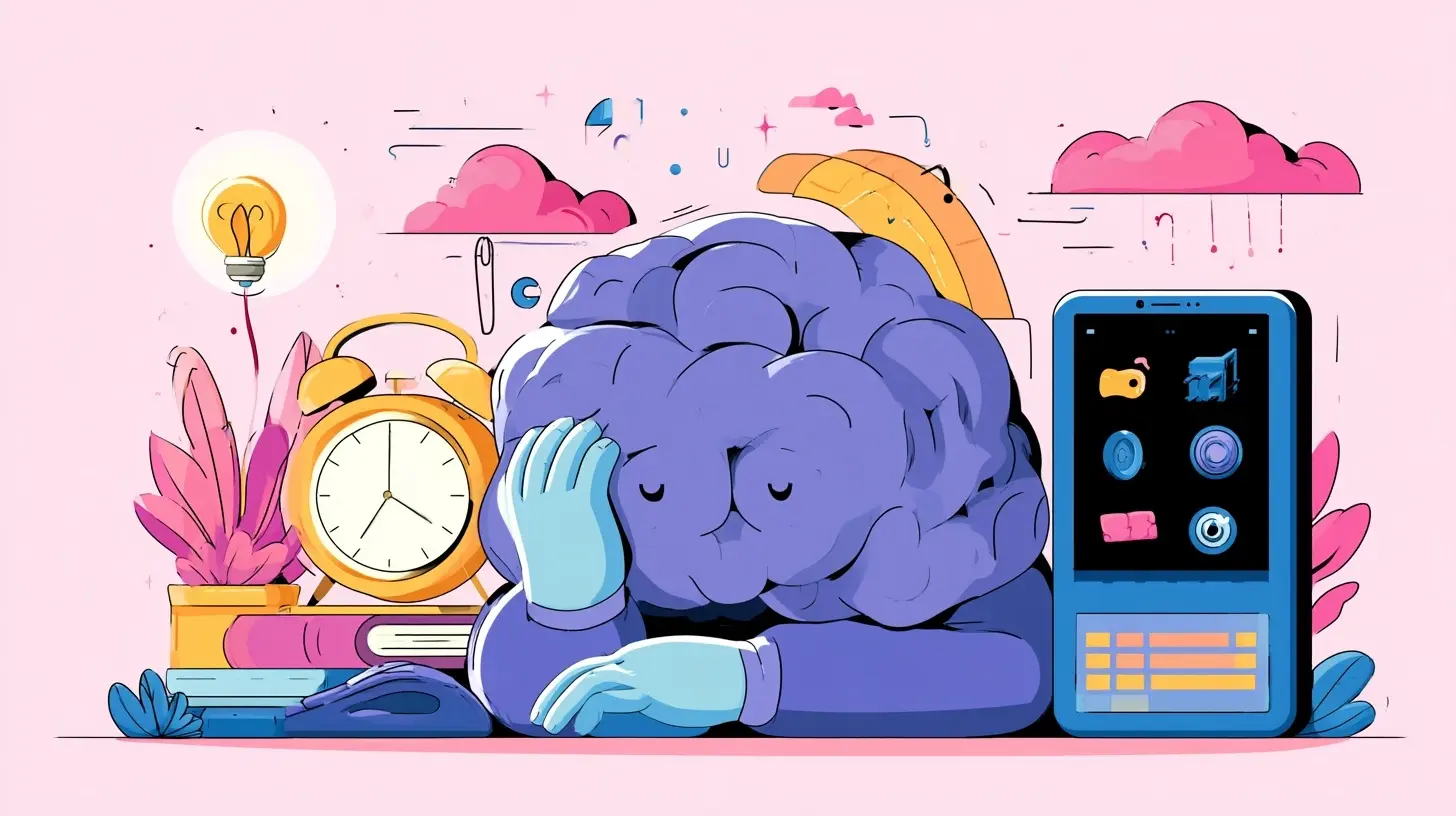
Productivity tools evolved from project management for teams. Their core assumptions come from manufacturing and logistics: tasks are units, time is a resource, and throughput is the goal. That model works well for predictable work with clear inputs and outputs. It breaks down for knowledge work, where the bottleneck is often cognitive and emotional rather than logistical.Mental health tools evolved from clinical practice and self-help. Their assumptions come from therapy: insight matters, patterns matter, and change is gradual. That model works well for reflection. It breaks down when it has no connection to the deadlines, meetings, and obligations that shape a person's day.
Each side has a legitimate reason for its design. The problem is that human beings do not experience their lives in two separate compartments. Anxiety about a performance review shows up while you are trying to write a report. Poor sleep shows up as a three-hour afternoon where nothing gets done. A productivity system that ignores this will produce plans that look reasonable and feel impossible.
What "Combining" Actually Means
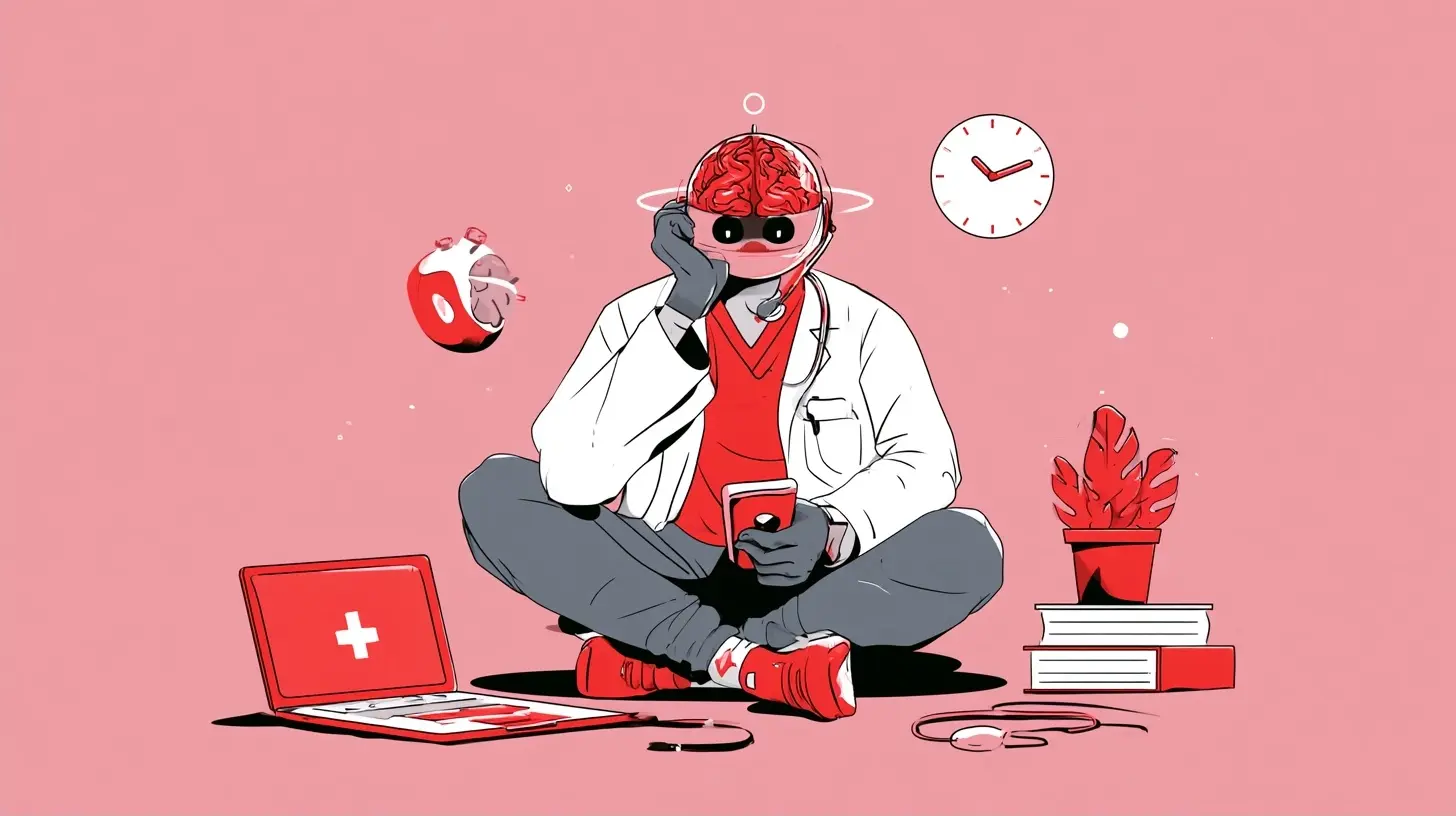
It is worth being precise, because the phrase can mean several different things, and some of them are bad ideas.The bad version: surveillance disguised as care
A tool that tracks your mood, your typing speed, your break frequency, and your heart rate, then reports all of it to your employer, is not a mental health tool. It is monitoring with a friendlier color palette. This pattern has already caused real harm in workplaces, and it deserves to be named clearly.The acceptable version: self-directed awareness
A tool that helps you notice your own patterns, privately, and adjust your own behavior, is genuinely useful. The data belongs to you. Sharing is opt-in, specific, and revocable.The ambitious version: adaptive planning
This is the interesting frontier. Software that adjusts what it asks of you based on signals you choose to provide, such as sleep quality, mood, or available energy. On a low day, it might suggest one meaningful task instead of twelve. On a good day, it might protect a longer block for deep work.The third version is where real value lives, but it only works if the first two are handled correctly. Privacy is not a feature here. It is the foundation.

The Core Design Principles
If you are evaluating or building this kind of software, these principles separate tools that help from tools that harm.1. The app serves the person, not the plan
Traditional productivity apps treat the plan as sacred and the person as the variable that must conform. That is backwards. A plan is a hypothesis about how work might happen. When reality contradicts it, the plan should change, not the person's sense of self-worth.In practice, this means the app should make it easy to reduce scope without shame. No red overdue counters. No streak-breaking guilt animations. Instead, a simple question: given how today is going, what is the one thing that still matters?
2. Energy is a first-class input
Time is not the only constraint. Two hours at 9 a.m. after good sleep are not the same as two hours at 4 p.m. after a difficult meeting. Most tools treat all hours as equal, which is why their schedules collapse in real life.A better model lets you tag tasks by cognitive demand, not just duration. Then it matches high-demand work to your stated high-energy windows and low-demand work to the rest. This is not pseudoscience. It is basic resource allocation applied to a resource that actually varies.
3. Friction should scale with capacity
On a good day, a well-designed app can ask a lot: plan the week, review goals, batch small tasks. On a bad day, it should ask almost nothing. Just one prompt, one action, and then get out of the way.This is harder to build than it sounds, because it requires the app to make a judgment about your state. If that judgment is wrong, it becomes patronizing. So the judgment should always be a suggestion, never a lock. You should be able to override it in one tap.
4. Reflection must lead to action
Mood tracking that produces a pretty chart and nothing else is a diary with extra steps. The value comes from the loop: notice a pattern, test a change, observe the result.For example, suppose your logs show that your mood drops consistently on days with more than three back-to-back meetings. The app does not need to diagnose you. It just needs to surface the pattern and offer a concrete experiment: try blocking 30 minutes after the second meeting and see what happens. That is the difference between data and insight.
5. Privacy is not negotiable
Anything that touches mental health data requires the strongest possible defaults. Local storage where feasible. End-to-end encryption where sync is needed. No ad tech. No data brokers. No "anonymized" datasets that can be re-identified.If a tool cannot explain in plain language where your data lives and who can see it, treat that as a disqualifying flaw, not a minor inconvenience.
How Adaptive Planning Could Work in Practice
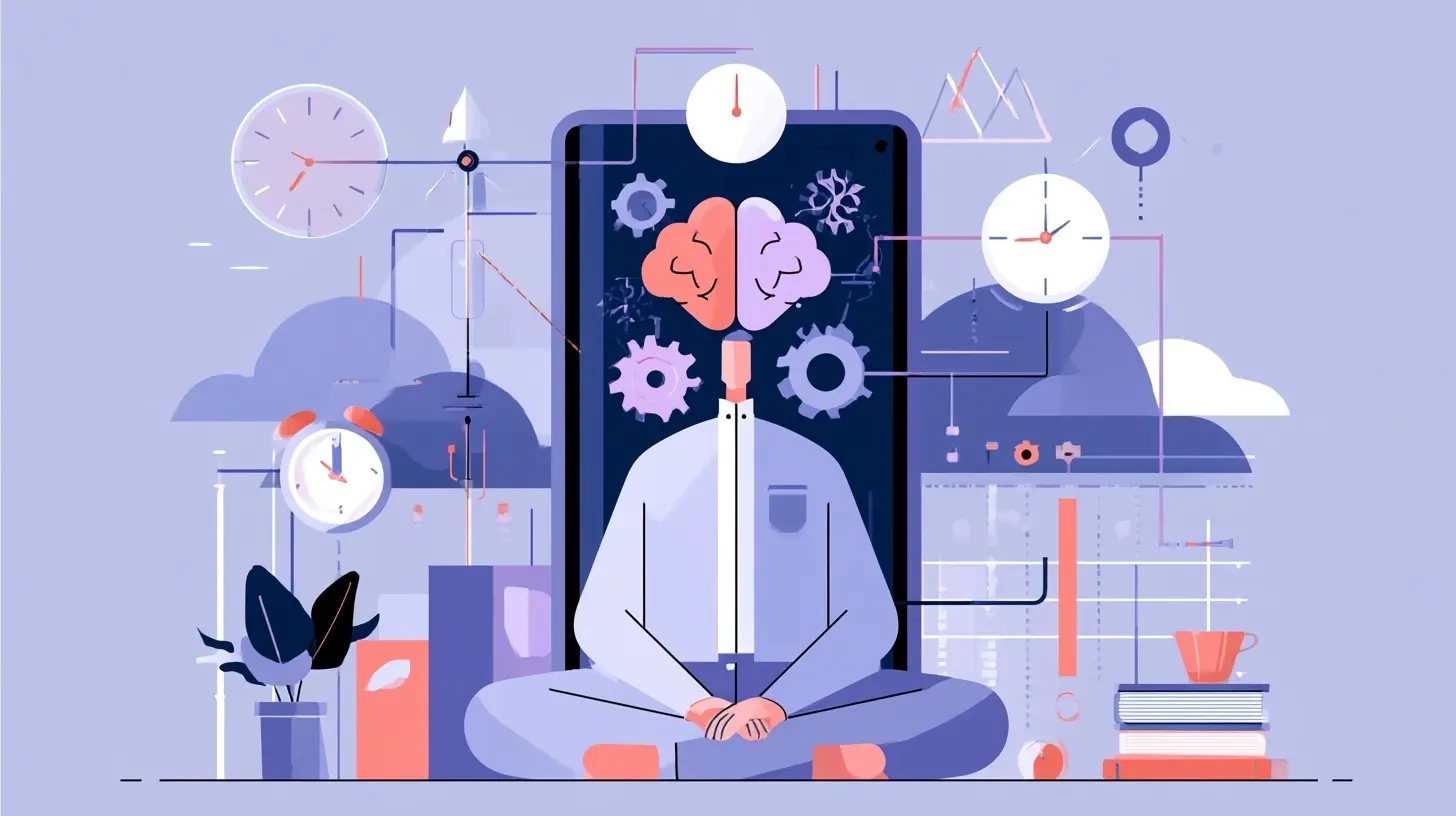
Here is a concrete example of what this looks like, described as a design pattern rather than a specific product.You wake up and open the app. It asks one question: how are you arriving today, on a simple scale. You pick "low." The app does not lecture you. It reshuffles. It marks two low-priority tasks as deferred, keeps one small task and one meaningful task, and suggests a 25-minute focus block rather than a 90-minute one. It also offers a two-minute wind-down at the end.
Later that day, you complete the meaningful task. The app logs it quietly. Over weeks, a pattern emerges: on low days, you still finish one meaningful task about 70 percent of the time when the list is short, but almost never when it is long. That is useful information about how you work, and it came from your own data, not a generic productivity rule.
Now consider the opposite failure mode. You pick "high" every day because you are afraid of looking weak, even to an app. The system degrades into a normal task manager. That is fine. The tool should not punish you for that. But it does mean the adaptive features only help people who are honest with themselves, which is a real limitation worth acknowledging.
Where This Gets Difficult
Any honest discussion has to include the trade-offs.The risk of avoidance
A tool that lowers demands when you feel bad can, in the wrong hands, become a tool for never doing hard things. The line between "I need rest" and "I am avoiding discomfort" is genuinely blurry, even for therapists.Good design handles this by distinguishing between rest and avoidance over time, not in a single moment. If low-energy days cluster around a specific task, the app might gently note that pattern. It should never accuse. It should offer the observation and let you decide.
The risk of over-quantification
Not everything that matters can be measured. If you reduce your inner life to a five-point scale, you may start optimizing the scale instead of your life. This is a known problem with any self-tracking, and it deserves more attention than it usually gets.The best mitigation is to keep the tracking light. One or two inputs per day, not twenty. And to make it clear that the numbers are a tool for noticing, not a verdict on your worth.
The risk of clinical overreach
An app is not a therapist. It should not attempt to treat depression, anxiety, or trauma. It should be designed to notice when someone might benefit from professional support and to make that handoff easy, without pretending to provide that support itself.This boundary matters legally, ethically, and practically. Crossing it puts users at risk and exposes developers to liability they are not equipped to handle.
The risk of employer misuse
If the same app is used by individuals and sold to employers, the incentives will eventually collide. The safest path is to keep the individual experience and any workplace analytics strictly separate, with the individual in full control of what, if anything, is shared.
What to Look For If You Are Choosing a Tool
A short checklist, based on the principles above.- Does it let you reduce scope without penalty or shame?
- Can you tag tasks by mental demand, not just time?
- Is the mood or energy input optional, and is it stored privately?
- Does reflection lead to a specific suggested action, or just a chart?
- Can you export or delete everything easily?
- Does it avoid clinical claims it cannot support?
- Is there a clear, non-manipulative way to step away from the app?
If a tool fails most of these, it is probably a standard productivity app with a wellness section bolted on. That is not the same thing.
What This Means for Builders
If you are building in this space, a few things are worth internalizing.First, resist the urge to add features. The value is in subtraction. A tool that does three things well, including knowing when to stay silent, will beat a tool that does thirty things adequately.
Second, treat the low-capacity day as the primary design case, not the edge case. Most apps are designed for the ideal user on the ideal day. That user does not exist. Design for the tired, distracted, overwhelmed person, and the good days will take care of themselves.
Third, be honest about what you cannot do. You cannot diagnose. You cannot replace human connection. You cannot guarantee outcomes. Saying so builds more trust than any feature.
Fourth, think in years, not weeks. Mental health and productivity both change slowly. A tool that helps someone notice a pattern over six months is more valuable than one that produces a dopamine hit every morning.
The Bigger Picture
There is a cultural assumption worth challenging here: that productivity is a moral virtue. That a good person gets things done, and a struggling person just needs better systems. This assumption is baked into most software, and it is wrong.People are not projects. Their worth does not depend on their output. A truly humane productivity tool would embody that belief in its design, not just its marketing copy. It would help you do meaningful work when you can, and it would not make you feel worse when you cannot.
That is the real opportunity in combining mental health and productivity. Not to squeeze more output from tired people, but to build tools that respect the person using them. The technology to do this is not especially hard. The harder part is the discipline to resist the usual patterns of engagement-driven design.
If the next generation of apps gets this right, they will not feel like productivity apps at all. They will feel like a calm, competent assistant who knows when to push and when to leave you alone. That is a modest ambition, and it would be a genuine improvement.
all images in this post were generated using AI tools
Category:
Productivity AppsAuthor:

Kira Sanders
Discussion
rate this article
1 comments
Gabriella McCool
The intersection of mental health and productivity in app design is a game changer. By prioritizing well-being alongside efficiency, we can create tools that empower users, reduce stress, and foster balance. The future of technology should nurture minds while enhancing performance... Let's embrace this vision together!
October 10, 2026 at 2:49 AM