Can Data Localization Laws Survive a Globalized Internet?
6 July 2026
The internet was built on the principle of frictionless data flow. Packets cross borders without passports, and a user in Tokyo can access a server in Frankfurt with roughly the same ease as a server next door. That architecture has fueled innovation, global commerce, and the modern digital economy. But over the past decade, a powerful counterforce has emerged: data localization laws. These regulations, which require that certain data be stored and processed within a specific country's borders, now exist in dozens of nations. They range from Russia's strict mandates on personal data to China's sweeping cybersecurity laws and India's evolving framework for financial and health data.
The central tension is obvious. Data localization laws demand geographic boundaries for data. The internet, by design, ignores them. So the question is not whether these laws will persist, but whether they can remain effective, enforceable, and economically viable as the internet continues to globalize. The answer is more complex than a simple yes or no.

Why Data Localization Exists in the First Place
To understand the survival prospects of data localization, you first need to understand why governments impose these laws. It is rarely about privacy alone. The stated justifications usually fall into four buckets, and each has different staying power.National security and law enforcement access is the most common driver. Governments want to ensure that when they issue a lawful warrant for data, the data is physically within their jurisdiction. If a company stores everything in a data center in another country, that country might refuse the request. The Microsoft Ireland case from 2014 is the classic example: the US government tried to obtain emails stored in Dublin, and the legal battle went all the way to the Supreme Court. That case eventually became moot when the CLOUD Act passed, but it crystallized the fear for many governments. They do not want their citizens' data subject to the whims of a foreign legal system.
Economic protectionism is the second, less discussed reason. Data localization forces global tech companies to build local infrastructure, hire local staff, and pay local taxes on that infrastructure. For countries like India, Indonesia, and Brazil, this is a way to capture some of the value that currently flows to Silicon Valley. It is a digital form of import substitution.
Privacy and human rights come next. The European Union's GDPR does not mandate localization outright, but its adequacy decisions and cross-border transfer restrictions have the same practical effect for many companies. The logic is that if data stays in a jurisdiction with strong privacy laws, it is harder for companies to abuse it or for hostile governments to access it.
Cultural and social sovereignty is the final reason. Countries like China and Vietnam argue that data flows carry cultural content and political speech that should be subject to local norms. They do not want foreign platforms deciding what their citizens can see or say. Data localization is a tool to enforce those norms.
Each of these justifications has different levels of legitimacy and enforceability. National security arguments tend to be the most politically durable. Economic arguments are more controversial but still popular in developing economies. Privacy arguments are strongest in the EU but weaker elsewhere. Cultural sovereignty arguments are almost impossible to challenge from outside because they rest on domestic political consensus.
The Technical Reality: Data Does Not Stay Put
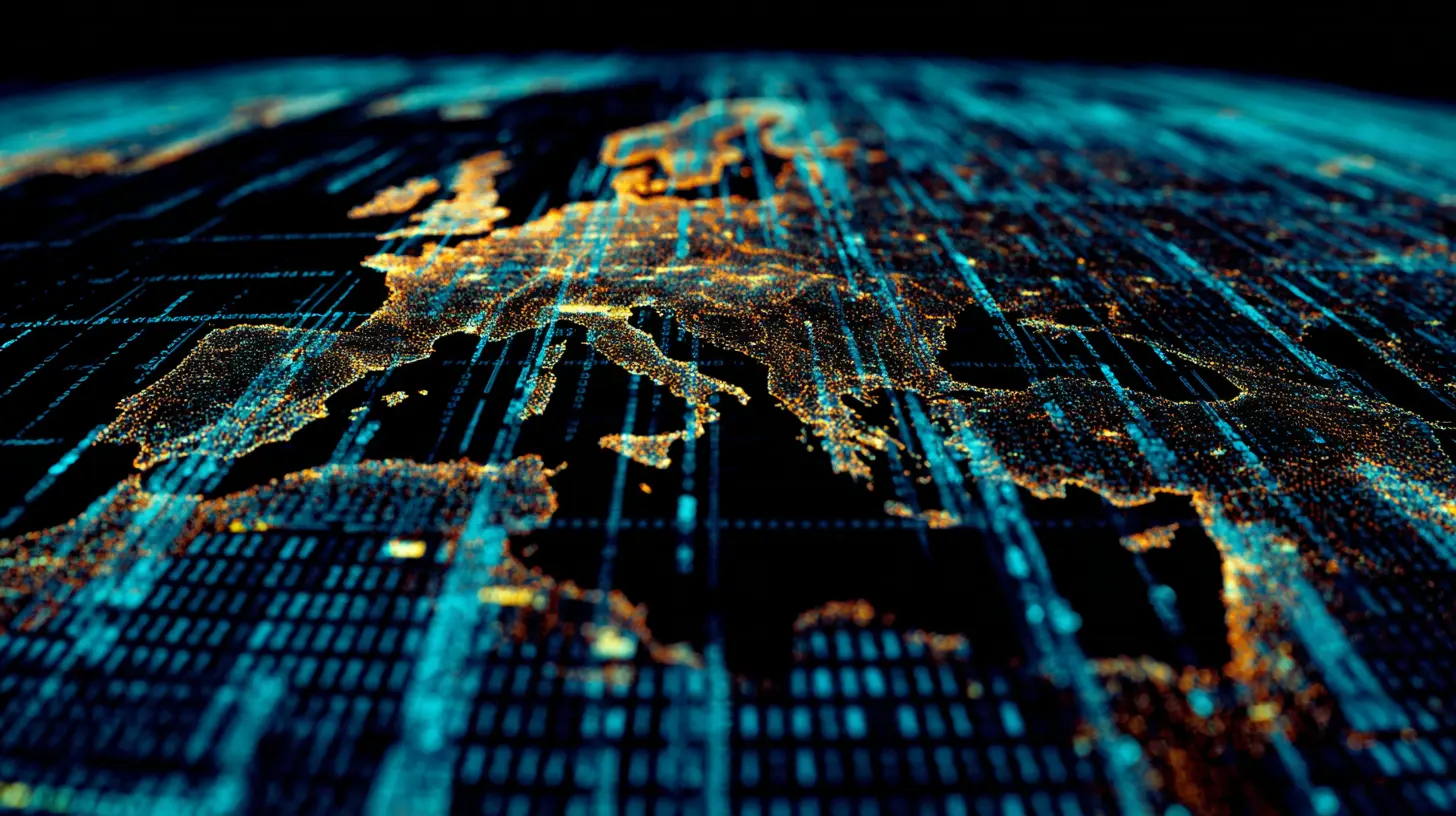
Here is where the rubber meets the road. Data localization laws assume that data is a static object that you can lock in a physical location. In practice, modern data architectures are distributed, redundant, and often ephemeral. A single user action can cause data to be replicated across three continents before the request completes.Consider a simple example. A user in Brazil uploads a photo to a social media platform. That photo might be stored in a primary data center in Sao Paulo, but it will almost certainly be replicated to a secondary site in Chile or Miami for disaster recovery. The platform's content delivery network will cache copies of that photo in dozens of edge locations worldwide. The machine learning pipeline that runs facial recognition on the photo might process it in a separate cluster in Ireland. The metadata about the photo might live in a database in Virginia.
Which copy counts as "the data"? The law usually says the primary copy. But in practice, the primary copy changes as systems fail, traffic shifts, and data gets rebalanced. A law that says "store this in country X" is straightforward. A law that says "ensure that no copy of this data ever leaves country X, even temporarily, even for processing, even for backup" is technically very difficult and economically expensive to comply with.
This is the first reason data localization laws will struggle to survive in their strictest form. They fight against the physics of distributed computing. Companies can comply, but only by building walled gardens that are far less efficient, less resilient, and more expensive than the global alternatives. Over time, the cost of compliance creates pressure to either relax the laws or to exempt certain types of data.

The Economic Cost of Compliance
Let us be direct about the numbers. Building a data center in a new country costs tens of millions of dollars at minimum. For a hyperscaler like Amazon, Microsoft, or Google, a single region can cost several hundred million. That is before you factor in the operational costs of hiring local engineers, paying local utilities, and navigating local procurement.For a startup or a mid-size company, the cost is prohibitive. Many companies simply exit markets that impose strict localization. This is why you see fewer Western tech services available in Russia and China. The cost of compliance is too high relative to the revenue opportunity. The unintended consequence is that local populations get worse services, fewer choices, and often higher prices.
There is also a hidden cost: the loss of data network effects. When data cannot flow freely across borders, it becomes harder to train global AI models, detect fraud across regions, or provide consistent user experiences. A bank that cannot share transaction data across its global network is less able to spot money laundering patterns that span multiple countries. A social media platform that cannot analyze user behavior across markets is less able to recommend relevant content.
These costs are real and they compound over time. Countries that impose strict localization may find their domestic tech industries becoming isolated, less competitive, and less innovative. This is not a theoretical concern. Look at Russia's internet, which has become increasingly disconnected from the global web. Local services have filled some gaps, but they are generally less sophisticated and more expensive than their global counterparts.

The Jurisdictional Tangle
A less obvious problem is the conflict between different localization regimes. If Country A requires data to be stored within its borders, and Country B requires the same data to be stored within its borders, and the data originates in Country C, you have a trilemma. The data cannot physically be in three places at once.This is not a hypothetical scenario. Financial data, for example, is subject to localization requirements in multiple jurisdictions. A global bank operating in the EU, India, and China must navigate three different sets of rules that may contradict each other. The practical solution is often to store the most restrictive version of the data in each jurisdiction and then try to avoid moving it. But that creates fragmentation. A customer who travels between countries might have their data in multiple silos, each incomplete.
The jurisdictional conflict also creates legal uncertainty for multinational companies. If a European company processes data for its Indian subsidiary, and that data includes information about Indian citizens, does the Indian localization law apply to the European server? The answer is usually yes, but enforcement is uneven. Companies are left guessing which regulator will act first and how aggressively.
The Enforcement Problem
Even the strictest data localization laws are difficult to enforce. How does a regulator know that a copy of data has left the country? They cannot monitor every packet that crosses the border. They rely on audits, whistleblowers, and occasional technical inspections. But sophisticated companies can obfuscate data flows. They can encrypt data before it leaves, use tokenization so that the actual values stay local while the tokens travel abroad, or use edge computing to process data locally while sending aggregated results globally.None of these workarounds are perfect. They all add complexity and risk. But they are available to any company with a competent engineering team. The result is a cat-and-mouse game. Regulators issue rules. Companies find ways to comply on paper while maintaining global operations in practice. The law exists, but its effectiveness varies widely.
This enforcement gap is why some countries are moving toward more pragmatic approaches. Instead of requiring physical storage, they are focusing on access control and data protection standards. The EU's approach with GDPR is instructive. It does not say "store data in the EU." It says "ensure adequate protection when data leaves the EU." That is a more flexible and enforceable model because it focuses on outcomes rather than geography.
The Cloud and the Edge: Technology Is Outpacing the Law
Cloud computing and edge computing are making localization laws even harder to sustain. In a cloud-native architecture, data is not stored in a fixed location. It moves between zones, regions, and providers based on cost, latency, and availability. Serverless computing takes this further by abstracting away the concept of a server entirely. The code runs wherever the cloud provider decides to run it.Edge computing adds another layer. When a self-driving car processes sensor data locally, that data never leaves the vehicle. But the aggregated training data might be uploaded to a central server later. Does that count as "processing" under a localization law? The answer is not clear. Most localization laws were written before edge computing became mainstream, and they do not account for this pattern.
The technology is moving faster than the regulatory machinery. By the time a law is passed and implemented, the technical landscape has shifted. This lag creates a persistent tension. Companies that want to comply must build for the laws as they are, not as the technology is. That means over-investing in fixed infrastructure that may become obsolete.
The Geopolitical Dimension
Data localization is not just a technical or economic issue. It is a geopolitical weapon. The US-China tech war has accelerated localization trends on both sides. The US has restricted data flows to China in the name of national security. China has responded with even stricter controls on outbound data. The EU sits in the middle, trying to maintain an open digital market while asserting its sovereignty.The survival of localization laws depends heavily on the trajectory of these geopolitical tensions. If the world continues to fragment into digital blocs, localization laws will become stronger, not weaker. Each bloc will demand that data stay within its sphere of influence. That is the path toward a "splinternet" where the global internet becomes a collection of regional networks.
But there are counterforces. Global trade agreements increasingly include provisions against data localization. The US-Mexico-Canada Agreement (USMCA) explicitly prohibits localization requirements. The Comprehensive and Progressive Agreement for Trans-Pacific Partnership (CPTPP) does the same. These agreements create a legal framework that pushes back against localization. The question is whether these trade deals can withstand the political pressures that drive localization in the first place.
Practical Advice for Companies
If you are building a product that handles data across borders, you cannot ignore localization laws. But you also cannot afford to overreact. Here is a practical framework.First, map your data flows. You cannot comply with laws you do not understand. Document where data is collected, where it is stored, where it is processed, and where it is backed up. This is tedious but essential. Most compliance failures happen because companies do not know their own architecture.
Second, classify your data. Not all data is equally sensitive. Personal data, health data, and financial data attract the strictest localization requirements. Anonymous or aggregated data usually does not. Separate your data into tiers and apply the most restrictive rules only to the tiers that actually need them. Do not treat all data as if it were subject to Russia's localization laws when only a small fraction of your users are in Russia.
Third, use data residency features that cloud providers offer. AWS, Azure, and GCP all allow you to restrict where data is stored. You can select specific regions and enforce policies that prevent data from leaving those regions. These tools are not perfect, but they are better than building your own infrastructure. They also allow you to scale compliance as you enter new markets.
Fourth, design for portability. If a new localization law passes in a country where you operate, you need to be able to move data quickly. That means using open formats, avoiding proprietary storage systems, and having clear data migration procedures. The worst position to be in is locked into a single provider or architecture when the regulatory ground shifts.
Fifth, engage with regulators early. Many localization laws include provisions for exemptions, certifications, or alternative compliance mechanisms. You will not get these unless you ask. Build relationships with data protection authorities in the countries where you operate. Show them your compliance efforts. Be transparent about your technical architecture. Regulators are more likely to work with companies that are proactive rather than reactive.
Common Mistakes and Misconceptions
One of the most common mistakes is assuming that localization laws are purely about privacy. They are not. As discussed earlier, many are about economic control, national security, or cultural sovereignty. If you approach compliance as a privacy exercise, you will miss the political dimensions that matter most to the government imposing the law.Another mistake is over-localizing. Some companies, in an abundance of caution, store all data in every country where they operate. This is wasteful and creates more compliance risk, not less. Every copy of data is a potential breach surface. Every data center is a target for local authorities. Store only what you must, where you must, and nothing more.
A third mistake is ignoring the extraterritorial reach of other countries' laws. The US CLOUD Act, the EU GDPR, and China's Data Security Law all claim jurisdiction over data that touches their citizens, regardless of where it is stored. You cannot comply with one country's localization law by ignoring another country's data access demands. You need a global strategy that accounts for all the regimes that claim jurisdiction over your data.
The Future: Will Localization Laws Survive?
The honest answer is that some will and some will not. Strict, blanket localization laws that apply to all data are unlikely to survive in their current form. They are too costly, too hard to enforce, and too out of step with the technical reality of distributed systems. Countries that have implemented these laws are already seeing pushback from industry, trade partners, and even their own citizens.But targeted localization for specific types of data is likely to persist and even grow. Health data, financial data, and government data will continue to face strict localization requirements because the stakes are high and the political will is strong. The question is not whether localization will disappear, but where the lines will be drawn.
The most likely outcome is a middle ground. Countries will move toward data protection standards and access control mechanisms rather than rigid geographic storage requirements. The EU's GDPR model, with its adequacy decisions and standard contractual clauses, points in this direction. It is not perfect, but it is more flexible than the binary "store it here or else" approach.
Another trend is the rise of data trusts and data intermediaries. These are organizations that hold data on behalf of multiple parties and enforce access rules without moving the data itself. If a global company wants to use data from multiple countries for AI training, a data trust could aggregate that data while ensuring that each country's localization rules are respected. This is still an emerging field, but it has potential.
data localization laws will survive, but they will evolve. The strictest versions will either be relaxed or become irrelevant as technology makes them unenforceable. The more nuanced versions, focused on protection and access rather than geography, will become the new normal. Companies that understand this trajectory and build flexible, portable, and well-documented data architectures will be best positioned to navigate the next decade of digital regulation.
The internet will remain globalized, but it will not be borderless. The challenge for policymakers, companies, and users is to find the balance between the benefits of free data flow and the legitimate concerns that drive localization. That balance will not be static. It will shift with technology, politics, and public opinion. The only certainty is that the debate is far from over.
all images in this post were generated using AI tools
Category:
Tech PolicyAuthor:

Kira Sanders
Discussion
rate this article
2 comments
Vesper Campbell
This article raises important questions about the balance between data localization and globalization. As we navigate these challenges, it's crucial to consider both privacy and innovation. Engaging in thoughtful discussions like this one will help shape a more secure and equitable digital future for everyone.
August 29, 2026 at 11:39 AM
Kira Sanders
Thank you for your thoughtful comment. It's essential to find that balance as we move forward in this complex landscape. I appreciate your engagement in this important discussion.
Natalie Ortiz
Data localization laws face significant challenges in a globalized internet. Balancing national interests with the free flow of information is crucial for both security and innovation in the digital age.
July 7, 2026 at 3:32 AM
Kira Sanders
You raise an important point. The tension between national security and global information flow is a complex issue that requires careful consideration. Finding a balance is essential for fostering both innovation and protecting local interests.