Key photocatalyst technology for converting greenhouse gases into future fuels
August 5, 2026 - 03:53
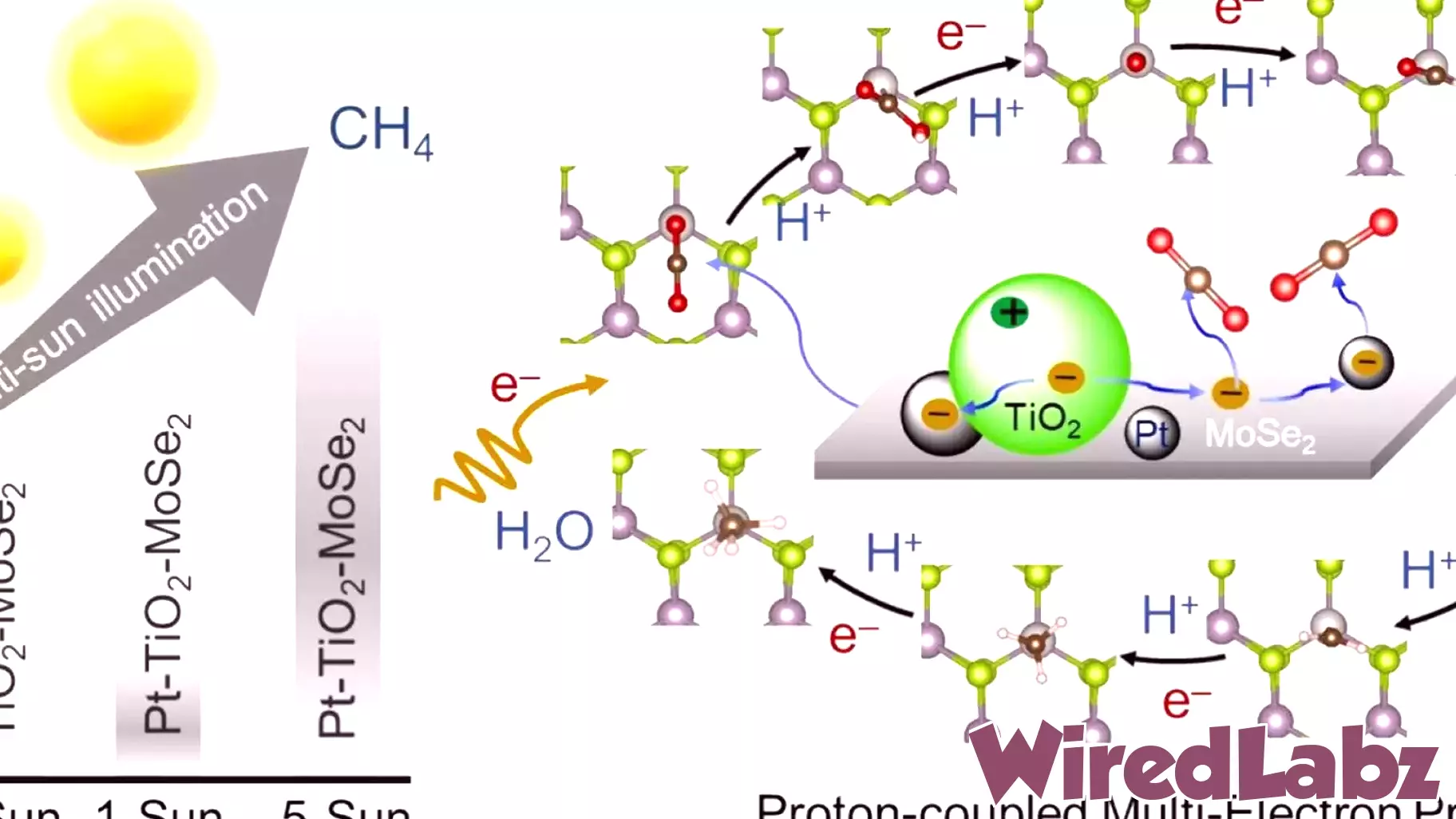
A joint research effort between DGIST in South Korea and the California Institute of Technology has produced a new photocatalyst that can convert carbon dioxide and methane, both potent greenhouse gases, into syngas, a key building block for liquid fuels and industrial chemicals. The work was led by Professor Su-Il In from DGIST's Department of Energy Science and Engineering and Professor William A. Goddard III from Caltech.
The team focused on a common problem in photocatalysis: the reaction often produces a mix of carbon monoxide and hydrogen, but the ratio is hard to control. That ratio matters a lot. For making methanol or synthetic diesel, you need a specific balance. The new catalyst, based on a modified titanium dioxide structure with copper and platinum particles, allows the researchers to tune that ratio simply by adjusting the light intensity and reaction temperature.
What makes this approach different is that it works under relatively mild conditions, using light as the main energy input rather than high heat and pressure. The team says the catalyst is stable over repeated cycles and does not degrade quickly, which has been a major hurdle in earlier attempts. They also ran detailed computer simulations to explain exactly why the metal particles on the catalyst surface steer the reaction toward the desired products.
The practical implication is significant. Instead of releasing carbon dioxide and methane into the air, industrial facilities could capture those gases and run them through a solar-powered reactor to produce syngas on site. That syngas can then be converted into gasoline, jet fuel, or even plastics, effectively turning waste emissions into a resource.
The researchers note that the technology is still at the laboratory stage. Scaling it up to handle the volumes needed for industrial use will require more work on reactor design and light absorption efficiency. But they believe the core finding, which is a reliable way to control the product ratio, removes a major obstacle. The study was published in a peer-reviewed journal, and the team is now looking at ways to integrate the catalyst into a continuous flow system for pilot testing.
MORE NEWS

September 19, 2026 - 04:29
Jennifer Bires: Rebuilding the Oncology Ecosystem Around Human NeedsThe oncology care system is facing a reckoning. For years, treatment advances have outpaced the infrastructure designed to deliver them, leaving patients and clinicians caught in a maze of...

September 18, 2026 - 04:45
EnGenius Appoints Rachel Saunders to Lead North American SalesEnGenius Technologies has announced the appointment of Rachel Saunders as Vice President of North American sales. Saunders steps into the role with more than 17 years of experience across...

September 17, 2026 - 12:12
Expert addresses concerns about AI technology’s future in West VirginiaCharleston, W.Va. - Artificial intelligence is quickly becoming a normal part of daily life, and as data centers continue to be built and planned across West Virginia, residents are asking what...

September 16, 2026 - 22:44
Seven with Missouri ties crack Forbes 400Two individuals connected to World Wide Technology have secured spots on this year`s Forbes 400 list of wealthiest Americans, continuing a trend of Missouri-affiliated billionaires gaining national...