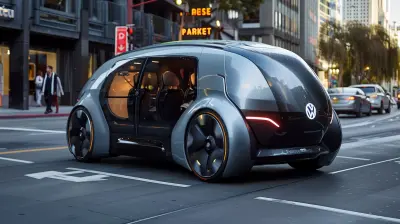
The Intersection of Mobile Tech and Autonomous Vehicles
26 January 2026
When we think about the future of transportation, it's hard not to envision a world where autonomous vehicles rule the roads. But here's the thing: it's not just about the cars driving themselves. What we’re really seeing is an exciting blend of two of the most disruptive technologies of the 21st century — mobile tech and autonomous vehicles. These two are not just colliding; they’re merging in ways that are shaping how we’ll travel, communicate, and interact with the world around us. Buckle up, because this is one thrilling ride through the intersection of mobile tech and autonomous vehicles.
The Evolution of Mobile Technology and Its Role in Autonomous Cars
Let's start with the basics. Mobile technology has come a long way from the bulky cell phones we carried around in the '90s. Today, our smartphones are more powerful than the computers that put a man on the moon. And with advancements in 5G networks, AI, and IoT (Internet of Things), mobile tech is no longer confined to the palm of your hand. It's bleeding into every aspect of our lives — including the way we drive, or rather, how our cars drive us.Think about it: smartphones have already transformed how we navigate on the road. GPS apps like Google Maps and Waze provide real-time traffic updates, helping us avoid congestion and find the fastest route. But that’s just a taste of what’s to come. The same mobile technologies that keep us connected, entertained, and informed are laying the groundwork for fully autonomous cars.
Mobile Networks: Fueling Real-Time Communication in Autonomous Vehicles
To understand why mobile tech is so crucial to autonomous vehicles, we need to talk about communication. Autonomous cars don’t just drive themselves in isolation. They rely on real-time data from their surroundings to make decisions — and that’s where mobile technology comes in.5G, the fifth generation of mobile network technology, is a game-changer for autonomous vehicles. Why? Because it’s fast. Really fast. Unlike previous generations, 5G offers ultra-low latency (think milliseconds) and high bandwidth, meaning cars can send and receive vast amounts of data almost instantaneously. This kind of speed is essential for autonomous vehicles, which need to communicate with other cars, traffic lights, and even pedestrians to ensure a smooth, safe ride.
Imagine this: you're in an autonomous vehicle cruising down the highway. Up ahead, there's another car that suddenly brakes. Thanks to 5G connectivity, your vehicle knows about that braking in real-time, allowing it to adjust its speed accordingly. This is called V2V (Vehicle-to-Vehicle) communication, and it’s only possible through the rapid advancements in mobile technology.
V2X: The Backbone of Autonomous Vehicle Communication
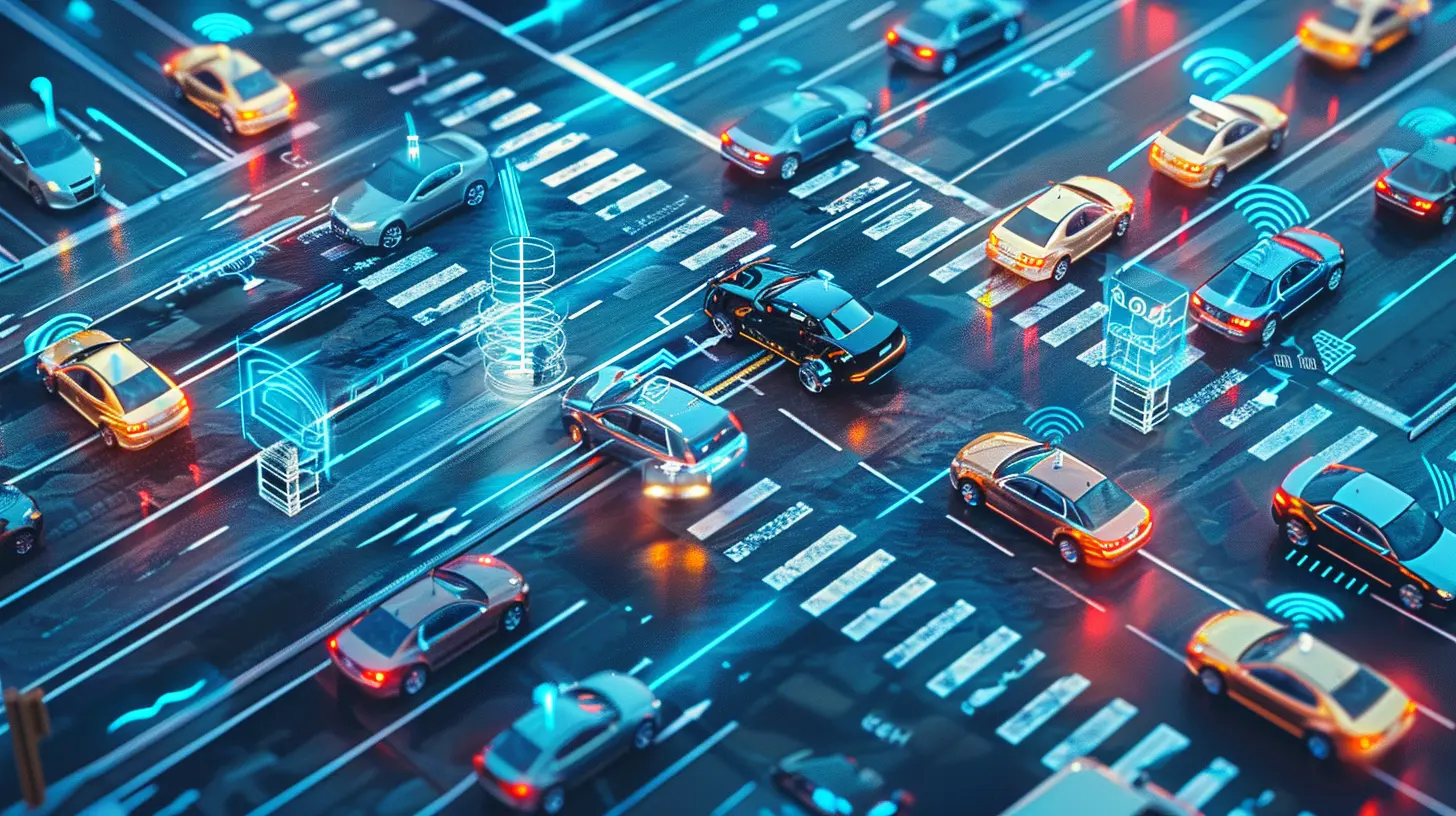
We’ve already touched on V2V communication, but there’s more. A truly autonomous vehicle ecosystem will also rely on V2X, or Vehicle-to-Everything communication. This broader concept includes not just cars talking to other cars, but also to infrastructure (V2I), pedestrians (V2P), and networks (V2N).For example, as your autonomous car approaches an intersection, it can communicate with nearby traffic lights to determine whether it should slow down or speed up. It can even "talk" to pedestrians’ smartphones, ensuring that it knows when someone is about to cross the street. In essence, mobile technology transforms cars into hyper-aware, data-driven machines capable of making split-second decisions.

AI and Machine Learning: The Brain Behind Autonomous Vehicles
While mobile networks provide the communication backbone, artificial intelligence (AI) and machine learning (ML) are the brains behind autonomous vehicles. But here’s the kicker: AI isn’t just making cars smarter; it’s also getting a major assist from mobile tech.Smartphones have paved the way for AI integration in our daily lives. Think of how voice assistants like Siri and Google Assistant have become so intuitive. The same kind of AI, only on a much grander scale, is being used to power autonomous vehicles. These systems are constantly learning from the data they collect — every road condition, every obstacle, every variable is processed and stored to improve future driving decisions.
And guess what? That data is often being processed in real-time, thanks to cloud computing and mobile technology. Autonomous vehicles are not just relying on their onboard systems; they’re tapping into the cloud to access massive amounts of information. With the help of mobile networks, cars can upload and download data in real-time, allowing them to learn from other vehicles and make smarter decisions.
Mobile Sensors and Cameras: Eyes and Ears on the Road
If AI is the brain, then sensors and cameras are the eyes and ears of autonomous vehicles. Just like your smartphone has a camera and sensors to detect motion or changes in light, autonomous vehicles are equipped with advanced sensors that help them "see" the world around them.LiDAR (Light Detection and Ranging) is one of the key technologies used in autonomous vehicles. It uses lasers to create a 3D map of the car’s surroundings, allowing it to detect obstacles, pedestrians, and other vehicles. But here’s where mobile technology comes into play: these sensors and cameras are often connected to mobile networks, allowing them to share data in real-time.
Mobile tech is also helping to improve the accuracy of these sensors. With 5G’s low latency and high bandwidth, cars can process sensor data more quickly and make faster decisions. This is crucial in situations where split-second reactions can mean the difference between avoiding an accident and causing one.

The Role of Mobile Apps in Autonomous Vehicles
Let’s not forget about another important piece of the puzzle: apps. Mobile apps have already transformed how we interact with our cars. Whether it’s unlocking your car via an app, checking your vehicle’s battery level, or finding the nearest charging station, mobile apps are playing a key role in the automotive experience.In the future, we can expect mobile apps to become even more integrated with autonomous vehicles. Imagine an app that not only schedules your car maintenance but also predicts when something might go wrong based on real-time data from the vehicle’s sensors. Or how about an app that allows you to control your autonomous car remotely, telling it to come pick you up from across town? The possibilities are endless.
The User Experience: Mobile Tech Enhancing Comfort and Convenience
In addition to safety and communication, mobile tech is also enhancing the in-car experience. Autonomous vehicles promise to transform our cars into mobile living rooms or offices, and mobile technology will play a big role in that transformation.Picture this: you’re on a road trip in an autonomous vehicle. Instead of focusing on the road, you’re using your smartphone to stream a movie or catch up on work emails. Thanks to 5G, you have seamless, high-speed internet access at all times. And with mobile apps controlling everything from the temperature to the entertainment system, your car becomes a highly personalized, comfortable space.

The Challenges and The Road Ahead
Of course, no discussion about autonomous vehicles and mobile tech would be complete without addressing the challenges. While the potential is enormous, there are still a few bumps in the road.Data Security and Privacy Concerns
With all this data moving between vehicles, networks, and infrastructure, security is a major concern. Autonomous vehicles will need to be equipped with robust cybersecurity measures to prevent hacking and ensure the privacy of user data. Mobile networks will play a key role in securing this data, but there’s still work to be done in ensuring that these systems are foolproof.Legal and Ethical Issues
Then there’s the question of legal and ethical issues. If an autonomous car gets into an accident, who’s to blame? The manufacturer? The software developer? These are questions that society is still grappling with, and they need to be resolved before autonomous vehicles become mainstream.Infrastructure Development
Finally, there’s the issue of infrastructure. For autonomous vehicles to truly thrive, we need smart cities with connected infrastructure. Traffic lights, roads, and even buildings will need to be equipped with sensors and IoT technology to communicate with autonomous vehicles. This level of integration will require significant investment and time.Conclusion: The Road to the Future
The intersection of mobile tech and autonomous vehicles is one of the most exciting developments of our time. These two technologies are not just complementary; they’re essential to each other’s success. Autonomous vehicles rely on mobile networks for real-time communication, AI for decision-making, and sensors for awareness. Meanwhile, mobile tech is pushing the boundaries of what’s possible, enabling faster, smarter, and more connected vehicles.As we move into the future, we’ll see these technologies continue to evolve hand-in-hand. The roads will never be the same again, and frankly, neither will we. So, whether you're a fan of gadgets, cars, or cutting-edge tech, one thing is for sure — this is a revolution you won’t want to miss.
all images in this post were generated using AI tools
Category:
Mobile TechnologyAuthor:

Kira Sanders
Discussion
rate this article
2 comments
Kate Cross
Exciting future for both industries!
February 4, 2026 at 11:55 AM
Kira Sanders
Absolutely! The convergence of mobile tech and autonomous vehicles promises innovation and transformative experiences ahead.
Vivian McDermott
Great insights on mobile tech's impact! Thank you!
January 27, 2026 at 1:05 PM
Kira Sanders
Thank you! I'm glad you found the insights valuable!