How to Create a Smart, Energy-Efficient Home by 2027
24 September 2026
Most homes are dumb in ways their owners never notice. A water heater keeps a tank hot all day for showers taken in the evening. A thermostat heats rooms nobody occupies. A charger pulls power for a laptop that is already full. None of this is dramatic on its own. Together, it adds up to hundreds of dollars a year and a lot of wasted electricity.
By 2027, the tools to fix this will be cheaper, more capable, and more standardized than they are today. But the technology is not the hard part. The hard part is knowing what to automate, what to leave alone, and how to avoid buying into an ecosystem you will regret in three years. This guide walks through the decisions that actually matter, from the physical upgrades that pay back fastest to the software layer that ties everything together.
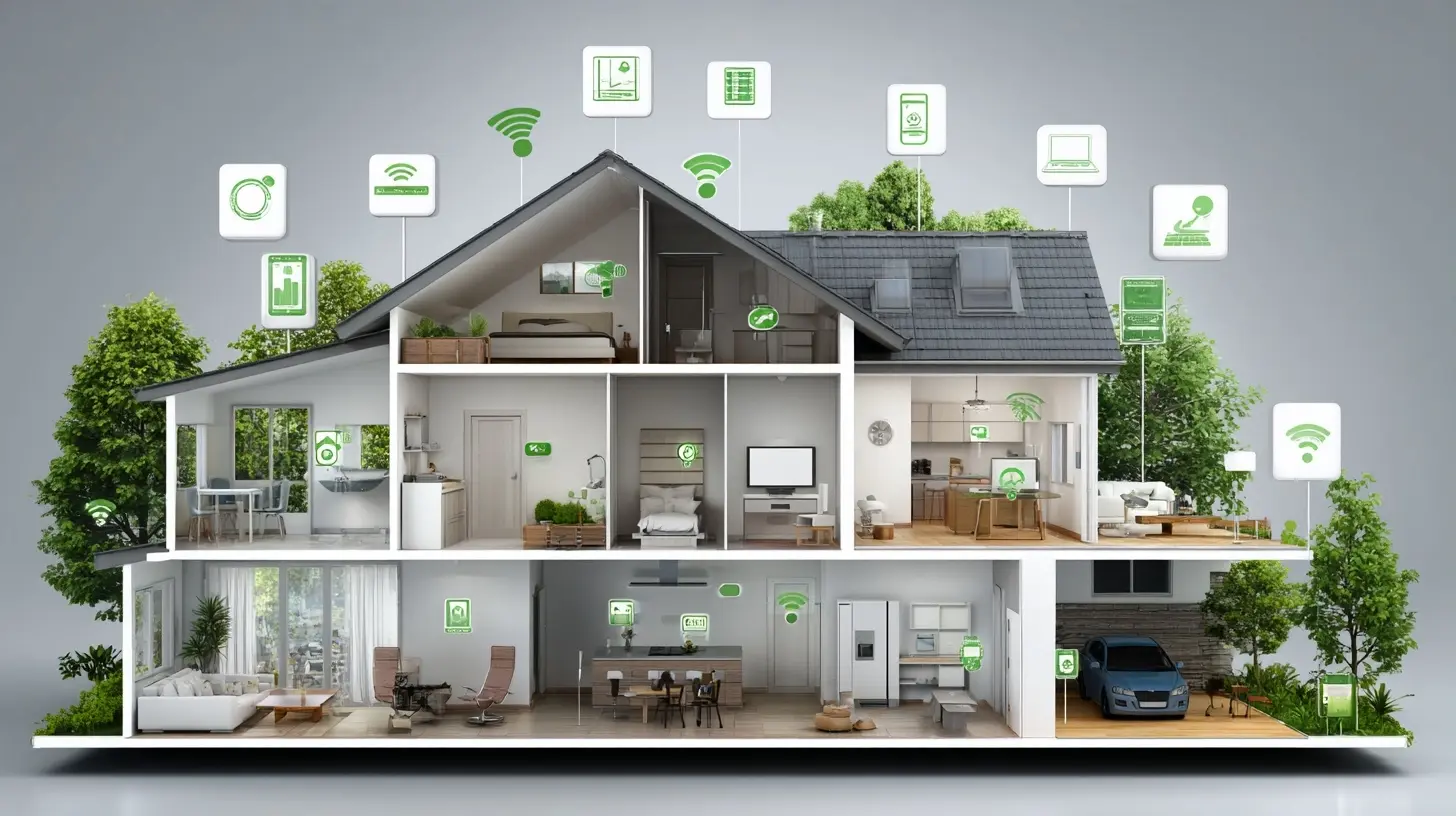
Start With the Building, Not the Gadgets
The most common mistake in smart home planning is buying devices before understanding the house. A smart thermostat cannot fix a drafty attic. A load controller cannot compensate for a water heater set to 140 degrees Fahrenheit. Efficiency starts with the envelope: insulation, air sealing, windows, and ventilation.Why the Envelope Comes First
Every dollar spent on reducing heat loss makes every downstream system work less. A well-sealed house needs a smaller heat pump, runs shorter cycles, and holds temperature longer during power interruptions. If you install smart devices first, you end up automating waste rather than eliminating it.The practical sequence looks like this:
1. Air seal the attic floor, rim joists, and any penetrations around pipes and wiring.
2. Upgrade insulation to meet or exceed your climate zone's recommended R-values.
3. Address windows only after sealing and insulation, since replacement is expensive and often less impactful than expected.
4. Verify with a blower door test if your utility or a local contractor offers one.
A blower door test measures how much air leaks through the building shell. It gives you a number, typically expressed in air changes per hour at 50 pascals of pressure. That number tells you whether your envelope work actually helped. Without it, you are guessing.
When Not to Prioritize the Envelope
If you rent, or if you plan to move within two years, envelope upgrades rarely make financial sense. Focus instead on plug-in devices you can take with you: smart plugs, smart thermostats that work with existing HVAC, and portable air quality monitors. These are reversible and portable.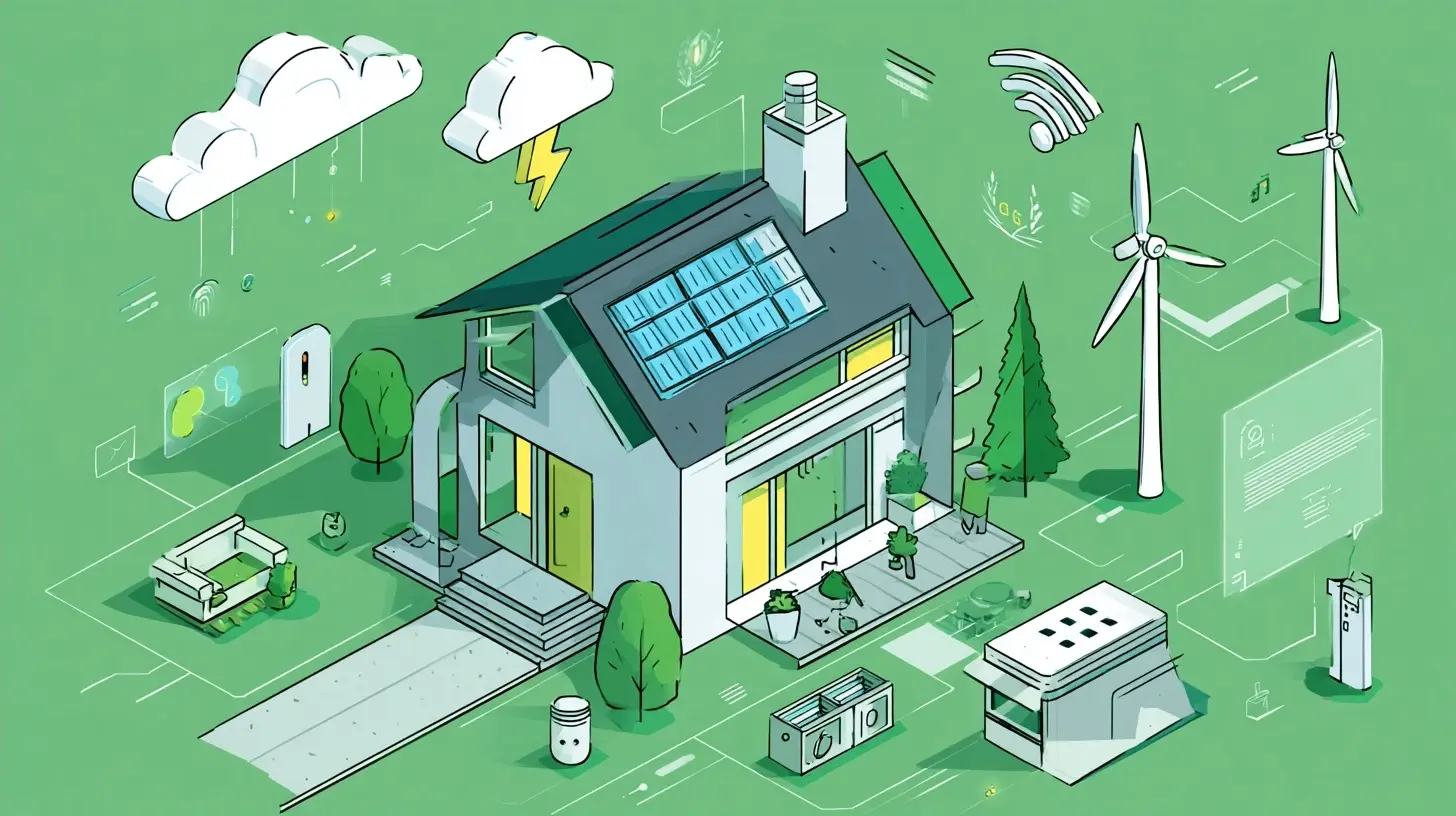
Heating and Cooling: Where the Real Money Is
In most climates, heating and cooling account for the largest share of household energy use. This is where smart control delivers the biggest return, but only if the underlying equipment is reasonably efficient.Heat Pumps and the Case for Variable Speed
A single-stage heat pump runs at full power or not at all. A variable-speed (inverter-driven) model modulates output continuously, matching demand more precisely. The result is fewer temperature swings, less compressor wear, and lower average power draw.Smart thermostats pair especially well with variable-speed systems because they can issue gradual setpoint changes instead of abrupt ones. A sudden five-degree jump forces the system into a high-output mode. A gradual ramp keeps it in its efficient range.
Zoning: Powerful but Easy to Get Wrong
Zoning divides a home into independently controlled areas. Done well, it stops heating unused bedrooms and offices. Done poorly, it creates pressure imbalances that strain the equipment and waste more energy than no zoning at all.Before adding zone dampers, consider:
- Whether your ductwork can handle reduced airflow without excessive static pressure.
- Whether the system has a bypass or dump zone to relieve pressure.
- Whether a multi-zone mini-split system would be simpler and more efficient than retrofitting dampers.
For many homes, especially those without existing ductwork, ductless mini-splits per room are the cleaner answer. They cost more upfront but avoid the complexity and failure modes of central zoning.
Thermostat Strategy That Actually Saves
Setback schedules save energy, but the savings depend on how long the setback lasts and how fast the system recovers. A two-hour setback of three degrees saves very little because the system spends most of that time recovering. An eight-hour overnight setback of five to seven degrees saves meaningfully in most climates.Heat pumps complicate this slightly. Deep setbacks can trigger resistance backup heat during recovery, which is expensive. The fix is to use a thermostat designed for heat pumps that ramps temperature gradually and locks out auxiliary heat above a certain outdoor temperature.
Water Heating: The Quiet Energy Hog
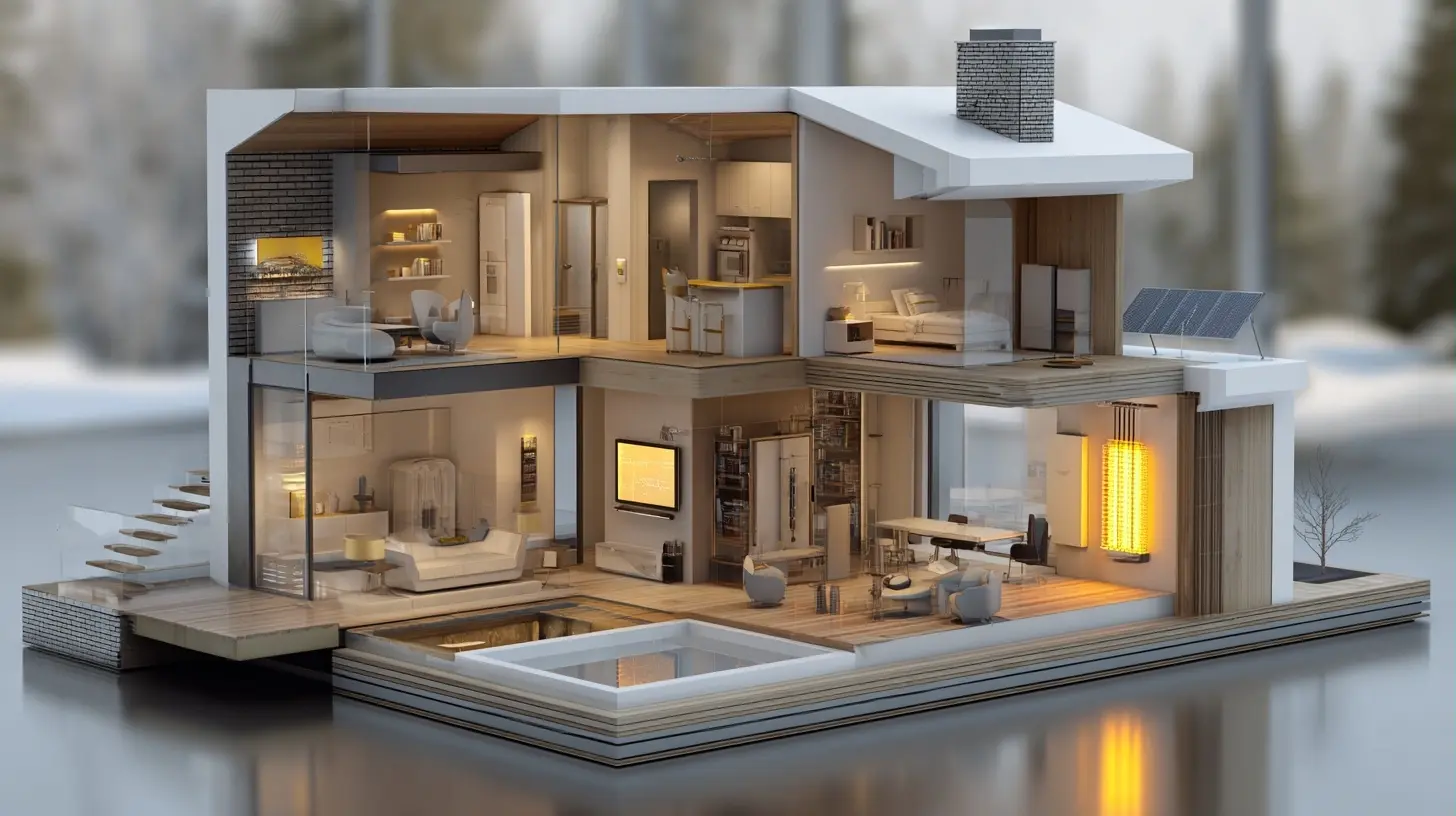
Water heating is often the second-largest energy expense and the one homeowners think about least. Three approaches dominate.Tankless vs. Heat Pump Water Heaters
Tankless gas units heat water on demand. They eliminate standby losses but often require upgraded gas lines and venting, and they can struggle to serve multiple fixtures simultaneously in cold climates where incoming water is cold.Heat pump water heaters (HPWHs) move heat from surrounding air into the tank. They are two to three times more efficient than resistance electric tanks, but they cool and dehumidify the space around them, produce noise, and need adequate air volume. In a conditioned basement, that cooling is often a benefit in summer and a minor penalty in winter.
A practical middle path: keep a well-insulated tank, set it to 120 degrees Fahrenheit, and add a smart controller that learns your usage patterns. This costs far less than replacement and captures much of the benefit.
Recirculation Done Right
Hot water recirculation pumps eliminate the wait for hot water, but continuous recirculation wastes enormous energy. The right approach is demand-controlled recirculation: a button or motion sensor triggers the pump only when someone needs hot water. This delivers convenience without the constant loss.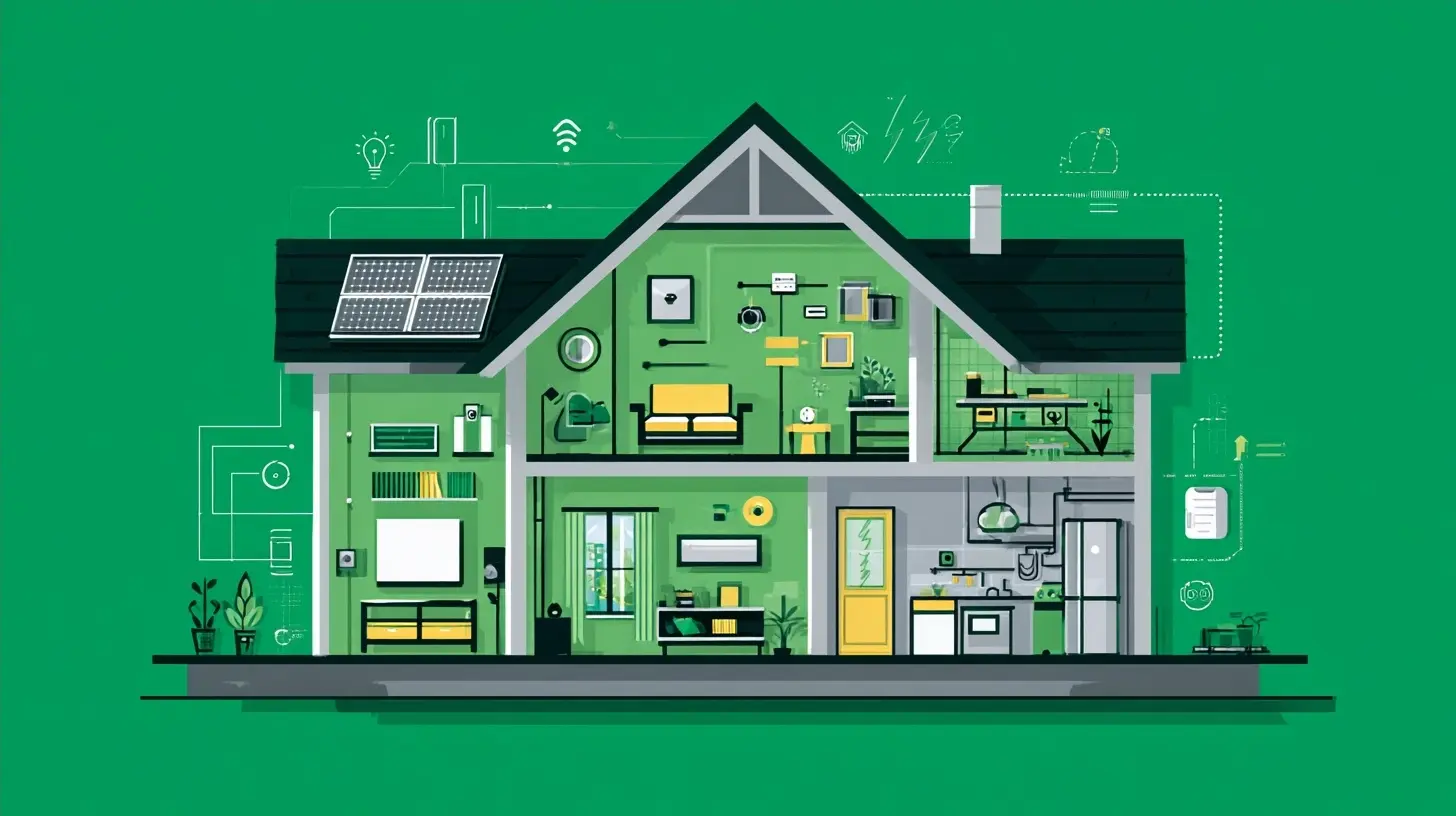
Lighting, Plug Loads, and the Long Tail
Lighting is largely solved. LEDs are cheap, efficient, and long-lived. The remaining opportunity is in control and in plug loads.Smart Lighting: Where It Helps and Where It Does Not
Smart bulbs make sense in lamps and fixtures where you want color tuning or scene control. Smart switches make more sense for overhead lighting, because they work with any bulb and do not become useless when a bulb fails.The trap is over-automating. Motion sensors in hallways and bathrooms are genuinely useful. Motion sensors in living rooms cause lights to turn off while people are sitting still. Presence detection using millimeter-wave radar is improving, but it is not yet reliable enough to replace a switch in every room.
Plug Loads Add Up
Televisions, game consoles, chargers, and set-top boxes draw power even when idle. Smart plugs with energy monitoring let you see which devices actually matter. In most homes, a handful of devices account for most of the standby draw: cable boxes, older game consoles, and audio receivers.Schedule these to cut power overnight. Do not bother with devices that draw under half a watt; the plug itself may consume more than it saves.
The Connectivity Layer: Choosing an Ecosystem You Will Not Regret
This is where most smart homes fail. Not because the devices are bad, but because they speak different languages.Matter, Thread, and Why They Matter
Matter is a connectivity standard that lets devices from different brands work together locally, without cloud dependency. Thread is a low-power mesh networking protocol that Matter devices often use. Together, they reduce the risk of buying into a dead ecosystem.The practical benefit: a Matter-enabled light switch from one brand can be controlled by a hub from another brand, and it keeps working if the manufacturer shuts down its cloud service. That last point is not hypothetical. Several smart home companies have discontinued products and left customers with bricks.
Local Control vs. Cloud Convenience
Cloud-based systems are easier to set up and often have better apps. Local systems are faster, more private, and keep working during internet outages.A balanced approach: use a local hub for critical functions like lighting, heating, and security, and use cloud services for convenience features like voice assistants and remote access. This way, a network outage does not leave you in the dark or without heat.
Zigbee, Z-Wave, and Wi-Fi
Wi-Fi devices are simple but congested. A home with 40 Wi-Fi devices stresses the router and can cause dropouts. Zigbee and Z-Wave use separate mesh networks with lower power draw and better scalability. For anything beyond a dozen devices, a dedicated mesh protocol is worth the extra setup.
Energy Monitoring and the Feedback Loop
You cannot optimize what you cannot see. Whole-home energy monitoring, installed at the electrical panel, shows real-time consumption and can often disaggregate individual appliances by their electrical signatures.What Monitoring Actually Changes
Studies of residential energy feedback consistently show that visibility alone reduces consumption by a modest but real amount, typically in the range of a few percent to low double digits. The bigger benefit is diagnostic: you find the failing refrigerator, the stuck well pump, or the space heater running in a closed room.Panel-Level vs. Device-Level Monitoring
Panel-level monitors like current transformer systems give whole-home and circuit-level data. Device-level monitoring through smart plugs gives granular data but only for what you plug in. The two complement each other. Start with the panel if you want a complete picture.Storage, Solar, and the 2027 Grid
By 2027, more homes will have some form of on-site generation or storage. The economics vary widely by region, utility rate structure, and incentives.When Solar Makes Sense
Solar pays back fastest where electricity is expensive, sun is abundant, and net metering still credits exports at retail rates. Where utilities have moved to time-of-use rates or reduced export credits, the math shifts toward self-consumption: using what you generate rather than selling it.Batteries as a Smart Home Asset
A home battery is not just backup power. It can shift consumption from expensive peak hours to cheap off-peak hours, and it can keep critical loads running during outages. The key is load management: a battery that tries to power the whole house will drain quickly. A battery paired with a smart panel that sheds non-essential loads can run essentials for days.This is where smart home and energy management converge. The same system that controls your lights can decide whether the electric vehicle charges now or at 2 a.m., whether the water heater runs during peak rates, and whether the battery discharges to avoid a demand charge.
Common Mistakes and Misconceptions
A few patterns show up repeatedly.Buying devices before defining goals. Start with the outcome you want: lower bills, backup power, comfort, or convenience. The device list follows from that.
Assuming smart equals efficient. A smart device that runs constantly is still wasteful. Automation should reduce runtime, not just make it more convenient.
Ignoring interoperability. If your devices cannot talk to each other, you will end up with five apps and no coordination.
Overlooking cybersecurity. Every connected device is a potential entry point. Change default passwords, keep firmware updated, and put IoT devices on a separate network segment if your router supports it.
Chasing rebates without reading the fine print. Many incentives require specific efficiency ratings, professional installation, or post-installation verification. Confirm eligibility before purchasing.
A Realistic 2027 Roadmap
If you want a smart, efficient home within a few years, sequence matters more than budget.Year one: Air seal and insulate. Install a smart thermostat designed for your HVAC type. Add whole-home energy monitoring. Replace the highest-draw plug loads with scheduled smart plugs.
Year two: Upgrade water heating, either with a heat pump unit or a smart controller on the existing tank. Add smart switches in high-traffic areas. Choose a hub that supports Matter and Thread.
Year three: Add solar and storage if the economics work in your area. Integrate load management so the battery, EV charger, and major appliances coordinate automatically.
Ongoing: Review your energy data quarterly. Replace failing devices with Matter-compatible models. Reassess incentives, since programs change.
The Bottom Line
A smart, energy-efficient home is not a collection of gadgets. It is a system where the building shell, the mechanical equipment, and the controls work together toward a clear goal. The technology will keep improving, but the principles will not: reduce demand first, then automate what remains, and choose open standards so your investment survives the next product cycle.Get the sequence right and you will spend less, stay more comfortable, and be ready for whatever the grid looks like in 2027 and beyond.
all images in this post were generated using AI tools
Category:
Technology GuidesAuthor:

Kira Sanders